



Rifaat al-Assad, perpetrator of Syria's 1982 Hama massacre, dies at 88
Known for his role in the 1982 Hama massacre, the late member of Syria’s former ruling family oversaw the killing of tens of thousands of civilians.


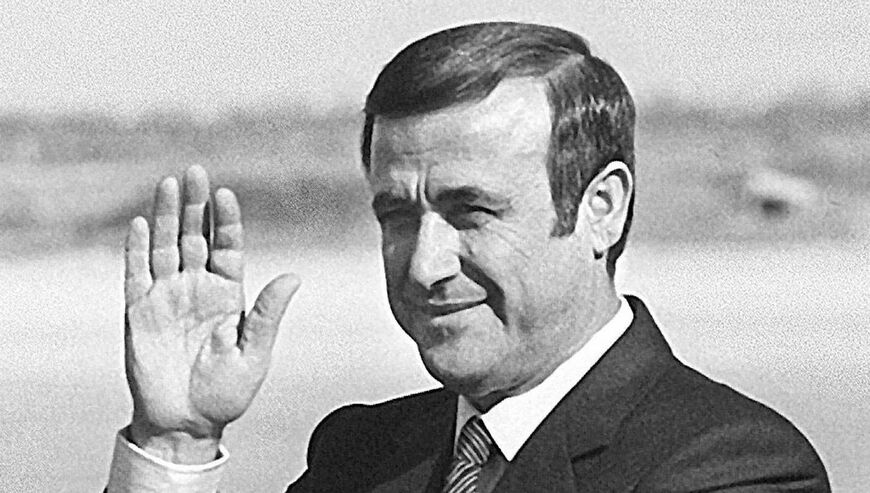
Rifaat al-Assad, the younger brother of former Syrian President Hafez al-Assad and widely known as the “butcher of Hama,” has died at the age of 88.
According to a Reuters report, Assad died in the UAE on Tuesday. Agence France-Presse, citing a source who had worked in Syria’s presidential palace, reported that he died after suffering from the flu for a week.
A central figure in Syria’s security apparatus for decades, Rifaat was widely associated with some of the darkest episodes in the country’s modern history, most notably the 1982 Hama massacre, in which his forces oversaw the killing of tens of thousands of civilians in a brutal crackdown on an Islamist uprising. That role earned him the nickname “butcher of Hama.”
Rise to power
Born in 1937 in the village of Qardaha near Latakia, Rifaat came from an influential Alawite family that would dominate Syrian politics for more than half a century. As Hafez's brother, he benefited from his sibling’s rise to power after the 1970 coup that installed Hafez as Syria’s leader.
Rifaat studied political science and economics at Damascus University and joined the Syrian army in 1958. His rise within the military accelerated after his participation in the Baathist coup of March 1963, followed by the 1966 intra-party coup that reshaped Syria’s ruling elite. By the late 1960s, he had become a key figure within the military wing of the Baath Party.
In 1970, Rifaat supported his brother’s overthrow of rival strongman Salah Jadid, helping pave the way for Hafez’s consolidation of power. The following year, Rifaat established the Defense Companies, a paramilitary force loyal to him, trained and armed with Soviet assistance.
Hama massacre
Rifaat and his Defense Companies played an outsized role in the 1982 Hama massacre, which came after years of mounting unrest and violent confrontations between the government and rebels associated with the Muslim Brotherhood, prompting Hafez to order a full-scale military assault on the city.
Rifaat’s forces imposed a full siege on Hama, cutting water, electricity and communications before launching an assault that involved heavy artillery, air strikes, mass arrests and summary executions. The operation lasted nearly a month.
The Syrian Network for Human Rights estimates that between 30,000 and 40,000 civilians were killed during that campaign, in addition to some 17,000 people who were likely subjected to arbitrary arrest or enforced disappearance.
Rifaat consistently denied responsibility for the atrocities.
Exile
Rifaat’s role in his brother’s regime began to falter in 1984, after Hafez suffered a heart attack and was put on bed rest. Rifaat moved loyal units into Damascus in what was widely viewed as a challenge to his brother’s authority. The standoff ended without open fighting, but Rifaat was forced into exile. The Defense Companies — then numbering between 55,000 and 70,000 troops, depending on estimates — were dismantled and absorbed into the regular armed forces.
Rifaat spent the next several decades in Europe, including France, Spain and the United Kingdom. He made further, unsuccessful attempts to return to political prominence, including after the death of Hafez’s eldest son Bassel al-Assad in 1994 and again following Hafez’s death in 2000. On both occasions, power consolidated instead around Bashar al-Assad, Hafez’s younger son and Syria’s president from 2000 until his ouster in 2024.
During his years abroad, Rifaat amassed significant wealth through real estate and media investments, eventually drawing scrutiny from legal authorities.
Legal proceedings
In 2020, a French court convicted him of the embezzlement of Syrian public funds and money laundering, sentencing him to four years in prison and ordering the confiscation of assets estimated at roughly $100 million. France’s highest court, the Cour de Cassation, upheld the conviction in 2022.
Separately, Swiss authorities pursued a case against Rifaat related to war crimes and crimes against humanity committed in Hama. In August 2023, Switzerland issued an international arrest warrant seeking his extradition, accusing him of ordering killings, torture and illegal detentions of thousands in Hama. After he was indicted by the Swiss attorney general in 2024, his lawyers said that Rifaat “has always denied any involvement in the acts of which he is accused in these proceedings.”
He returned to Syria in 2021, reportedly to avoid serving his French prison sentence. Following Bashar’s ouster, Rifaat fled the country once again. Reports circulating at the time said that he fled Syria via Lebanon, though it was unclear where he went immediately afterward.
He was married four times and is survived by 16 children, according to a 2021 report in The National.
This one's on us.
The story doesn't end here.
Our correspondents are already on the next chapter. Read everything they file, from $2/week.
See Offers