



Iranian sculptor's desire for artistic freedom takes him across region
Iranian Kurdish sculptor Seywan Saeedian's life takes him across borders in a conflict-torn region, where artistic independence often comes at a steep price.
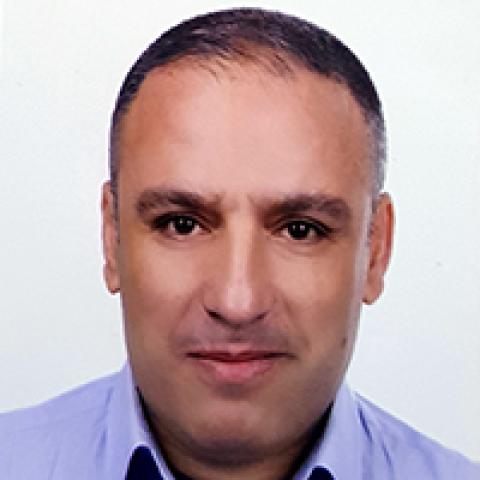

DIYARBAKIR, Turkey — At an award ceremony in Iran two decades ago, Iranian Kurdish sculptor Seywan Saeedian had the audacity to criticize the regime, setting in motion the events that would force him into a nomadic life in a turbulent region, where arts often go hand in hand with war, politics and dissent.
For the past four years, the 47-year-old has lived in Diyarbakir, the largest city of Turkey’s mainly Kurdish southeast, where his hallmark sculptures of scrap metal adorn several public spaces.
Born in Mahabad, which was the seat of a short-lived Kurdish republic in 1946, Saeedian grew up in a large family with nine siblings. In an interview with Al-Monitor, he described himself as “a child of war and migration,” recounting how tribal rifts and economic woes displaced the family twice in his childhood. The events that left the deepest marks on him, however, were the 1979 Islamic Revolution and the Kurdish peshmerga battles with the Iranian regime.
Saeedian’s attraction to arts began through calligraphy, which his elder brother practiced. As he became aware of his own talent, he went to Sanandaj, the capital of Iran’s Kurdistan province, to take classes with prominent artists, while working a manual job at a brick factory to make ends meet.


