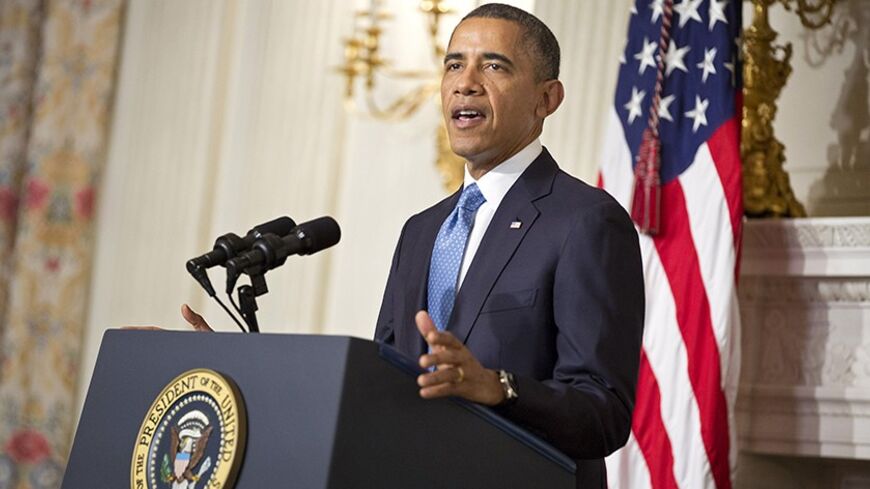
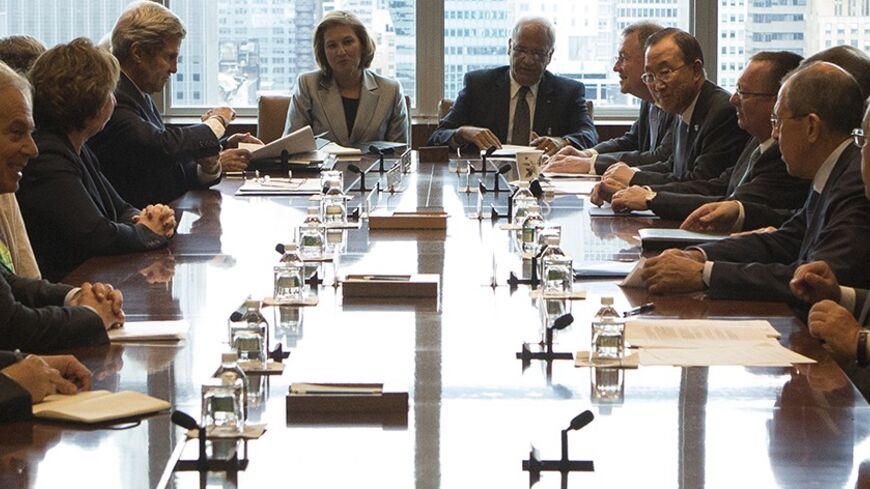
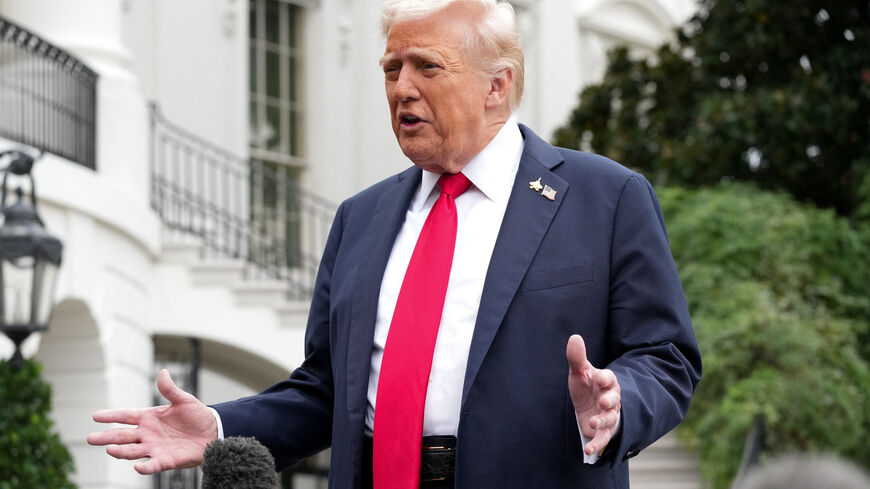
While the annual AIPAC conference was overshadowed by the developing events in Ukraine and the heightened crisis between Russia and many Western countries, including the US, President Barack Obama sought to reinforce the efforts by Secretary of State John Kerry during his meeting with Israel’s Prime Minister Benjamin Netanyahu on March 3.
As always, including in this case, similar — if not identical — vocabulary was used to persuade Israel to accept “US sponsored frameworks for final peace talks with the Palestinians.” In an interview with Bloomberg View, Obama said, “When I have a conversation with Bibi, that's the essence of my conversation: If not now, when? And if not you, Mr. Prime Minister, then who?”
Although these were questions that Obama supposedly raised, we are not yet privy to Netanyahu's answers. After meeting with Obama, Netanyahu went to meet with House Majority Leader Eric Cantor, who in turn stated that Palestinians must “accept Israel’s right to exist as a Jewish state” and “uniformly and aggressively” combat terrorism and confront, not condone, “incitement against the Jews.”
President Obama repeated the “urgent” pleas of all previous US presidents since the Madrid Conference in 1991 during the tenure of George H.W. Bush. This included then-President Bill Clinton’s remarks during ceremonies at the White House in the aftermath of the Oslo Accords of September 1993 and subsequently the Hebron Protocol in 1997, the Wye River Memorandum in 1998 and the Sharm el-Sheikh Memorandum in 1999. Clinton had to make a “framework” as well when he invited Israel's then-Prime Minister Ehud Barak and then-Palestine Liberation Organization (PLO) Chairman Yasser Arafat to the White House in 2000. Subsequently, there was the Taba Summit in 2001, the Road Map in 2003, the Agreement on Movement and Access in 2005 and the Annapolis conference in 2007. All these show that there have been problems in the semantics of the so-called peace process.
AL-MONITOR All-Access gives you unlimited access to all our journalism, the full Daily Briefing, exclusive interviews, premium newsletters, and live events — for less than $2/week.