Why China stepped up Iran war diplomacy six weeks in
China moves to shield energy flows and growth as the Iran war disrupts oil and shipping.


Leading this week
Beijing is engaging with Gulf states, Iran, Russia and the United States in response to the Iran war, while publicly maintaining a stance of restraint and saying that it has no plans to become militarily involved.
China's recent flurry of diplomacy suggests that its priority is to limit the economic impact — especially risks to energy supplies and shipping — as spillover from the war begins to weigh on the country's economic growth.
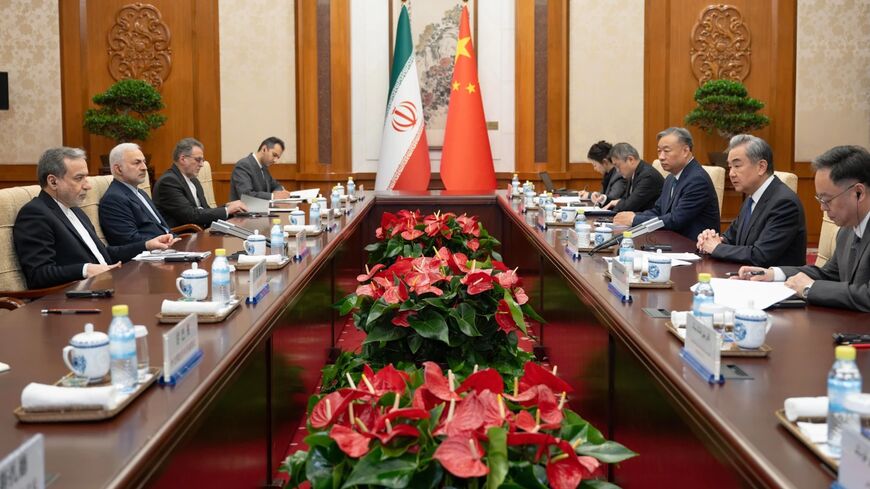
➡️ On Monday, Chinese Foreign Minister Wang Yi met with the United Arab Emirates' presidential special envoy to China, Khaldoon Khalifa Al Mubarak, in Beijing. Wang told the Emirati envoy that China "fully understands the legitimate security concerns of the Gulf Arab states."
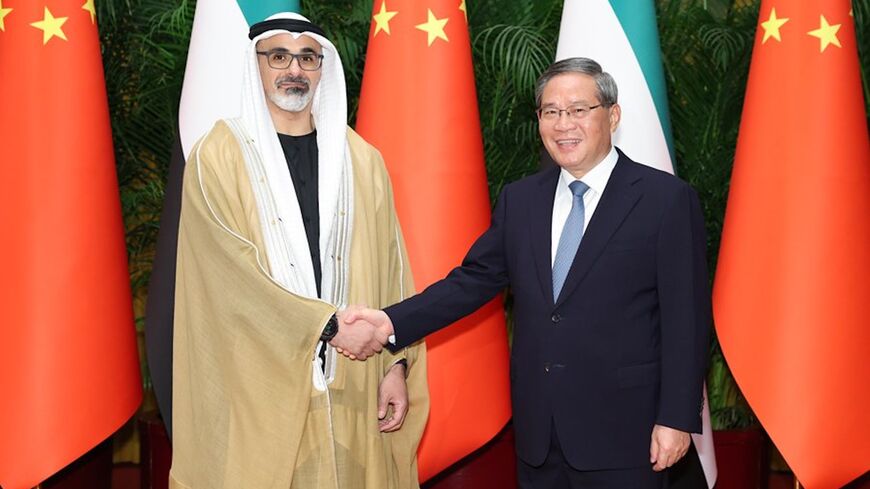
➡️ On Tuesday, Abu Dhabi Crown Prince Sheikh Khaled bin Mohamed bin Zayed met with Chinese President Xi Jinping. During that meeting, according to China’s Foreign Ministry, Xi urged the parties to the conflict to “stay committed” to peaceful coexistence, sovereignty, international law and security.
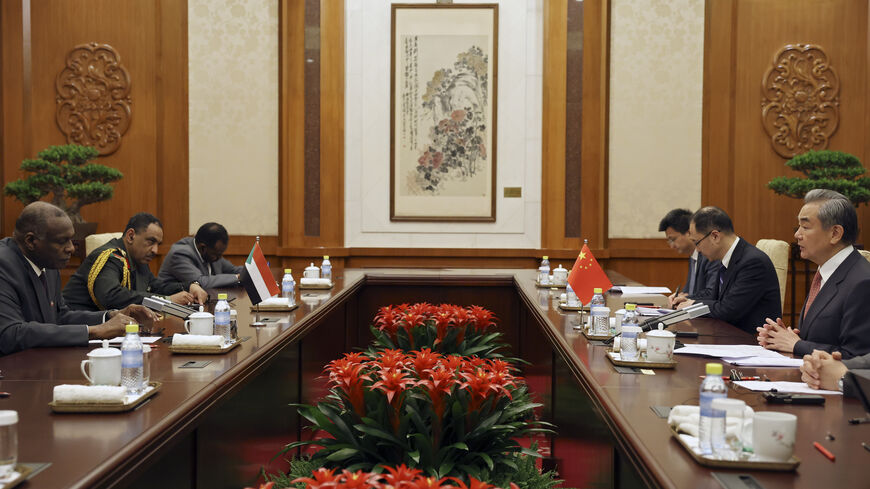
➡️ On Wednesday, Wang held a phone call with his Iranian counterpart, Abbas Araghchi. According to a readout from the Chinese Foreign Ministry, Araghchi briefed Wang on "the latest developments in the Iran-US negotiations and Iran's next steps."
➡️ China also hosted Russian Foreign Minister Sergey Lavrov — who held a phone call with his Iranian counterpart on Monday — from Tuesday to Wednesday. After meeting Xi on Wednesday, Lavrov told reporters at a news conference that Moscow could “compensate” for China’s energy shortages as shipping through the Strait of Hormuz is constrained. Lavrov did not specify what he meant, though he may have been pointing to oil supplies given that the Trump administration has recently eased sanctions on Russia's oil exports amid the Iran war energy crunch.
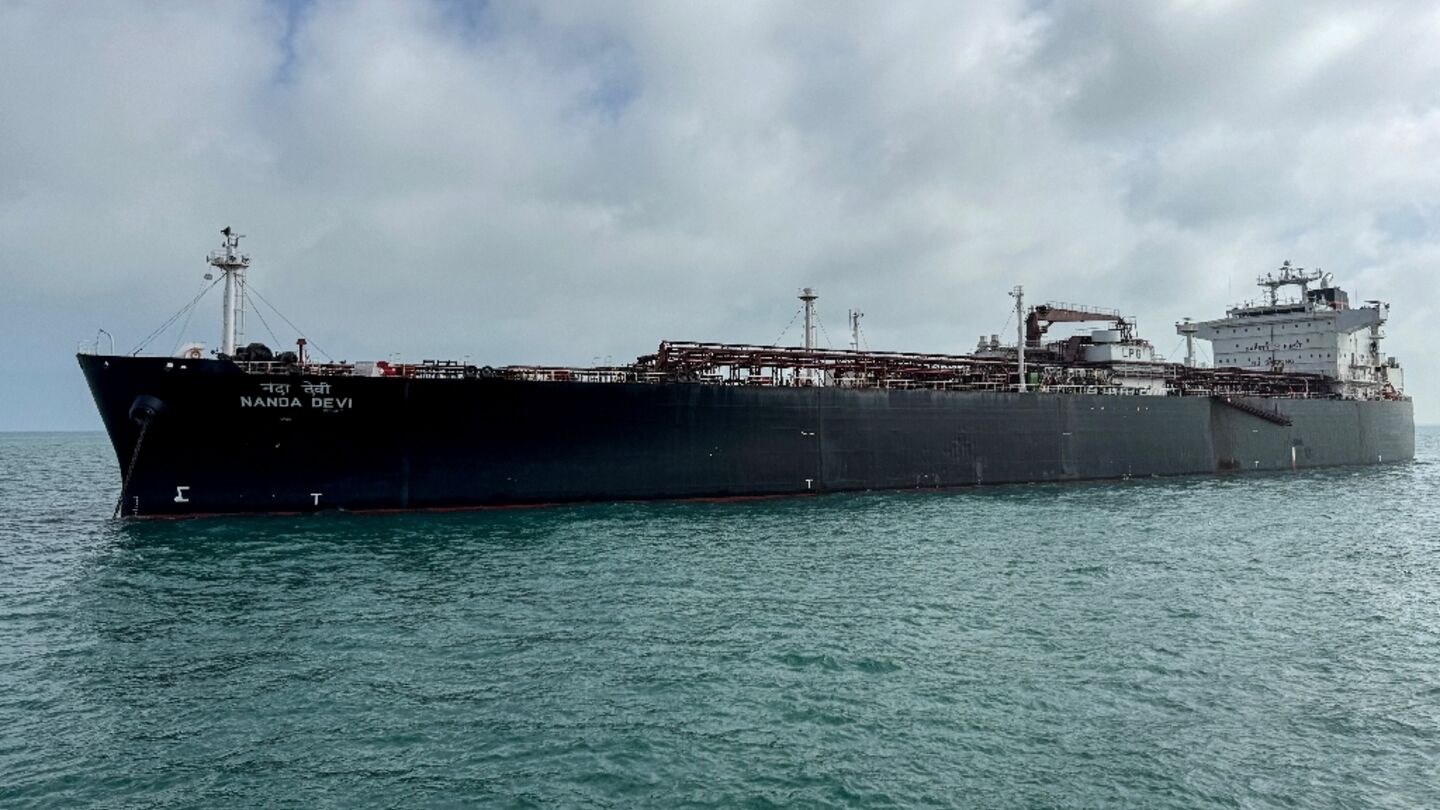
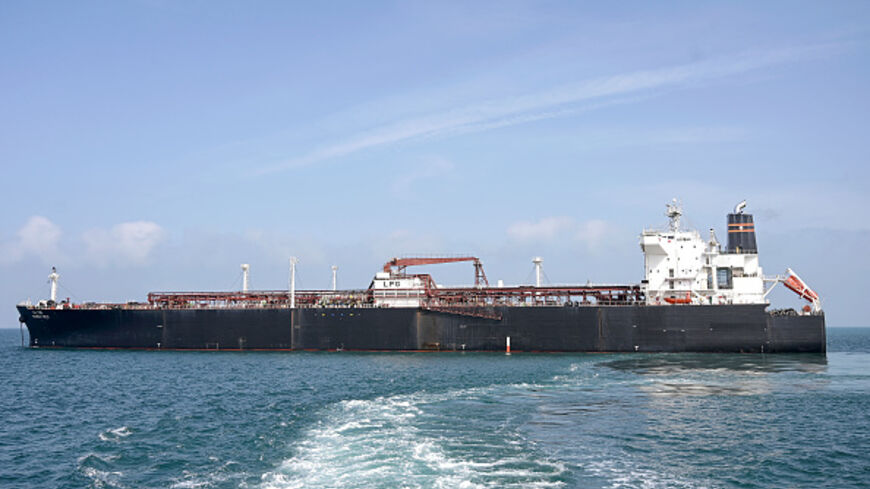
The 'Nanda Devi', an Indian ship carrying liquefied petroleum gas (LPG) which Iran allowed to pass through the Strait of Hormuz last month — STR
China also appears to be maintaining high-level communication with the US. During an interview with Fox Business Network on Wednesday, President Donald Trump — after referring to reports of China providing Iran with weaponry — said he asked Xi in a letter not to supply Iran with weapons and that Xi responded that China is not doing so. Defense Secretary Pete Hegseth echoed Trump's comments on Thursday, saying that "China's assured us that that indeed is not going to happen." China has denied sending weapons to any party to the conflict.
Why now? China’s more visible role reflects increased exposure to the conflict.
A US blockade of Iran’s ports, along with a partial blockade of the Strait of Hormuz — the narrow waterway between Iran and Oman that carried roughly a fifth of global oil trade before the war and serves as the Gulf’s main shipping route — took effect on Monday. A day later, China’s Foreign Ministry called the move “a dangerous and irresponsible move.”
For weeks before that, Iran had already been enforcing its own partial disruption of traffic through the strait, though Chinese crude purchases reportedly continued. On March 10, CNBC reported that China had received 11.7 million barrels of Iranian crude since the war began.
A US blockade targeting Iran-linked tankers could pose greater risks to China, which gets an estimated 13% of its crude imports from Iran.
On Wednesday, US Central Command said on X that no ships made it past the blockade in its first 48 hours, though data from tracking firm Kpler showed at least two crude oil tankers appeared to have entered Iranian territorial waters via the Strait of Hormuz from the Gulf of Oman between Tuesday and Wednesday.
While Beijing has built up one of the world’s largest crude stockpiles — estimated at around 1.2 billion barrels of onshore reserves as of January, according to Kpler — that buffer does not shield its export-heavy economy from prolonged disruption to global shipping.
Responding on Wednesday to an International Monetary Fund warning on slowing global growth, China’s Foreign Ministry posted on X: “The Strait of Hormuz must reopen. Peace must return to the Gulf. The global economy and energy supply must not take any more hits.”
Recent data points to growing economic pressure on China. China's export growth slowed to 2.5% in March from a year earlier, underperforming expectations after gaining nearly 40% in February compared to the previous year, per Bloomberg. Plus, China’s total trade surplus shrank by 3% in March as import costs rose, CNBC reported Monday.
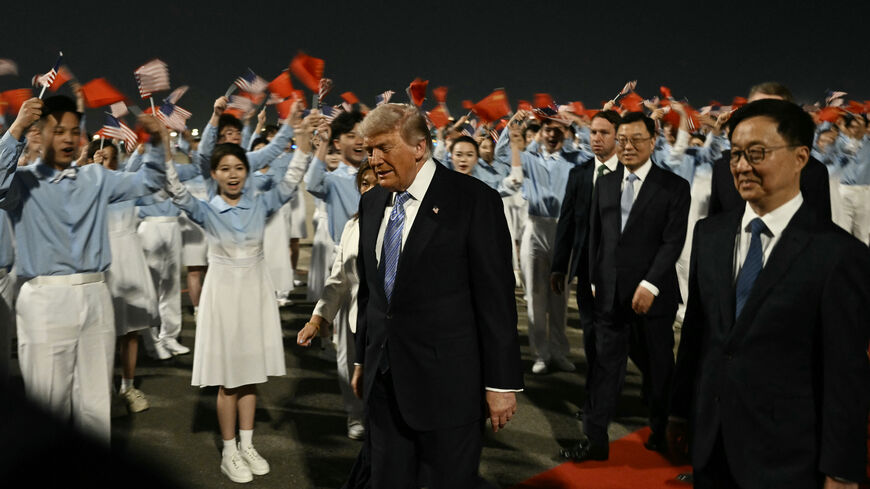
A prolonged conflict and blockade could also complicate, or postpone again, the Trump-Xi summit, which is currently scheduled for May 14-15. So far, however, the meeting appears to be on track.
In a post Wednesday on Truth Social, Trump — after saying that China has “agreed not to send weapons to Iran” — said that Xi "will give me a big, fat, hug when I get there in a few weeks. We are working together smartly, and very well!"

Photo of the week
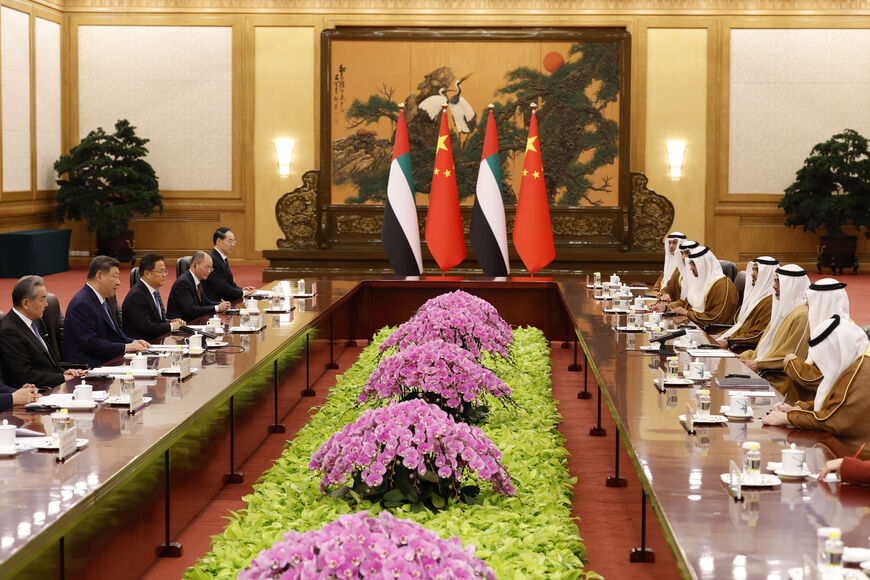
China's President Xi Jinping (2nd L) and Sheikh Khaled bin Mohamed bin Zayed, Crown Prince of Abu Dhabi (3rd R), attend a meeting at the Great Hall of the People on April 14, 2026, in Beijing, China. (Photo by Haruna Furuhashi - Pool/Getty Images)

Deals and visits ✈️
- Egypt in talks with Chinese company to establish $2 billion aluminum production complex
- Chinese robotaxi firm Didi plans UAE expansion
- Abu Dhabi crown prince meets with heads of leading Chinese companies
- Algeria hosts symposium to promote China-Africa ties
- UAE’s Etihad Airways launches five new China routes
- Saudi Arabia’s oil sales to China set to halve in May

What we are reading
- How China is winning the global energy war: Semafor
- Iran used Chinese spy satellite to target US bases: Financial Times