



Palestinian women in Jerusalem in crossfire of Israeli Police, settlers
In light of the recent Israeli Police and settlers’ attacks on Al-Aqsa Mosque compound and the Sheikh Jarrah neighborhood, Jerusalemite women have been remarkably present, taking part in the demonstrations and using social media to share the suffering of Jerusalemites.
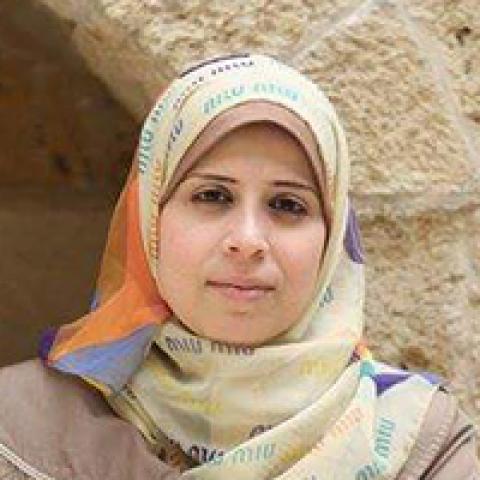

The Israeli Police and settlers’ fierce attacks on Al-Aqsa Mosque compound and the Sheikh Jarrah neighborhood in Jerusalem has shed light on the significant presence of Palestinian women in the city and their participation in demonstrations condemning the Israeli attacks. These women have also held the ribat, the act of defending Islamic holy places, at Al-Aqsa Mosque and used the hashtag “SaveSheikhJarrah” on social media to shed light on the developments there.
The participation of Jerusalemite women is an extension of the historic role they have played since the British Mandate for Palestine. In 1925, women had their first impactful movement, as they took part in the protest to condemn Britain's then-Foreign Minister Arthur Balfour’s visit to Jerusalem and plan to visit Al-Aqsa Mosque.
Since then, women’s organized political activity has witnessed a qualitative leap. Following the Buraq Uprising in 1929, a group of Jerusalemite women founded the Arab Women Union Society in Jerusalem, which was chaired by Zulaikha Shihabi. The union suspended its works for a while after 1948, before re-registering in 1957.
An estimated 451,584 people inhabited East Jerusalem in mid-2019, 9.1% of the total population in Palestine and 15.1% of the total population in the West Bank. The sex ratio in 2018 was around 107.6 males per 100 females, according to the Jerusalem Statistical Yearbook 2020.


