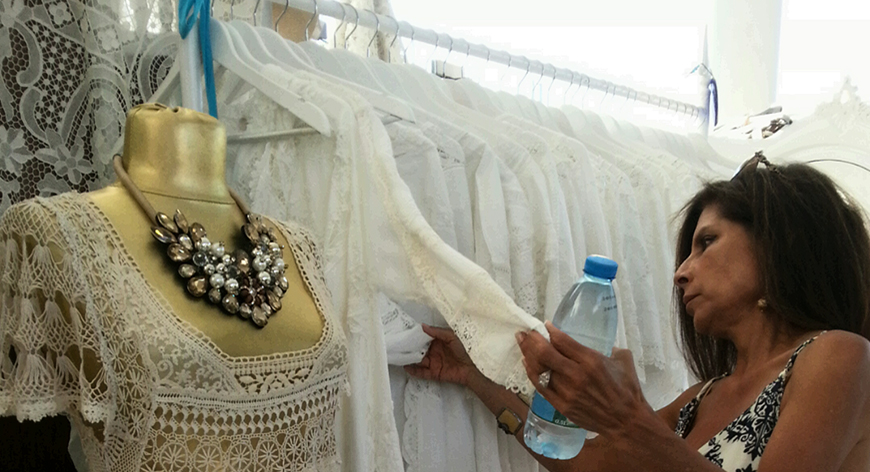
Turkey's brides-to-be flock to vintage look
The old dowry chests of middle-aged Turkish women are full with precious, handmade embroideries, some of which are now re-emerging and making their way to luxury stores.


In Turkey’s provincial regions, some brides-to-be still collect trousseaux — mainly needlework but also clothing and home appliances. But the advent of technology has largely eroded the tradition. In the marriages of yesteryear, the bride’s trousseau, intended as a reciprocal gesture to the groom’s kin for the wedding expenses, was such an essential element that a “trousseau display” was held for relatives and friends to see the linen, embroidery and lacework the bride would take to her new home. The quality of the handwork would earn the bride’s kin prestige and serve to build bonds between the families of the couple. Female relatives and neighbors would discuss for months the fabric, embroidery and vintage value of the pieces, the product of years of onerous handwork.
Ever since Ottoman times, the most prized items in a trousseau chest would typically feature the silver-thread embroidery known as sirma or Maras isi (Maras work), one of the oldest embroidery arts in Anatolia. The craft, which takes its name from the southern city of Maras, now officially called Kahramanmaras, is applied on tablecloths, bedspreads and duvets, as well as red velvet dresses known as bindalli (meaning, a thousand branches) that are worn on special occasions. In the 18th century, men’s waistcoats, gun covers and belts were also embellished with this type of embroidery. In the Cukurova (Cilicia) region, wealthy men used to have it on their riding outfits, while those in Maras, Antep and Kilis wore it on their fezzes.
My late mother, Ulviye, who came from the deep-rooted Aytemiz family in Maras, used to tell me how women embroidered velvet with gold threads in the years she was a student at the local girls’ vocational institute. She had also learned the technique and embroidered a small tablecloth for her trousseau. I know she spent fortunes to have master artisans embroider her cloths. I occasionally accompanied her on visits to the homes of women who practiced the craft, and there I realized they used a great variety of tools, well beyond needles and threads. Master embroiderers earning enough to buy houses and vineyards were the talk of the town. Embroidery had become the main income for Maras’ housewives who learned the craft at the girls’ institute.