



Syrian Kurdish commander sees chance to ease tensions with Turkey under Biden
In an exclusive interview with Al-Monitor, Mazlum Kobane said the former vice president's victory may well spell change in Ankara’s behavior.
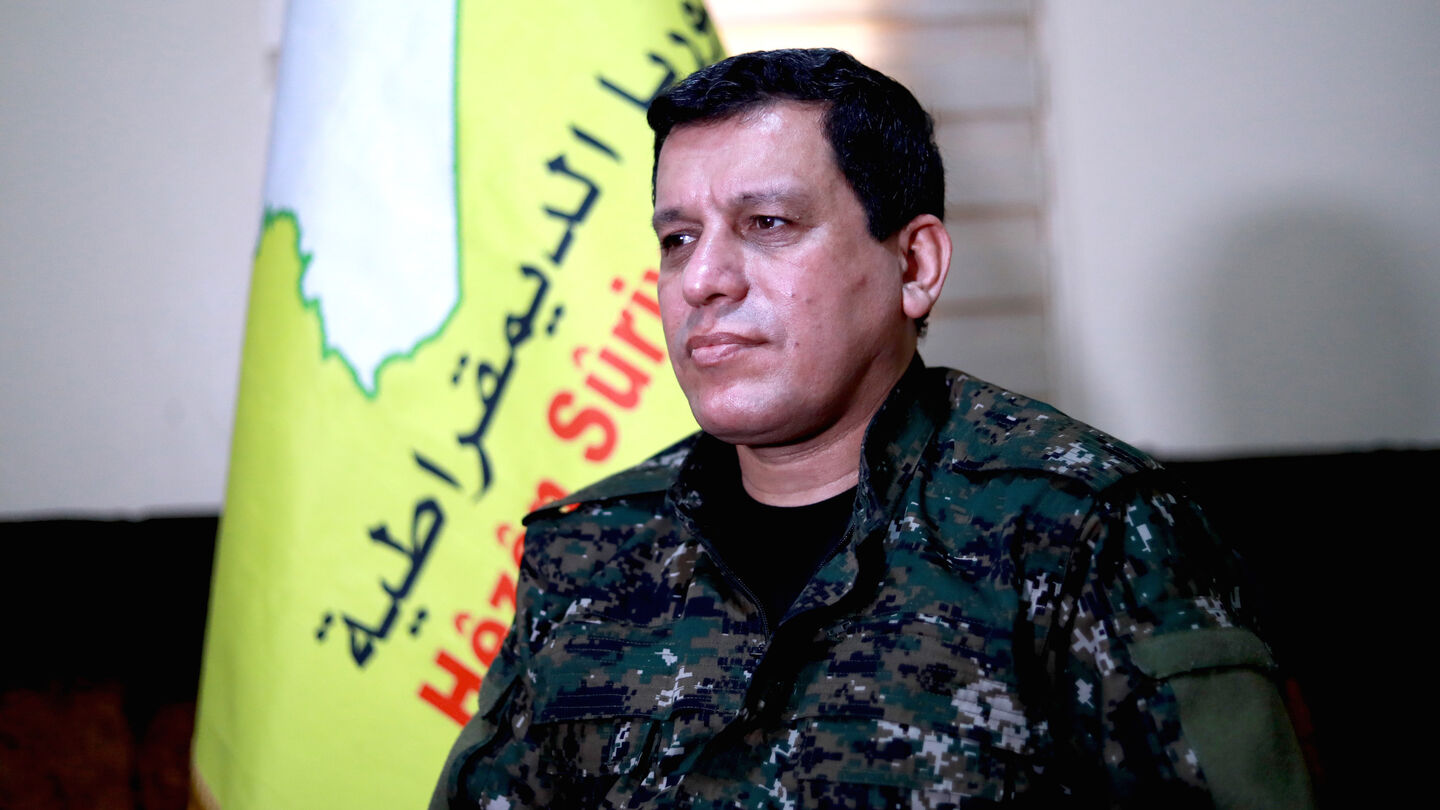
The victory of former Vice President Joe Biden in the US presidential election has raised expectations of renewed and constructive US engagement across the world. Such expectations are acutely felt by the Kurds of northeast Syria. Washington's top allies in the war against the Islamic State (IS) have suffered an undue share of tumult as a result of President Donald Trump’s erratic policies. His decision to green light Turkey’s October 2019 invasion, which resulted in the loss of a huge chunk of Kurdish-controlled territory and the withdrawal of US troops from the Turkish border, was a huge shock. But in the year that has elapsed since the Turkish assault, the Syrian Kurds — under the stewardship of Mazlum Kobane, the commander-in-chief of the Syrian Democratic Forces (SDF) — have been striving to turn adversity into opportunity.
The universal outcry over Trump’s perceived betrayal of the Kurds led the US president to backtrack and keep several hundred US troops in northeast Syria. Trump said they would remain to protect several oil fields, which hold the bulk of Syria’s reserves.
With US military protection intact, Kobane has embarked upon a series of political and economic initiatives aimed at cementing the Kurds’ hard-won gains. The most critical is the ongoing unity talks between the Democratic Unity Party, which shares power in the Kurdish-led Autonomous Administration in Northeast Syria, and a group of opposition parties gathered under the umbrella of the Kurdish National Council (KNC), which has close ties to the Kurdistan Democratic Party (KDP) in Iraq as well as with Turkey.
The need for intra-Kurdish unity has gained fresh urgency in the wake of the Turkish invasion that displaced tens of thousands of people, adding a new layer of misery to that inflicted by IS. Kobane succeeded in persuading the United States to become co-facilitators of the talks whose strategic objective is to help normalize relations with Turkey. This, in turn, would help Kobane achieve his overarching goal of ensuring that US troops stay put and US diplomatic engagement is sustained until Syria gets a government that respects the will of all of its citizens, including that of its long-repressed Kurds.


