


What’s next for OPEC+ oil quotas as Saudi Arabia ramps up output?
Each member's capacity figure will be used to set its production limit starting 2027, to end years of quota disputes.


ABU DHABI — Saudi Arabia's crude output jumped in October to its highest level since the Iran war began, the increase coming days before OPEC+ is due to receive a US audit to settle recurring disputes over how much each member of the world's biggest group of oil producers can pump.
The kingdom produced 10.56 million barrels a day last month, up 26% from September, according to figures it provided for OPEC's monthly report released on Nov. 11. The audit had been due by the end of September but slipped to mid-November after the war delayed plans in the region to expand capacity, and some members failed to submit their data, according to a Reuters report in October. OPEC+ ministers are scheduled to meet on Nov. 29. The timeline would still allow them to consider the audit findings at that meeting, Reuters reported.
OPEC+, which groups the 11 members of OPEC with 10 allies led by Russia, has set production quotas by bargaining for years, and ministers decided last November that an independent audit of each country’s capacity would become the reference point for its output limit starting in 2027. Saudi Arabia, the group’s de facto leader and the member with the most spare capacity, wants each country’s quota to rest on the audit’s figures.
“It wants to get away from the difficult quota negotiations that OPEC and OPEC+ have faced for many years and which ultimately drove UAE and Angola out of OPEC,” Tim Callen, who ran the International Monetary Fund’s division covering Saudi Arabia and the other Gulf oil exporters from 2012 to 2021 and is now a visiting fellow at the Arab Gulf States Institute in Washington, told Al-Monitor. “The audit will likely show that there is little spare production capacity outside of Saudi Arabia.”
Inside the audit
DeGolyer and MacNaughton, a Dallas-based petroleum consultancy that audited Saudi Aramco's reserves ahead of the 2019 stock market listing of the world’s biggest oil company, is conducting the audit for all members except Russia, Venezuela and Iran, according to Reuters. DeGolyer and MacNaughton and the OPEC Secretariat did not respond to Al-Monitor’s requests for comment.
The audit measures how much oil a country can bring into production within 90 days, which is OPEC's definition of production capacity, according to Argus, one of the agencies OPEC uses to monitor members’ output. Having one firm apply the same methodology to most members should make their capacity figures easier to compare, said Carole Nakhle, founder and CEO of Crystol Energy, a British advisory firm.
“This is particularly important given the longstanding disagreements within OPEC+ over production baselines, which determine each country’s share of the group’s output,” Nakhle told Al-Monitor. “A common assessment may help reduce such disagreements, although it is unlikely to eliminate them entirely.”
War and quotas
OPEC+’s current production levels expire on Dec. 31 under the June agreement. Ministers could prolong the audit and delay setting new limits, said Bob McNally, founder and president of Rapidan Energy Group and a former White House energy adviser.
“OPEC+’s capacity limits review will remain a side issue for global oil markets until the Iran and Russia-Ukraine wars end, and their impacts on Gulf and Russian oil production, processing and exporting capacity can be assessed,” McNally told Al-Monitor. “The Nov. 29, 2026, OPEC+ meeting will not matter for US gasoline prices.”
OPEC+ states pumped 41.23 million barrels a day of crude in October, up 2.04 million from September, OPEC’s monthly report showed. The war’s damage has fallen mainly on Gulf exports, said Jim Krane, a research fellow in Middle East energy at Rice University’s Baker Institute for Public Policy in Houston and author of a book on Gulf oil politics.
Restoring damaged energy assets to full capacity is costly and slow, OPEC+’s ministerial monitoring committee said on Oct. 4. Energy resilience depends on spare production capacity and on the ability to maintain, repair and reroute supplies, Saudi Energy Minister Prince Abdulaziz bin Salman said at the World Petroleum Congress in Riyadh on Oct. 12.
“Some countries have demonstrated strong ability to ramp up and down without affecting capacity,” Krane told Al-Monitor. “Others have found it difficult or impossible to ramp back up to previous levels.”
Past quota disputes
OPEC+ previously brought in outside firms in 2023, when IHS, Wood Mackenzie and Rystad Energy assessed Angola, Congo and Nigeria, according to Nigeria’s petroleum ministry. Angola rejected its lower quota and quit OPEC weeks later, saying it needed to defend its interests.
A wider review of all members by the same three firms was extended in December 2024, before ministers asked OPEC’s own staff in May 2025 to design the method now in use, according to OPEC. The audit will be repeated every year, with the next round starting in March 2027, Reuters reported last December.
Russia, Venezuela and Iran objected to the appointment of a US auditor, according to the same report. Russia and Venezuela will be assessed by a separate firm based outside the United States that has not been publicly identified, while Iran’s production baseline for 2027 will be based on its average output from August through October this year, Argus said.
The UAE left OPEC and OPEC+ on May 1 after what its April statement called a comprehensive review of its production policy and its current and future capacity. Iraq, whose capacity is being assessed by an independent U.S. consultancy, has no plan to follow and wants quotas that better match what members can sustainably pump, its oil ministry said in June.
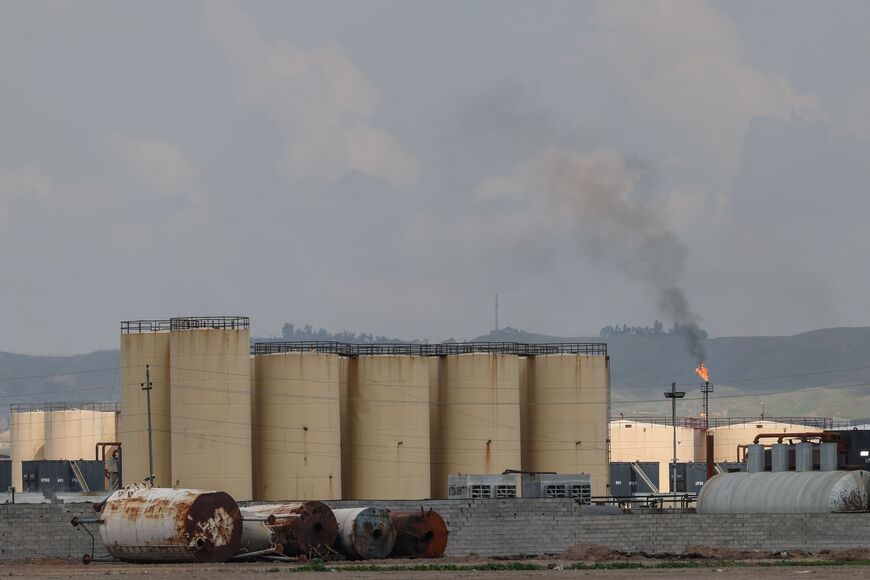
A view of an oil refinery on March 17, 2026, in Erbil, Iraq. A member of OPEC, Iraq has had to sharply reduce oil production as its main export route, through the Strait of Hormuz, has been blocked due to the war between Iran and the US, Israel and their regional allies. (Sedat Suna/Getty Images)
“It’s hard to know how the capacity audit will change oil markets,” Krane said. “It’ll be interesting to see whether the audit signals anything about the UAE’s departure.”
Members such as Iraq that remain in the group could get a favorable assessment that lets them keep expanding, Krane said. The new method will reward members that invest and that expect demand to rise, Prince Abdulaziz had said last December.
The U.S. Strategic Petroleum Reserve, the government’s emergency oil stockpile, held 282.2 million barrels in late October, its lowest since 1982, Energy Department data showed. More countries could build or expand strategic oil reserves once the war ends, as a hedge against future supply disruptions, Giovanni Staunovo, a commodity analyst who tracks oil for Swiss bank UBS, told Al-Monitor.
Rapidan expects the war and the refilling of emergency stockpiles to tighten the oil market later this decade, McNally said. At some point after that, producers will again have to manage a glut, he said.
“When that moment comes, it’s critical for price stability and the US shale industry that OPEC+ is able and ready to restrain supply,” McNally said. “History and oil’s intrinsic economic properties continually show that the absence of effective supply management unleashes extreme price volatility, and US shale oil has been, and would continue to be, the biggest loser if crude oil prices burst in the coming years.”
An AL-MONITOR subscriber gifted you this article. Gifted by an AL-MONITOR subscriber.
A gift worth sharing.
This one's on us. Subscribe for unlimited access to everything we publish, plus gift articles for your inner circle. As low as $2/week. This one's on us. Get unlimited access, plus gift articles for your inner circle, from $2 a week.
Already a subscriber? Sign in