


Why Syria and Iraq are taking different approaches to armed groups
In a break from past policies, the new governments in Damascus and Baghdad are clamping down on militant groups with the capacity or desire to harm regional partners.

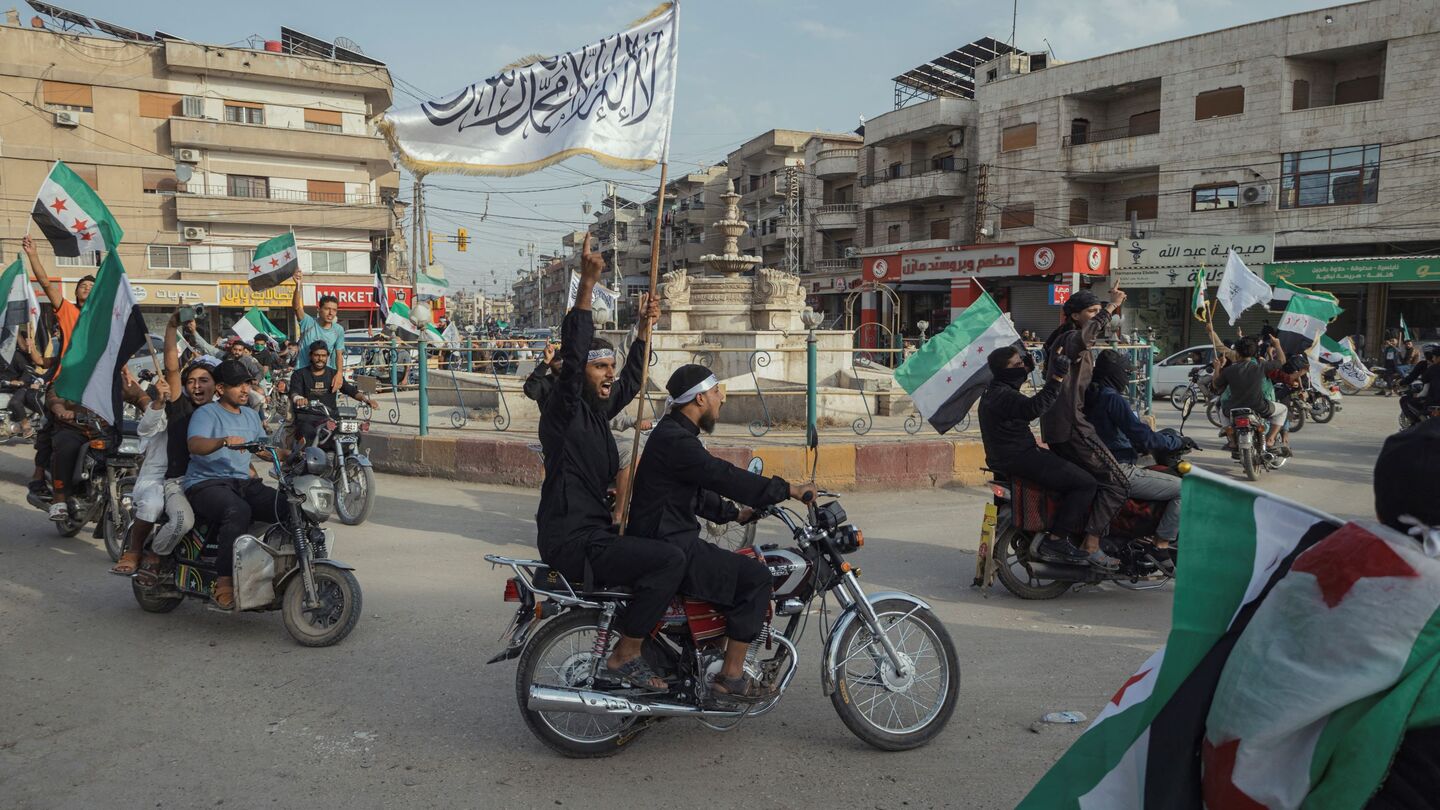
AMMAN — The trampling and desecration of the US flag has been a common sight in Iraq in recent decades, including during recent Sovereignty Day celebrations marking the Sept. 30 withdrawal of US-led coalition forces from the country.
Iraq’s response under Prime Minister Ali al-Zaidi, however, has been different: Several people involved were reportedly arrested and an inquiry was ordered. As of Oct. 8, the number of people arrested, as well as their names, positions and any affiliations they may have had, had not been released to the public. Several prominent Iraqi officials have shown themselves in favor of this disciplinary action.
Akram al-Kaabi, commander of the Harakat Hezbollah al-Nujaba (HHN) armed faction, railed against the “dangerous precedent” that the arrests had set, posting an older video of himself walking on a US flag. The paramilitary group is backed by Iran’s Islamic Revolutionary Guard Corps and was one of the first Iraqi armed factions to cross into Syria to support the government of former Syrian President Bashar al-Assad in its fight against armed opposition forces. HHN, which formed in 2013, played a major role in the battle for Aleppo. It was designated a foreign terrorist organization by the US on Sept. 19, 2025.
In a 2015 interview, Kaabi said that HHN took orders from Iran’s Grand Ayatollah Ali Khamenei and that they were prepared to fight alongside the Ansar Allah armed group, also known as the Houthis, in Yemen and that he and other Iran-linked factions in Iraq could and would overthrow the Iraqi government if Khamenei deemed it a "religious duty." Khamenei was killed by an Israeli airstrike in Tehran on Feb. 28.
Syria seeks to avoid Iraq’s mistakes
Following the fall of Assad in 2024, Syria has largely sought to prevent members of its security forces from taking actions that could strain relations with neighboring countries, even amid Israeli military strikes and territorial incursions.
Syrian officials and others close to the new government have repeatedly stressed since December 2024, when anti-Assad forces took over most of the country, that mistakes made in Iraq would not be made in “the new Syria." The stated goals included avoiding Iraq’s muhasasa system of dividing public offices and state resources largely along ethno-sectarian lines, replacing the fear associated with checkpoints and intelligence services with greater trust between the Syrian people and their security forces, and refraining from threatening neighboring countries.
Damascus has exerted significant efforts to depoliticize army-building, according to a paper published on Oct. 5 by Jerome Drevon, an associate at the Geneva Graduate Institute. In late August, the Syrian Ministry of Interior released an app for reporting violations by Syrian security personnel.
Syrian officials have defended such decisions as pragmatic steps intended to protect the country’s future, particularly when asked how the government would prevent jihadists from continuing their fight inside or beyond Syria’s borders.
The Syrian government has since made it clear to Uyghur fighters, many of whom belong to the Turkestan Islamic Party and fought against the Assad regime, and other foreign fighters that they will face consequences if they attempt to create a state-within-a-state or friction with other countries.
Cross-border threats
Militants operating in Syria and Iraq, whether aligned with the government or acting semi-independently, have posed cross-border threats that complicate both countries’ relations with their neighbors, Caroline Rose, senior director at the Soufan Center, told Al-Monitor.
"This has challenged both governments in Damascus and Baghdad, placing a strain on foreign relations and raising the risk of external militant or terrorist operations conducted from respective territories," she said.
Damascus’ January 2025 arrest of Ahmed al-Mansour, an Egyptian Islamist militant who launched an online campaign targeting Egyptian President Abdel Fattah al-Sisi, set an example early on, while across the border, Iraq continues to find it difficult — or inexpedient — to arrest those within its forces who commit crimes damaging relations with other nations.
“The Ahmed al-Mansour case is particularly revealing,” Rose said, noting that he was formerly a member of rebel forces that overthrew Assad and led by current Syrian President Ahmed Al-Sharaa. Mansour posted on social media “a recorded warning to Egyptian President al-Sisi, staged in front of the 25 January Revolutionaries Movement banner with an older version of the Egyptian monarchy-era flag, flanked by a gun and bullet on the table in front of him," she said.
“Mansour’s use of the Syrian revolutionary phrase used against Bashar al-Assad — ‘Your turn, Doctor’ into ‘Your turn, Dictator’ —and subsequent threats to take action in Egypt raised immediate issues for Syria’s new administration” in January 2025, “prompting his arrest," Rose added.
“This reportedly came after officials in Cairo communicated grievances about Mansour and his movement through intelligence channels to their Syrian counterparts, warning that Syria should not become a safe haven for foreign threats,” she said.
“The intent and capacity of some Iran-aligned Hashd militias [PMU] against regional partners and great-power actors like the US, Saudi Arabia and Israel is more mature than militants” in Syria threatening foreign governments, “placing greater urgency on the Iraqi government to respond and suppress threats emanating from its territory," Rose said.
“For Syria,” she added, the arrest of Mansour and others “has reinforced a norm that both Syrian soil and its new security forces cannot be exploited to pose threats to foreign countries — particularly Arab states that the government has sought relations with.”
A statement issued by the US State Department the day after the Oct. 1 meeting in Rome of political directors and senior diplomatic officials from the US-led anti-ISIS coalition stressed that the Sept. 30 end of its “mandate in Iraq represents true victory of the collective efforts of the coalition.”
In Syria, the statement continued, “We celebrate the coalition having a partner in Damascus that recognizes the ISIS threat and is determined to work with the coalition to diminish it.”
An AL-MONITOR subscriber gifted you this article. Gifted by an AL-MONITOR subscriber.
A gift worth sharing.
This one's on us. Subscribe for unlimited access to everything we publish, plus gift articles for your inner circle. As low as $2/week. This one's on us. Get unlimited access, plus gift articles for your inner circle, from $2 a week.
See OffersAlready a subscriber? Sign in