Turkey, Pakistan to deploy forces to Saudi Arabia amid Houthi attacks

Turkish, Saudi and Pakistani officials agreed to bolster military cooperation under the Mecca defense pact as Houthi attacks and fighting in Yemen intensify.

A Yemeni man holds up a mock missile decorated with the colors of the Palestinian flag and the chechered keffiyeh in front of portraits of slain Hamas leader Yahya Sinwar (L) and the leader of the Houthi movement, Abdel Malek al-Houthi (R), during a protest in Sanaa to denounce strikes on Yemen and Israel's bombardment of Gaza on Jan. 15, 2025.
A Yemeni man holds up a mock missile decorated with the colors of the Palestinian flag and the chechered keffiyeh in front of portraits of slain Hamas leader Yahya Sinwar (L) and the leader of the Houthi movement, Abdel Malek al-Houthi (R), during a protest in Sanaa to denounce strikes on Yemen and Israel's bombardment of Gaza on Jan. 15, 2025. — MOHAMMED HUWAIS/AFP via Getty Images

ANKARA — Turkey and Pakistan agreed Monday to prepare forces and other military support for rapid deployment to Saudi Arabia under their trilateral defense pact, the countries announced after an emergency meeting in Riyadh. The meeting came amid ongoing Houthi attacks on the kingdom and intensifying fighting in Yemen.

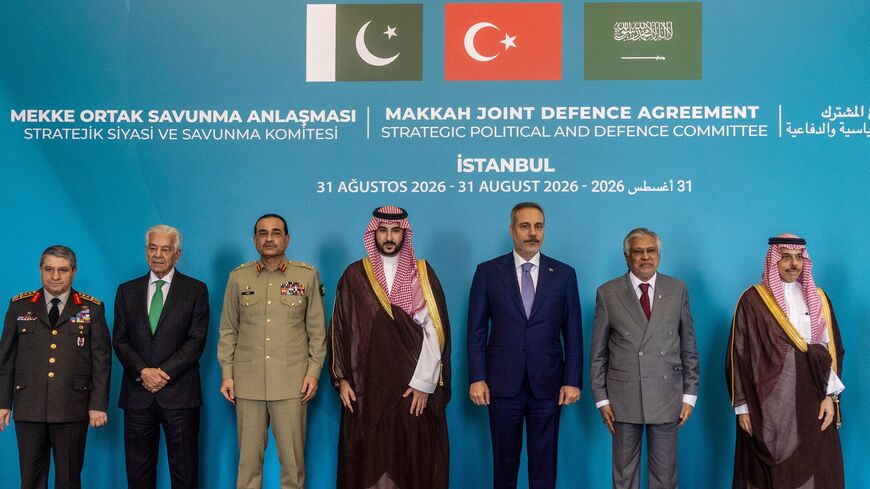
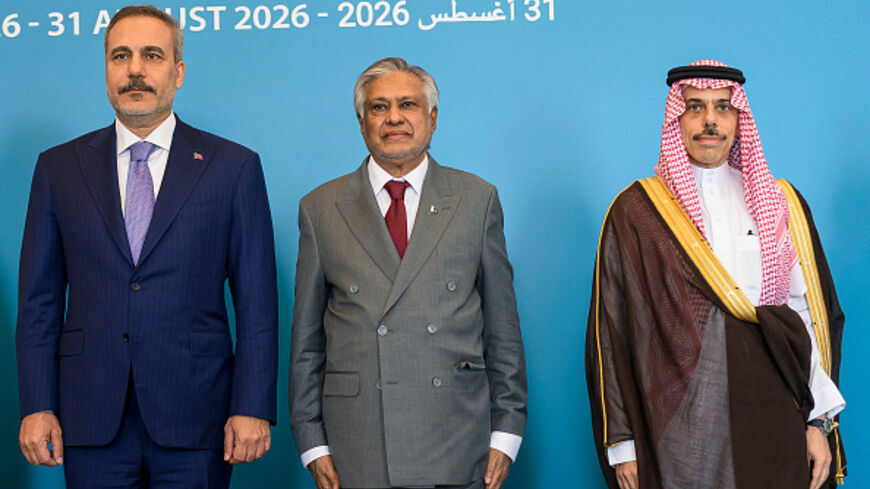
Saudi Foreign Minister Prince Faisal bin Farhan, Defense Minister Prince Khalid bin Salman and army chief Fayyadh bin Hamed Al-Ruwaili hosted their Turkish and Pakistani counterparts in Riyadh on Monday. 

Turkish foreign Minister Hakan Fidan, Defense Minister Yasar Guler and army chief Selcuk Bayraktaroglu joined Pakistan's Foreign Minister Ishaq Dar, Defense Minister Khawaja Asif and Chief of Defense Forces and Army Chief Field Marshal Asim Munir for the trilateral talks.

Saudi Crown Prince Mohammed bin Salman also met with the delegations, according to an image released by the Turkish Foreign Ministry.

Force and capacity deployment: The meeting, which is part of the Mecca defense pact signed between the three countries in August, comes amid ongoing Houthi attacks on Saudi Arabia as well as intensifying clashes between Saudi-backed Yemeni forces and the Iran-backed group.

The three countries reaffirmed their "unequivocal rejection of any attack or threat against the kingdom’s security and territorial integrity,” according to a joint statement released after the meeting.

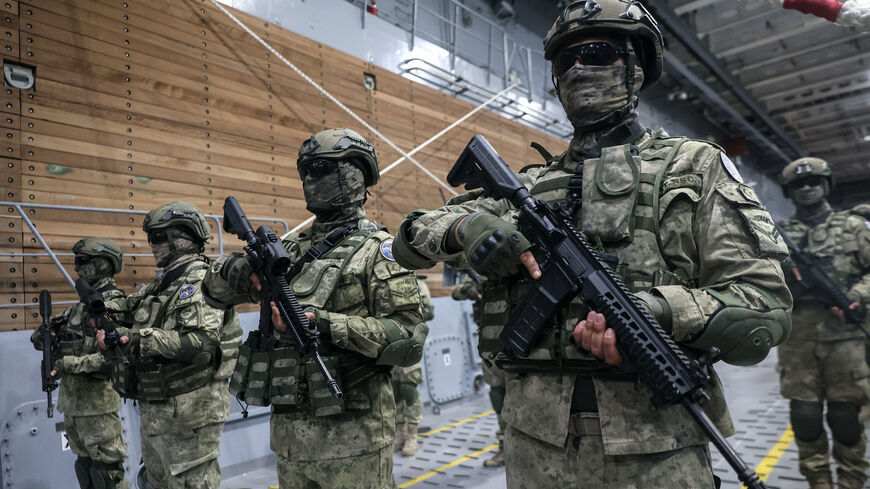
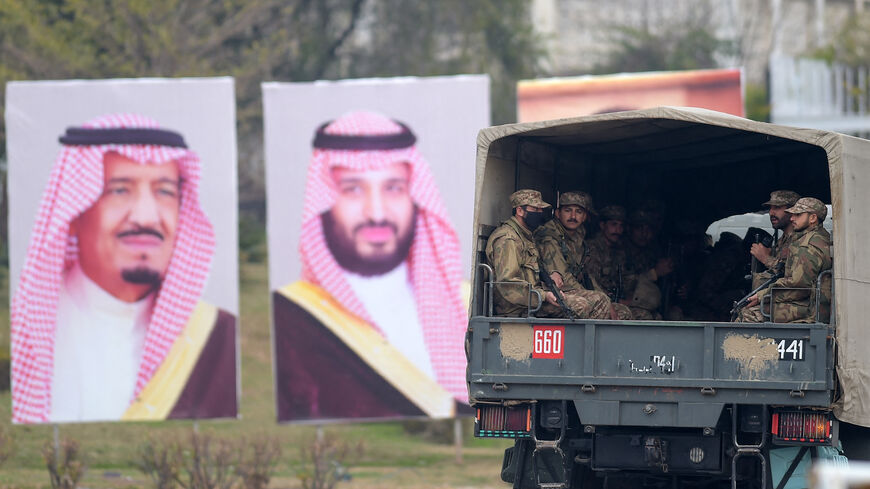
Pakistan and Turkey also agreed to “take the necessary measures to provide the agreed military forces and capabilities and ensure their rapid deployment in the kingdom,” the statement said. 

Any deployment would take place in accordance with the countries’ “national legislation,” according to the statement. The Turkish parliament is expected to ratify the Mecca agreement this month.

The statement did not specify what forces or military capabilities would be deployed, how many personnel would be involved or when the deployment would take place.

A test for the pact: Monday’s talks in Riyadh come as the Houthis’ ongoing attacks on Saudi Arabia have brought the Mecca pact under scrutiny. Under the agreement, the three countries pledged to consider an armed attack on one member as an attack on all.

Pakistani Foreign Minister Ishaq Dar described Monday’s talks as an “emergency meeting” focused on Houthi attacks on Saudi Arabia. 

On Saturday, the Iran-backed group announced that it had targeted an Aramco facility in Riyadh with ballistic missiles and drones. Aramco is Saudi Arabia’s state-owned oil giant. Reuters reported that a large plume of smoke and fire was seen near an Aramco facility, citing a witness. Fidan last month said Turkey could provide “technical support” to the Saudi military amid ongoing Houthi attacks. 

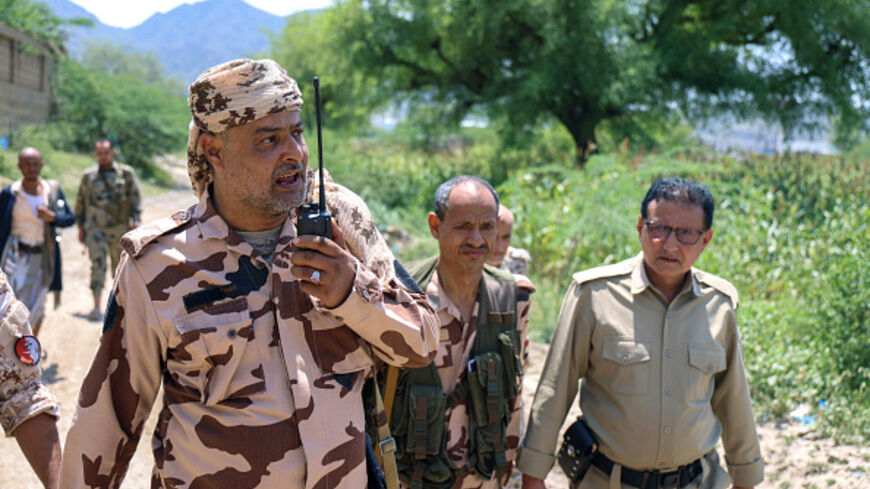
Clashes between the Houthis and Saudi-backed Yemeni forces have also intensified following the Yemeni government’s major offensive against the Iran-backed group on Sunday in a bid to recapture strategic positions near the Bab el Mandeb Strait.

Houthi advances near the strait last month have raised concerns over global energy supplies amid continuing disruption to shipping through the Strait of Hormuz during the Iran war. Roughly 8.1 million barrels per day of crude oil and petroleum products passed through the Bab el Mandeb in the second quarter of 2026, according to the US Energy Information Administration, making it one of the world’s key energy choke points.

Next steps: The three countries also agreed to appoint retired Pakistani general Nauman Mahmood as the first secretary-general of the cooperation mechanism formed under the defense pact, according to the statement. Mahmood will serve a three-year term.

The secretariat of the mechanism, which is expected to be based in Riyadh, is set to become operational in the coming weeks.

An AL-MONITOR subscriber gifted you this article. Gifted by an AL-MONITOR subscriber.

A gift worth sharing.

This one's on us. Subscribe for unlimited access to everything we publish, plus gift articles for your inner circle. As low as $2/week. This one's on us. Get unlimited access, plus gift articles for your inner circle, from $2 a week.

See Offers

Related Topics