Explainer

As Guterres exits, here are contenders for UNSG and their Middle East outlook

The next UN secretary-general will inherit a Middle East agenda dominated by crises.
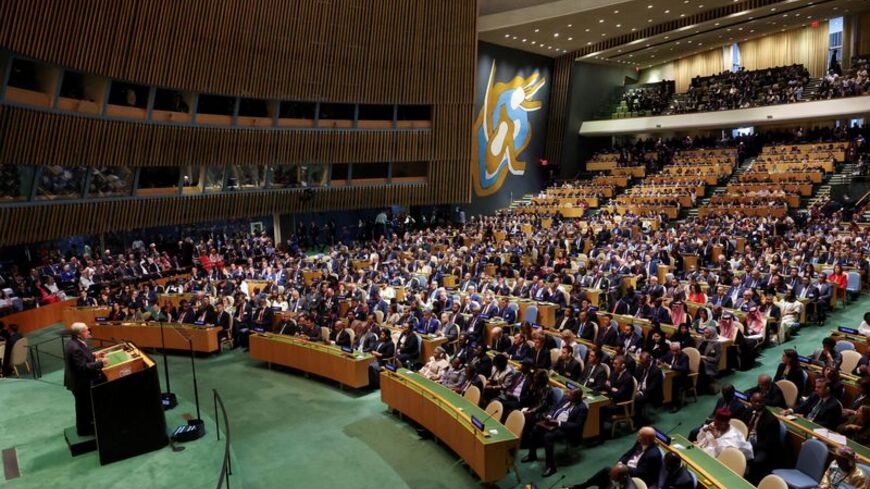
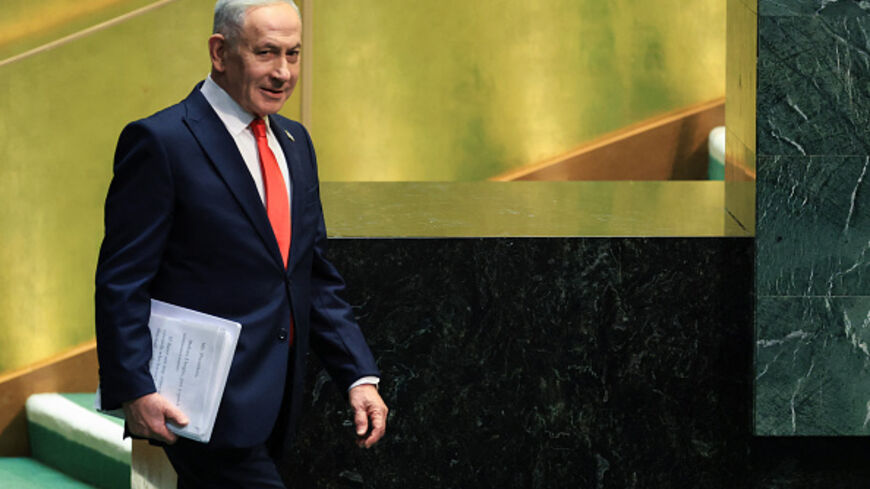
United Nations Secretary-General António Guterres speaks at the UNGA
United Nations Secretary-General António Guterres speaks during the 81st session of the UN General Assembly in New York City on Sept. 22, 2026. — Michael M. Santiago/Getty Images

The next United Nations secretary-general will inherit a Middle East agenda spanning Gaza, southern Lebanon and Iran’s nuclear program, but first, one of the seven candidates currently vying for the job must win the backing of the UN Security Council’s five permanent members.

Antonio Guterres, a former prime minister of Portugal who has led the UN since January 2017, will step down at the end of his second five-year term on Dec. 31. His tenure has been defined by a succession of major crises, including the COVID-19 pandemic, wars in Ukraine, Gaza, Iran and Sudan, as well as tensions among the major powers that have constrained the UN’s ability to act. 

Guterres, 77, has made climate change and international cooperation on artificial intelligence central to his agenda and has pushed for reforms to international institutions, including greater representation for African countries on the Security Council and a larger role for developing countries in global financial institutions. His tenure has drawn criticism over the UN’s limited ability to advance political solutions to major conflicts. Guterres has instead focused on the organization’s role in humanitarian response and civilian protection.

His successor will take over an organization facing financial pressures and questions about its political influence.

The process of choosing Guterres' successor has already moved into the Security Council’s informal straw-poll stage. The council will hold additional rounds before formally recommending a candidate to the 193-member General Assembly. The five permanent members of the Security Council — the United States, China, Russia, France and the United Kingdom, known as the P5 — must agree on the nominee, after which the General Assembly is expected to formally appoint the next secretary-general. The new secretary-general will take office Jan. 1, 2027.

The race could produce the UN’s first woman secretary-general. Four of the seven candidates are women, and an informal regional rotation has fueled expectations that the next secretary-general will come from Latin America or the Caribbean.

Grynspan

Costa Rica’s Rebeca Grynspan, 70, has emerged as the leading candidate. In the Security Council’s fourth straw poll on Tuesday, Grynspan received 10 “encourage” votes, according to Reuters. The informal ballots are conducted anonymously.

Grynspan’s lead does not make her the presumptive winner. The General Assembly formally appoints the secretary-general, but only after the Security Council recommends a candidate. Any of the five permanent members can block a nominee with a veto.

Grynspan, a former vice president of Costa Rica and current secretary-general of UN Trade and Development, has built her campaign around economic development and reform of the multilateral system. Her latest showing gives her the strongest position in the race so far. If elected, she would become the UN’s first woman secretary-general and its first Jewish leader. Grynspan’s parents were Jewish refugees who fled Europe during the Holocaust.

Latin American candidate for UN Secretary-General, Costa Rican Rebeca Grynspan, walks during the Regional Dialogue on the Future Leadership of the United Nations in Montevideo on August 3, 2026. (Photo by Santiago Mazzarovich/AFP via Getty Images)

Rodrigues-Birkett

Carolyn Rodrigues-Birkett, Guyana’s ambassador to the UN and a former foreign minister, has campaigned on strengthening multilateralism and reforming the organization to make it more effective. The 53-year-old has also been an active voice on the Palestinian issue at the UN, including raising concerns about the displacement of Palestinians in Gaza. She received eight “encourage” votes in Tuesday’s poll, according to Reuters.

Ambassador Carolyn Rodrigues-Birkett, Permanent Representative of Guyana to the UN and president of the Security Council for the month of June, speaks during a UN Security Council meeting on threats to international peace and security at the United Nations Headquarters on June 13, 2025 in New York City. (Photo by Michael M. Santiago/Getty Images)

Grossi

Rafael Grossi, 65, is Argentina’s candidate and has served as director-general of the International Atomic Energy Agency (IAEA) since 2019. He has spent much of his tenure at the center of international efforts to monitor Iran’s nuclear program. The status of Iran’s nuclear facilities and stockpiles remains a major issue for the IAEA amid the ongoing conflict between the US and Iran. Bloomberg reported Thursday that Iranian Foreign Minister Abbas Araghchi suggested in private talks with European and Middle Eastern diplomats that Tehran was willing to allow IAEA inspectors back into bombed nuclear facilities, where they are currently unable to conduct inspections, in exchange for sanctions relief.

Grossi also received eight “encourage” votes in Tuesday's straw poll, according to Reuters.

Iranian Foreign Minister Abbas Araqchi (R) and Director General of the International Atomic Energy Agency (IAEA) Rafael Grossi (L) sign a protocol concerning Nuclear Inspections on September 9, 2025 in Cairo, Egypt. Iran had halted inspections of its nuclear program since Israel and the United States bombed several facilities in June. (Photo by Sayed Hassan/Getty Images)
Iranian Foreign Minister Abbas Araqchi (R) and Director General of the International Atomic Energy Agency (IAEA) Rafael Grossi (L) sign a protocol concerning Nuclear Inspections on September 9, 2025 in Cairo, Egypt. (Photo by Sayed Hassan/Getty Images)

Espinosa

Maria Fernanda Espinosa, 62, Ecuador’s former foreign minister and former president of the General Assembly, has also been vocal on regional issues. In June, she said lasting peace in the Middle East requires security for Israel alongside Palestinian self-determination and statehood, as well as continued efforts to protect civilians. In a May interview with Spanish newspaper La Razon, she also called for a more active UN role in efforts to reopen the Strait of Hormuz. According to Pass Blue, she received three “encourage” votes in the Tuesday poll. 

Latin American candidates for UN Secretary-General, Ecuadorean Maria Fernanda Espinosa, speaks during the Regional Dialogue on the Future Leadership of the United Nations in Montevideo on August 3, 2026. (Photo by Santiago Mazzarovich/AFP via Getty Images)
Latin American candidate for UN Secretary-General, Ecuadorean Maria Fernanda Espinosa, speaks during the Regional Dialogue on the Future Leadership of the United Nations in Montevideo on August 3, 2026. (Photo by Santiago Mazzarovich / AFP via Getty Images)

The remaining candidates are Ivonne A-Baki, 75, an Ecuadorian diplomat who served as ambassador to Qatar; Olara Otunnu, 76, Uganda’s former foreign minister and former UN under-secretary-general; and Macky Sall, 64, Senegal’s former president. 

Grynspan’s current lead could allow her to consolidate support in the coming weeks, but a failure to build sufficient backing could reopen the race to new candidates.

What the P5 want

“The P5 will make significant demands of all the candidates,” said Richard Gowan, Program Director of Global Issues and Institutions at the International Crisis Group.

Russia, Gowan said, will want the next UN chief to be less critical of its conduct in Ukraine than Guterres has been. The US, meanwhile, will push for lower UN spending and closer relations with Israel. “The US will insist that whoever gets the top job rebuild relations with Israel and promise to cut UN costs,” Gowan said.

Under President Donald Trump, the US has sought to reduce its support for the UN. The administration has withdrawn from or cut funding to several UN bodies, including UNRWA, the UN agency that provides health care, education and other services to Palestinian refugees across the Middle East, as well as UNESCO, the World Health Organization and the UN Human Rights Council. The US was historically UNRWA’s largest donor but cut funding to the agency in January 2024 after Israel accused about a dozen UNRWA staff members of involvement in the Oct. 7, 2023, Hamas attack.

The P5 are also likely to bargain over senior UN positions as part of the negotiations, Gowan said, with Washington potentially seeking an American to run the organization’s management office and France and China interested in the top UN peacekeeping post.

A Middle East test

Whoever takes over will inherit an organization deeply involved in the Middle East but increasingly constrained by divisions among its most powerful members.

In Lebanon, the UN is approaching a major transition. The Security Council decided in 2025 to end the mandate of the UN Interim Force in Lebanon, or UNIFIL, a peacekeeping mission deployed along the Israel-Lebanon border, on Dec. 31, 2026, with the force beginning a yearlong drawdown and withdrawal afterward.

The UN also remains a central humanitarian actor in Gaza, despite restrictions on humanitarian access. The next secretary-general will also inherit diplomacy around Iran’s nuclear program and the humanitarian needs and diplomacy surrounding the war in Sudan, now in its fourth year.

“The UN has been at the center of diplomacy over the Middle East since the 1940s, but its political position in the region is precarious,” Gowan said. 

Gowan expects that, in his or her early months, the next secretary-general will have to engage with the next Israeli government to improve coordination on humanitarian issues and may also need to help craft a new security structure for southern Lebanon after the current UN peacekeeping force leaves.

In March, Guterres established a task force to develop mechanisms to address needs arising from the disruption of shipping through the Strait of Hormuz. Gowan said the next secretary-general could have a role in “backstopping some sort of new mechanism to monitor shipping through the Strait of Hormuz.”

An AL-MONITOR subscriber gifted you this article. Gifted by an AL-MONITOR subscriber.

A gift worth sharing.

This one's on us. Subscribe for unlimited access to everything we publish, plus gift articles for your inner circle. As low as $2/week. This one's on us. Get unlimited access, plus gift articles for your inner circle, from $2 a week.

See Offers

Related Topics