Analysis

Why Saudi Arabia's balancing act with US, Iran, Houthis risks collapse

Houthi rebels escalated their attacks on Tuesday, triggering alerts around the holy city of Mecca, Taif and the Red Sea port city of Jeddah.
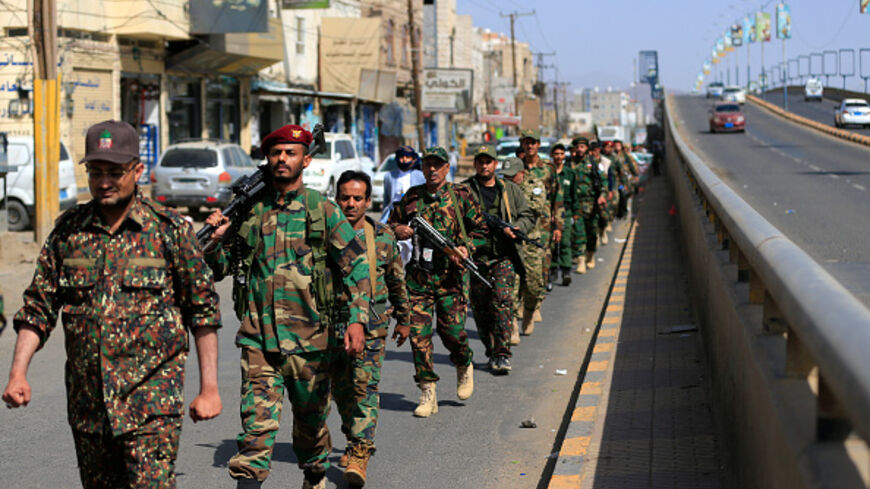
Fighters loyal to the Houthi authorities shout slogans during a rally to recruit more fighters, in Sanaa, Yemen, on Sept. 10, 2026.
Fighters loyal to the Houthi authorities shout slogans during a rally to recruit more fighters, in Sanaa, Yemen, on Sept. 10, 2026. — Mohammed HUWAIS / AFP via Getty Images

Saudi Arabia's policy of hedged deterrence — engaging diplomatically with its enemies while remaining aligned with its principal ally, the United States — is proving a dead end amid continued attacks by Iran, its Houthi allies in the Red Sea and its Shiite militant proxies in Iraq, officials based in the region say.

The limits of that policy burst into full view when Saudi Arabia withdrew at the last minute from a meeting scheduled for Monday between Iran, the Gulf Arab states and Iraq in Oman's coastal resort city of Salalah. The purpose was to discuss the contours of an Omani-brokered deal that would guarantee safe passage for vessels through the Strait of Hormuz, through which, prior to Iran's blockade of the waterway, the bulk of Gulf and Iraqi oil exports flowed.

Saudi Crown Prince Mohammed bin Salman had agreed to explore the deal during a Sept. 1 meeting in Jeddah with Omani Sultan Haitham bin Tariq, amid mounting setbacks and the realization that the United States would not intervene forcefully on the kingdom's behalf, officials speaking on condition of anonymity told Al-Monitor. Oman controls the southern portion of the Strait of Hormuz and has played a central role in mediating between Iran and the Gulf states over unhindered access to it.

The Saudis withdrew after rejecting Iranian assertions that the strait is not an international waterway, according to an unnamed senior Gulf official cited by The New York Times on Tuesday. Sources briefing Al-Monitor said pressure from the Trump administration played a significant role in the kingdom's decision. Brad Cooper, the top commander of American forces in the Middle East, met the Saudi crown prince on Monday and was likely already in the kingdom when the Saudis pulled the plug on the Salalah meeting, the officials said. A CENTCOM spokesperson did not respond to Al-Monitor's request for comment on Cooper’s movements.

Rejection and uncertainty

Cooper's trip followed President Donald Trump's reported refusal, in two separate phone calls on Sept. 10 with Saudi Arabia's de facto ruler, to join the war effort against the Houthis as the militants seized the key port of Mokha and Perim Island in the Bab el-Mandeb Strait. The militants continued their advance, seizing two more islands in the Red Sea on Monday. Meanwhile, Saudi Arabia confirmed that last week's drone attack that crippled the kingdom's vital East-West pipeline originated in Iraq. The pipeline, which runs to the Red Sea port of Yanbu, has emerged as a critical alternative for exporting Saudi crude via the Bab el-Mandeb Strait. The disruption has also forced Saudi Arabia to cut some crude shipments to Europe, Reuters reported Tuesday, prompting major customers to seek alternative supplies.

Trump opposes any deal by his Gulf allies that would legitimize Iran's control over the Hormuz Strait and weaken his own bargaining position with the Islamic Republic, especially ahead of the midterm elections in November — even as he declines to intervene directly against the Houthis, the sources said. "Imagine if the deal had gone through. Trump would have egg on his face as Iran claimed yet another strategic victory — first the memorandum of understanding, then tighter control over Hormuz," one official told Al-Monitor. The official was referring to the June 17 memorandum signed between Iran and the United States that outlined an interim framework to end the conflict and reopen the Strait of Hormuz. Trump eventually declared it dead, and the conflict is escalating anew with the Houthis now joining the fray.

Cooper's visit, coupled with the dispatch of American military advisers and pledges of continued intelligence support to the kingdom, is calculated to dissuade the Saudis and other Gulf partners from striking an independent agreement with Iran over Hormuz. But how long can this strategy last?

"We see the Saudis trying to preserve relations with both sides. So the fact that they did not attend the Salalah meeting this week doesn't say anything about next week or the week after," said Danny Citrinowicz, a senior researcher in the Iran and the Shiite Axis Program at the Institute for National Security Studies in Tel Aviv. "I think they want to give the Americans another chance, but it's not going to last forever," he told Al-Monitor.

Citrinowicz added the Saudis will eventually need to choose between pursuing a local solution or siding fully with the Americans, with further unforeseen consequences.

What makes matters worse for Riyadh is that even if some temporary arrangements were reached over Hormuz, there is no guarantee the Houthis would stop their attacks, "because it's all about lifting the Saudi blockade on Yemen," Citrinowicz said.

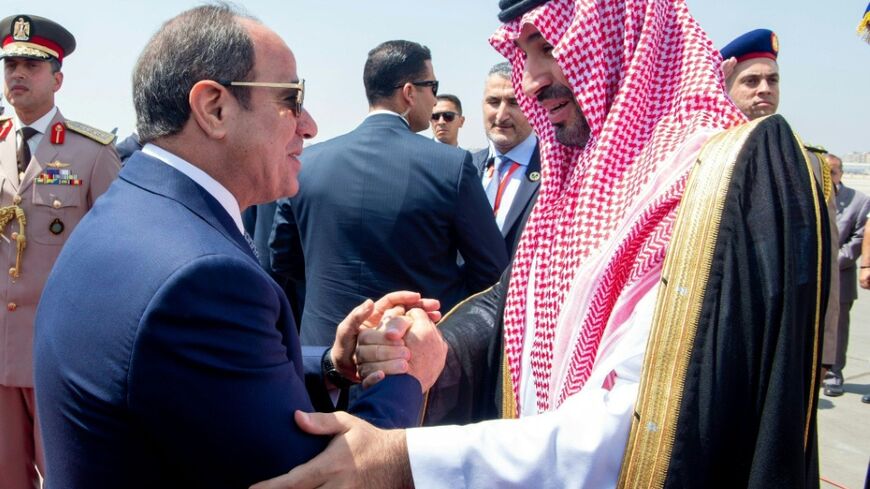
There are, indeed, few signs that the Houthis are deterred. Their attacks escalated on Tuesday, triggering alerts around the holy city of Mecca, Taif and the Red Sea port city of Jeddah, where many foreign consular missions are based. Saudi Arabia’s retaliatory attacks, despite its vastly superior military arsenal, have proven largely ineffective thus far. The fresh Houthi assaults came as the crown prince held talks in Cairo with Abdel Fattah al-Sisi, Egypt's president, to expand cooperation and discuss efforts to secure freedom of navigation in the Bab el-Mandeb Strait.

The Saudis cannot hedge forever. Even after the November midterms, the United States is unlikely to engage in the kind of military action — namely a ground invasion — that could tip the Iran conflict decisively against Tehran. The more likely scenario — a long war of economic attrition punctuated by occasional escalation — would hurt America's beleaguered Gulf allies even more. "Every single piece of critical Gulf infrastructure — the world's largest oil facility, the largest desalination plant, the largest of everything — is within [Iran and its allies'] range," one Gulf-based official noted.

Gulf disunity, Omani 'brilliance'

Another complication is the lack of unity among the Gulf states themselves. Bahrain was the first country to announce it would not attend the Salalah meeting, citing its lack of diplomatic ties with Iran.

"Getting all six GCC states to agree on a common position as consequential as this was never going to be easy," said Michael Ratney, the last American ambassador to serve in Saudi Arabia. Ratney disputes that American pressure played a central role in Riyadh's decision to cancel the Salalah meeting. "My sense is that Trump has been so keen to find a way to declare the war over that I don't think a deal negotiated by GCC states directly with Iran would bother him. He might even be relieved," Ratney said. "He can say, 'If it's OK for them, it's OK for me. After all, the United States doesn't use the Strait of Hormuz.'”

That may well be the conclusion all sides eventually draw, one that forces them to the negotiating table either separately or together. And any deal will by definition be a bad one, "because it won't be on America's or the Gulf states' preferred terms," Citrinowicz said. Starting the conflict was a mistake to begin with, he added. "If you make mistakes, you pay for them. You cannot lose the war and win the negotiations.”

Either way, one country stands to lose the least, having played its cards "brilliantly" so far, according to one senior official speaking on condition of anonymity. "Oman's economic survival lies with Iran, but it can't go against the United States and its other Gulf allies," the official said.

Hence, over the past six months, Oman has worked with the United States on a southern corridor in its own territorial waters in the Hormuz Strait that would remain open to all commercial shipping but accommodate only a fraction of prewar volumes. At the same time it has worked on an alternative plan with Iran, "waiting for the Gulf countries to come on board," the official said. Meanwhile, the higher the price of oil, the more amenable the United States is likely to be to a negotiated settlement. "The brilliance of Oman's strategy is not to push in any one direction but to sit tight in the middle and wait for everyone to move toward an equilibrium," the official concluded.

Related Topics

You're reading a free AL-MONITOR Original

Want more like this?

AL-MONITOR All-Access gives you unlimited access to all our journalism, the full Daily Briefing, exclusive interviews, premium newsletters, and live events — for less than $2/week.

See Offers