Turkey’s $18B Ponzi-like scandal likened to Madoff as arrests mount
Turkey detained 14 more people Tuesday as authorities widened a probe into one of the country's largest investment-fund scandals.
ANKARA — Turkey detained 14 additional people on Tuesday as authorities widened one of the country’s biggest market-manipulation probes, deepening a Ponzi-like scandal involving more than $18 billion in assets that has affected more than 350,000 investors.
What happened: Turkish Justice Minister Akin Gurlek said Tuesday that the suspects were detained in raids in Istanbul and the western province of Aydin, bringing in 14 of the 15 people sought in connection to alleged market manipulation.
Tuesday's raids came on top of 15 detentions made a day earlier in Istanbul as part of the same investigation.
"With the operation carried out today, legal proceedings have been launched against 60 suspects so far. Four suspects have been arrested; legal proceedings for 44 detained suspects are continuing; efforts continue to capture 12 suspects," Gurlek said on X.
Among those detained are executives and owners of financial firms at the center of the probe, including Muhammed Yariz, chairman of asset manager Pusula Portfoy, and Altunc Kumova, chairman of Destek Holding. Both have since been jailed pending trial.
Authorities have also detained Serdar Turhan, chairman of Pusula Holding, and senior Tera executives, including Tera Yatirim Holding Chairman Emre Tezmen and board member Alper Ozturk.
Background: Turkey’s investment fund scandal erupted last week after Pusula was unable to meet some investor withdrawal requests, while Tera later reported payment defaults in two of its funds as redemption demands surged.
Regulators subsequently ordered several associated funds into liquidation as investors rushed to pull their money.
From late 2025 into 2026, some funds bought large amounts of shares that were not widely traded by the public. As the prices of those shares soared, the reported value of the funds holding them also jumped, making their portfolios appear more valuable than they otherwise would have been.
High returns, in turn, attracted more investors and fresh money, creating what economists and market analysts have described as a Ponzi-like dynamic and drawing comparisons with Bernie Madoff. The Wall Street financier orchestrated the largest known Ponzi scheme in US history, in which investors lost about $17.5 billion in principal, even though fictitious account statements reflected roughly $64 billion in supposed holdings.
One of the most striking examples of the market distortions was Destek Finans Faktoring, a relatively little-known company that provides businesses with short-term financing against their receivables. Its shares had risen more than 300% this year, at one point making it one of Turkey’s largest listed companies by market value.
Before last week’s selloff, Destek was valued at roughly $14.2 billion — not far below TUPRAS, Turkey’s largest oil refiner, which had a market capitalization of around $16.4 billion.
Authorities have since moved to contain the fallout, ordering 131 investment funds into liquidation, meaning their assets will be sold and the proceeds returned to investors in proportion to their holdings.
Trading in the affected funds has been suspended and criminal investigations opened into alleged market manipulation. Investors could recover some or all of their money through the liquidation process, but the final amounts will depend on a series of factors including the prices at which the funds' underlying assets can be sold.
Why it matters: The 131 funds ordered into liquidation covered more than $18 billion in assets and about 353,000 investors, according to Reuters.
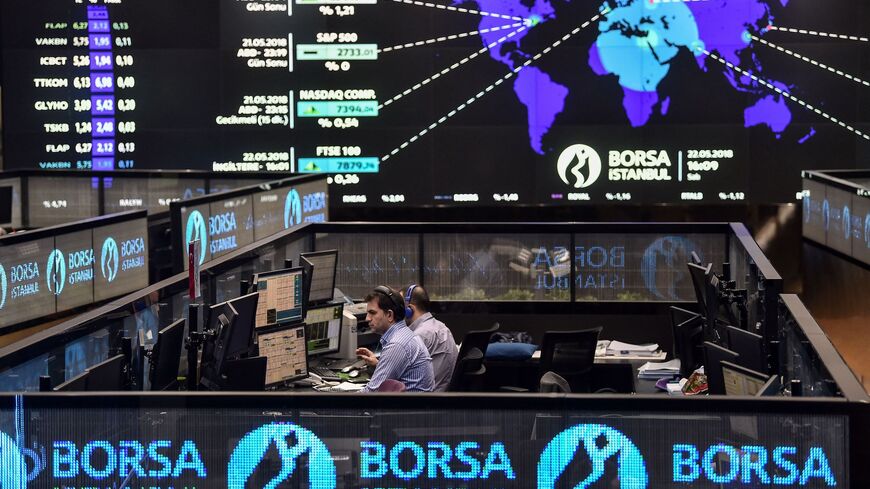
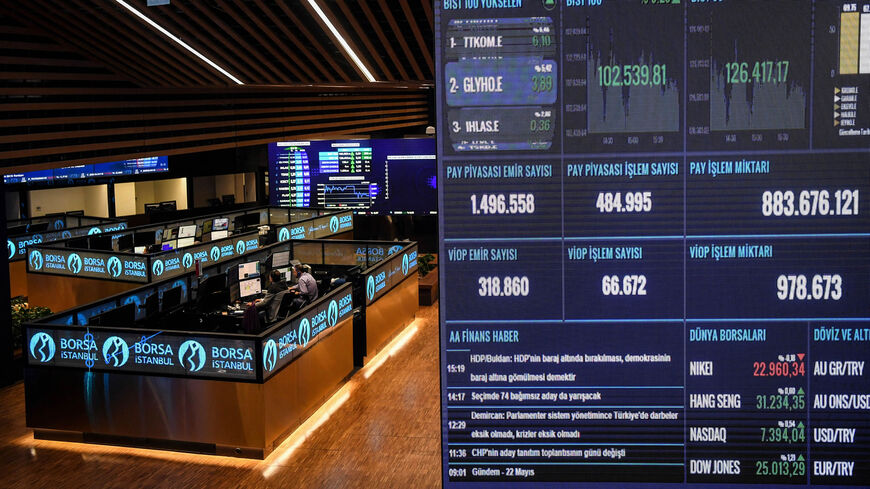
Following the crash, the BIST-100, the benchmark index of Istanbul stock exchange’s 100 largest companies, fell more than 5% last Wednesday as the crisis intensified, triggering a market-wide circuit breaker. The index rebounded 2.6% the following day after authorities announced measures to support the market.
Investors also withdrew roughly $1 billion from local investment funds in a single day last Wednesday, intensifying a liquidity squeeze.
Know more: Warnings had been building for months. In June, global index provider MSCI said international investors had raised concerns about possible coordinated trading involving fund holdings closely affiliated with some smaller listed companies. MSCI said such activity could artificially inflate estimates of a stock’s free float, making it harder to determine how much was actually available to trade and potentially distorting price formation and index calculations.
Late last month, government regulators introduced broad measures aimed at limiting market manipulation, restricting unsecured transactions between related parties and increasing transparency.
Despite criticism that authorities had acted too late, Finance Minister Mehmet Simsek did not directly address the timing of the intervention. In remarks on Sept, 18, two days after the sharp selloff, he sought to downplay the turmoil, saying the affected funds represented only a small portion of the market and did not pose a systemic risk.
On Tuesday, Borsa Istanbul announced its biggest BIST-100 reshuffle in six years, removing more than a quarter of the index's companies, including Destek Finans.
An AL-MONITOR subscriber gifted you this article. Gifted by an AL-MONITOR subscriber.
A gift worth sharing.
This one's on us. Subscribe for unlimited access to everything we publish, plus gift articles for your inner circle. As low as $2/week. This one's on us. Get unlimited access, plus gift articles for your inner circle, from $2 a week.
See OffersAlready a subscriber? Sign in