Lebanon seeks Turkey’s help to join Syria-Saudi rail link: What to know
Beirut is seeking Ankara’s support to link its ports to a railway project aiming to link Turkey to the Gulf, through Syria and Jordan.

BEIRUT/ANKARA — Lebanese Transport Minister Fayez Rasamny met Turkey’s ambassador to Beirut this week as Lebanon seeks to link its ports to an emerging regional rail network stretching through Syria toward Turkey and Saudi Arabia.
Rasamny and Turkish Ambassador Murat Lutem discussed expanding cooperation in transport, public works and infrastructure during their meeting on Monday, according to the Lebanese transport ministry.
The meeting comes as the Lebanese government is pushing to join a Turkish-led railway network project aimed at connecting Turkey to Saudi Arabia through Syria and Jordan.
Background: The project aims to revive and restore parts of the Ottoman-era Hejaz Railway, which linked Damascus to Medina, Saudi Arabia.
The push has gained further momentum as the Iran war disrupted shipping through the Strait of Hormuz, increasing interest in alternative regional trade routes. In June, Turkey completed preparations to reopen a rail crossing with Syria, linking southeastern Turkey to the Aleppo rail network after restoring 350 kilometers (217 miles) of track along the border. Later the same month, Turkey and Saudi Arabia also signed memoranda of understanding aimed at linking the rail network to the Gulf.
Lebanon, meanwhile, has been seeking to join the emerging network by restoring a railway linking the northern port city of Tripoli to Homs in western Syria, as well as reviving the long-defunct Beirut-Damascus railway to eventually connect its Mediterranean ports with Syria and broader regional trade routes.
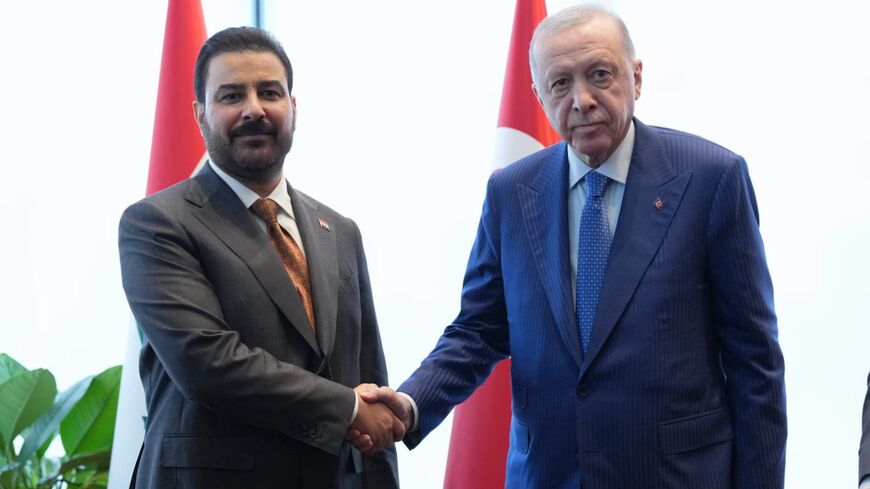
Why it matters: Lebanese officials have been raising the issue with Turkish officials in recent months. Most recently, Turkish President Recep Tayyip Erdogan and Lebanese Prime Minister Nawaf Salam discussed railway links between Turkey, Syria and Lebanon in New York last Tuesday on the sidelines of the UN General Assembly, according to Salam’s office.
Lebanon is aiming to use the revived rail link to boost its role in regional trade and better connect its ports to markets in Turkey, Syria and the Gulf.
Earlier this month, Rasamny said the emerging regional transport network represented an opportunity to “enhance Lebanon’s commercial role” in the region, urging Ankara to help advance the Lebanese section of the project.
“We are counting on Ankara to help us with this route,” he told Turkey’s state-run Anadolu Agency.
Know more: Turkey has yet to publicly endorse Lebanon’s proposed link to the network. Ankara-Beirut tensions rose last year over a maritime boundary agreement signed by Lebanon and Cyprus in November 2025.
The Turkish Defense Ministry criticized the agreement at the time, saying it violated the rights of Turkish Cypriots on the ethnically divided island of Cyprus. Yet the two countries have stepped up contacts since July when Salam paid a working visit to Ankara, meeting with Erdogan and Turkish Foreign Minister Hakan Fidan. Following Salam, Lebanese President Joseph Aoun paid his first official visit to Turkey later the same month.
An AL-MONITOR subscriber gifted you this article. Gifted by an AL-MONITOR subscriber.
A gift worth sharing.
This one's on us. Subscribe for unlimited access to everything we publish, plus gift articles for your inner circle. As low as $2/week. This one's on us. Get unlimited access, plus gift articles for your inner circle, from $2 a week.
See OffersAlready a subscriber? Sign in