How Netanyahu is leveraging Houthi threat in secret Saudi normalization push
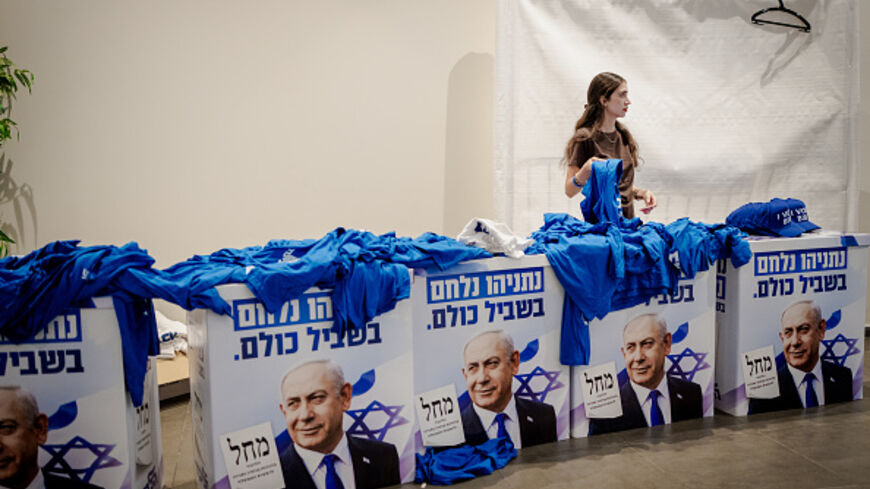
Israeli Prime Minister Benjamin Netanyahu is trying to capitalize on Riyadh's need for intelligence assistance to make normalization headway ahead of the October elections.

TEL AVIV — Prime Minister Benjamin Netanyahu is busy with secret, last-ditch efforts to normalize ties with Saudi Arabia, two senior Israeli political sources told Al-Monitor, hoping the achievement could help his reelection prospects.
Saudi distress
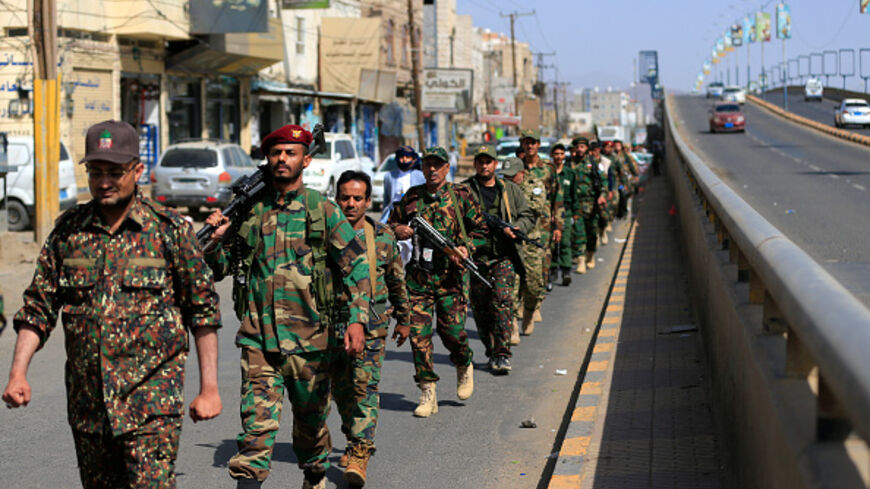
Netanyahu is hoping to capitalize on Riyadh's recent military losses to the Iran-backed Houthi rebels and present Israel as the kingdom’s only reliable regional partner, said the Israeli political sources. They added that Netanyahu has not given up on an agreement with Riyadh, although Saudi Arabia has repeatedly made recognition conditional on Israeli progress toward establishing a Palestinian state.
The sources stated that Israel messaged the Saudis indirectly that it was willing to assist them with intelligence, potentially via military consultations, on how to address the Houthi threat. They believe that Netanyahu is trying to indirectly pressure the Saudis via Washington to advance toward normalization in exchange for Israeli intelligence assistance. Netanyahu could present any such progress to his voters as a personal diplomatic achievement, which the Saudis would not want.
An associate of Netanyahu told Al-Monitor on condition of anonymity that Netanyahu is capable of reaching an agreement with the Saudis. He said, “He knows that such an agreement could win him the elections, and he is working on it.”
Elections in focus
Netanyahu’s associate said that one cannot discount the genuine and growing concerns within the Israeli security establishment over the Houthi offensive against Saudi Arabia. As Al-Monitor reported on Sept. 16, Israeli defense officials were astonished by the scope and pace of the Houthi offensive, and especially the apparent helplessness of the Saudis and the pro-Saudi regime forces in Yemen.
The Houthis "caught them totally unprepared,” a senior Israeli security source told Al-Monitor, also speaking on condition of anonymity. “It’s very one-sided, and this is very worrying. The consequences are dire, not only for Saudi Arabia, but for the entire Middle East.”
The senior Israeli security source said that Saudi Crown Prince Mohammed bin Salman "knows our capabilities, knows what we can do and has also seen what we did to Hezbollah and Iran over the past three years. He sees the Americans pulling back and staying out of the struggle; he sees that the partnership he signed with Pakistan and Turkey is not worth the paper it's printed on,” The source added that Netanyahu hopes these developments will show the Saudis that Israel is the only force in the region they can rely on, said his associate.
Oct. 7 disruption
Riyadh had always stressed that progress must be made toward Palestinian statehood before it normalizes ties with Israel. There was some progress on this front in the two years before the Oct. 7, 2023, Hamas assault. Diplomatic sources had told Al-Monitor at the time that Saudi Arabia might accept a declaration by the Israeli government in favor of advancing talks with the Palestinians. As a goodwill gesture, Riyadh agreed in July 2022 to open its airspace to civilian flights to and from Israel.
The US-mediated progress toward Saudi recognition of Israel was disrupted by the Oct. 7 Hamas attack and the ensuing three-year war in Gaza. A May 2025 Wall Street Journal report revealed that Hamas documents retrieved by the Israeli military showed that part of the motivation for carrying out the attack was to stop Israel and Saudi Arabia from normalizing ties. That effort has been successful, and Riyadh has insisted over the past three years that it won't normalize ties with Israel without a credible, binding path to a two-state solution for Palestinians.
A report by Israel’s public broadcaster Kan on Thursday cited an unnamed Saudi source who dismissed the idea that the path to Israel-Saudi normalization would advance if Israel were to provide the kingdom with military or intelligence assistance.
Israel and Saudi Arabia maintain long-standing security and intelligence back-channel contacts. After Joe Biden was elected US president in 2020, Netanyahu flew with then-Mossad chief Yossi Cohen to the Saudi port city of Neom, where he met with Crown Prince Mohammed, the Wall Street Journal reported. The Saudis were outraged by the leaked news, according to the Israeli media outlet Kul al-Arab, but the unofficial contacts have continued.
An Israeli intelligence official explained to Al-Monitor that this relationship is due in no small part to Israel’s intelligence capabilities, as demonstrated by its long-range aerial attacks on the Houthis.
“This is exactly what Netanyahu is counting on,” he said, speaking on condition of anonymity. “He knows that the Saudis lack intelligence and operational capabilities, but they have money, which can buy solutions to their problems.”
Need for assistance
One of Al-Monitor's diplomatic sources said, “At the moment, Saudi Arabia has no one to help it. That is why Mohammed bin Salman even turned to China for help. It doesn't make sense for the Israeli air force to go out and attack the Houthis on behalf of Saudi Arabia, but it might make sense for Israeli experts to instruct their Saudi counterparts on how to be more effective in this struggle. It's not much, but it's much better than what the Saudis have so far.”
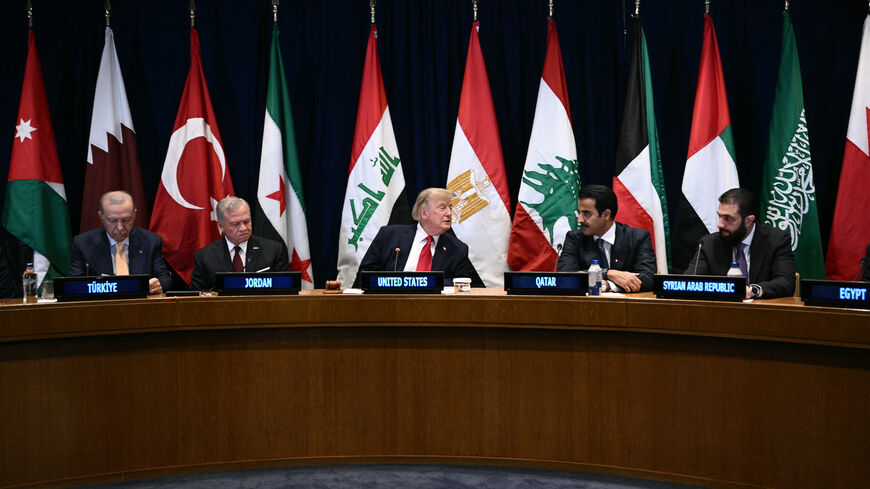
Axios reported Sept. 15 that military chiefs from Israel, the US, Saudi Arabia, the United Arab Emirates, Bahrain, Kuwait, Qatar, Jordan and Egypt held a meeting in Germany the week before to discuss recent developments in Iran and Yemen. According to the report, Israel and Saudi Arabia are engaged in direct dialogue facilitated by US Central Command regarding Israeli intelligence assistance to Riyadh against the Houthis. A regional diplomat told i24NEWS Thursday that Israel could potentially supply Saudi Arabia with intelligence on Houthi military positions, weapons infrastructure and operational plans.
The Israeli security source said that past Israeli-Saudi contacts have been conducted by the heads of Israel’s Mossad spy agency. Such channels remain open, as does mediation by CENTCOM, which is closely tied to both the Saudis and the Israelis.
“The question is how desperate Mohammed bin Salman is now after the collapse of the front against the Houthis and the barrage of drones and missiles directed at his country almost daily,” argued Netanyahu's associate. “This could be enough to make him forget his preconditions regarding normalization with Israel and initiate some kind of signature or at least a public meeting with Netanyahu,” he added.
An AL-MONITOR subscriber gifted you this article.
A gift worth passing on.
This one's on us. Subscribe for unlimited access to everything we publish, plus gift articles for your inner circle. As low as $2/week.
See OffersAlready a subscriber? Sign in