Turkey bets on US deconfliction as Israel widens Syria red lines
As Washington pushes a new deconfliction mechanism between Turkey and Israel, the Jewish state shows little incentive to accept tighter constraints on its freedom of action in Syria, experts say.



ANKARA/PARIS — While Ankara has strong incentives to make renewed US efforts to establish a deconfliction mechanism with Israel in Syria succeed, deep mutual mistrust and Israel’s expanding red lines in the war-ravaged country could complicate efforts to reach a durable arrangement.
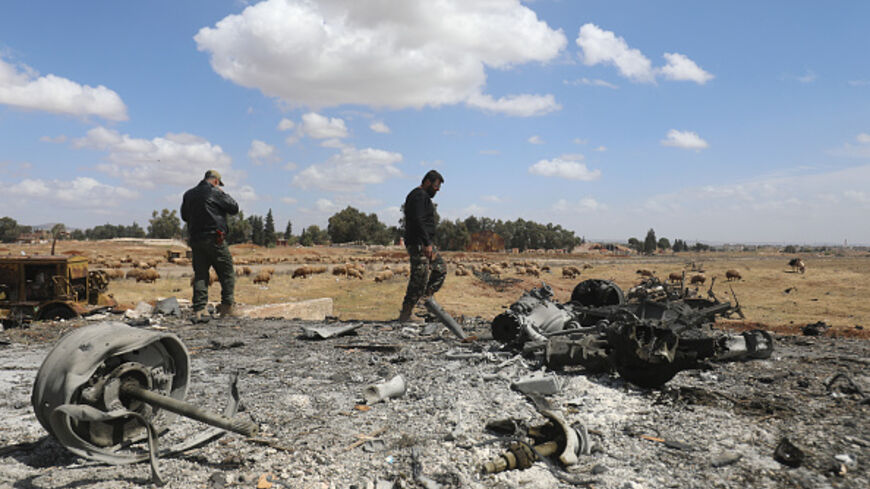
Tensions between Turkey and Israel have risen once again this week after Israeli strikes targeted the Abu al-Duhur military airbase in northwestern Syria, roughly 70 kilometers (43 miles) east of the Turkish border, bringing the two countries’ increasing rivalry closer to Turkey’s frontier than at any point since the fall of Bashar al-Assad.
Both the Turkish and the Syrian foreign ministries strongly condemned the attack as an "unjustified provocation" and a violation of Syrian sovereignty. Israeli Prime Minister Benjamin Netanyahu, in turn, said Syria had been on the verge of violating what Israel described as an agreed security "status quo."
He said Israel had warned Turkey against establishing a presence at an airport near Aleppo, but concluded Ankara had ignored the message, prompting Israel to act militarily. The comment was an apparent reference to a broader series of contacts between Israel and Syria over Turkey’s possible military role, including an Aug. 14 phone call between Mossad chief Roman Gofman and Syrian Foreign Minister Asaad al-Shaibani, Reuters reported on Wednesday.
An Israeli security source told Al-Monitor that the strike was based on specific intelligence, suggesting Damascus had authorized a Turkish deployment in northern Syria, potentially including radar systems.
Ankara, meanwhile, rejected the Israeli account on the potential deployment, with the Turkish Presidency describing Israel's assertions about Turkey's military posture as "unsubstantiated claims." Upping the ante on Friday, Turkish Justice Minister Akin Gurlek announced that Ankara had asked Interpol to detain Israeli Prime Minister Benjamin Netanyahu over Israel’s interception of the Gaza-bound Global Sumud Flotilla in September 2025.
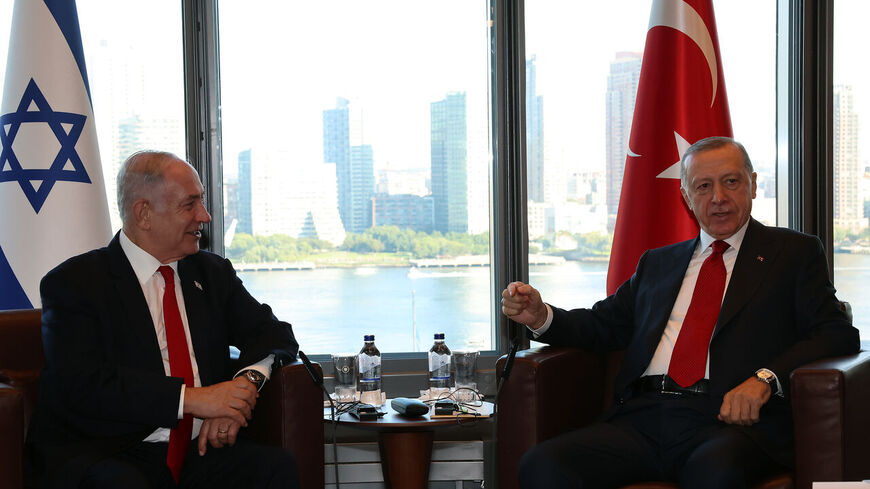
The tensions prompted Washington to ramp up efforts to establish a new deconfliction mechanism among Turkey, Syria and Israel, with US Ambassador to Turkey Tom Barrack, who also serves as Iraq and Syria envoy, vowing to step up Washington's efforts to prevent further escalation.
Israel’s new red lights
According to Carmit Valensi, a senior researcher at Israel’s Institute for National Security Studies, the Israeli strikes on Abu al-Duhur reflect Israel’s broadening red lines in Syria toward Turkey.
“When it comes to Turkey and Syria, Israel has drawn two red lines — a geographical one and a strategic one,” Valensi told Al-Monitor.
Geographically, Israel does not want to see a Turkish presence in southern Syria. Strategically, Israel also does not want to see further Turkish military buildup or the deployment of advanced military technology across Syria.
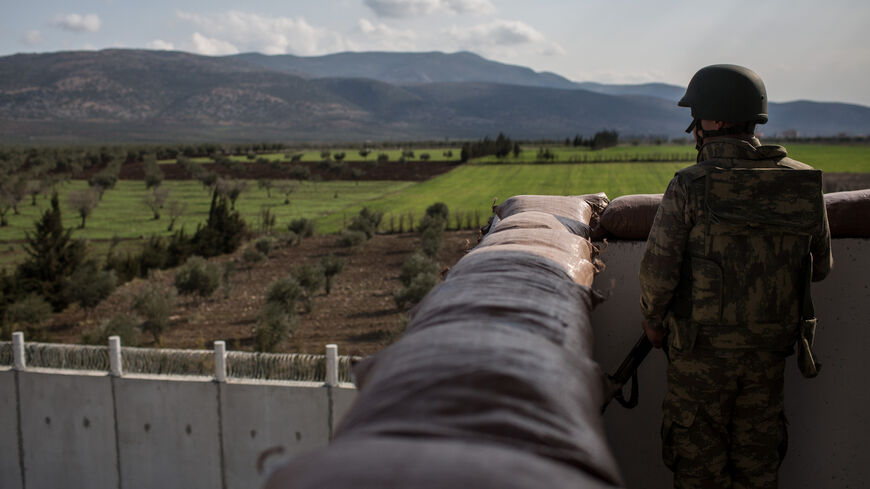
Turkey maintains more than 20,000 troops across northern Syria and has said it has no immediate plans to withdraw them. Ankara has also expanded training and support for Syria’s military under the new government in Damascus in a bid to maintain its influence in the country.
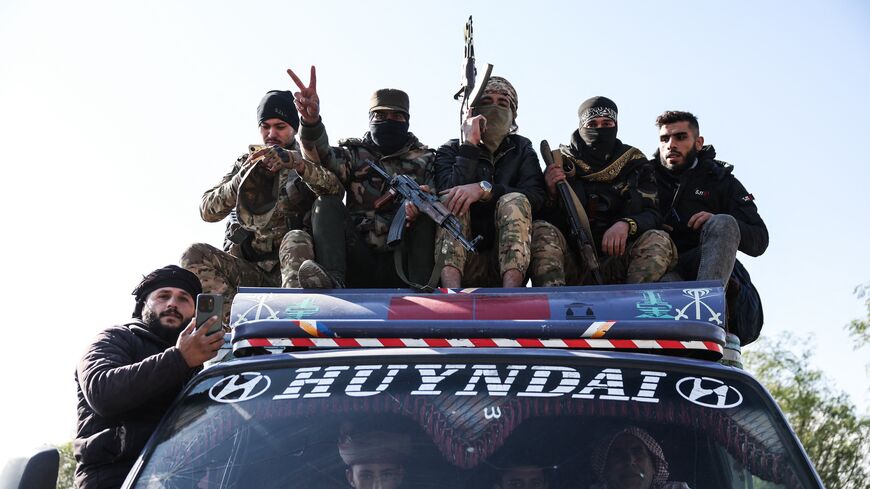
The Turkish military presence in Syria has become a more sensitive issue for Israel, as the two countries’ ties have deteriorated over the Gaza war. Israel remains wary of Syrian President Ahmed al-Sharaa, the former Islamist rebel leader whose forces toppled Bashar al-Assad, and views Ankara’s close cooperation with Damascus as a potential security threat along its northern frontier.
According to Eytan Gilboa, a professor of international relations at Reichman University, “Israel could live with” a limited Turkish military presence in northern Syria.
“But establishing Turkish military infrastructure is another matter entirely. Israel cannot accept that,” he told Al-Monitor.
Israel is also concerned that a Turkish military presence, particularly the deployment of Turkish radar and air defense systems, could restrict the Israeli Air Force’s freedom of action over Syria, as such systems could track Israeli aircraft, complicate flight routes and potentially constrain Israel’s ability to use Syrian airspace as part of operations against Iran.
The Jewish state's concerns have also grown against the backdrop of US President Donald Trump’s increasingly close ties with both Turkish President Recep Tayyip Erdogan and Syrian leader Ahmed al-Sharaa.
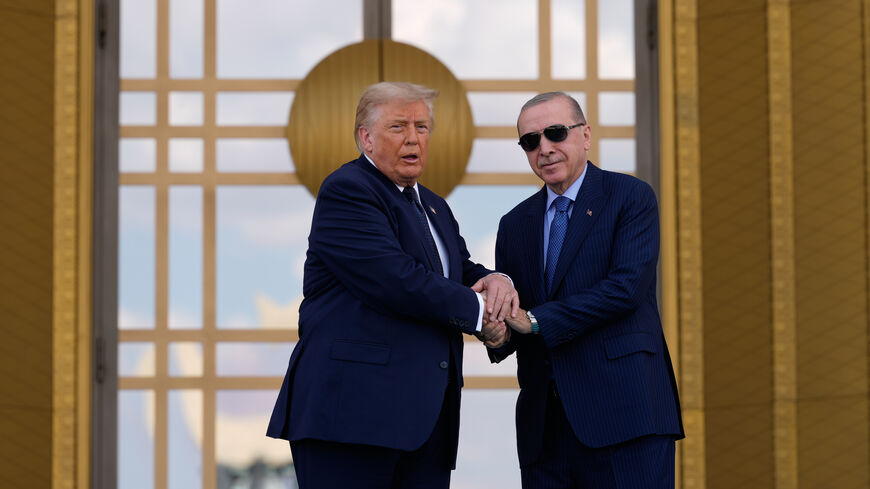
Trump has repeatedly praised Erdogan, saying during his July visit to Ankara that the US relationship with Turkey was “better probably than it’s ever been.” Washington has also embraced Sharaa despite longstanding Israeli suspicions of the Syrian leader.
Gilboa argued that Trump’s relations with the two leaders may now be closer than those he maintains with Prime Minister Benjamin Netanyahu.
Behind Turkey’s restraint
Turkey, meanwhile, has closely linked the strikes to Netanyahu’s election-year political troubles. “Netanyahu is seeking a provocation ahead of the elections. In this way, he wants to deceive both the Israeli public and the international community,” a Turkish official told Al-Monitor.
Netanyahu heads into Israel’s Oct. 27 election under pressure from weak poll numbers and lingering public anger over the failures surrounding Hamas’ Oct. 7, 2023 attack. A recent Channel 12 poll put Likud on 22 seats and Netanyahu’s bloc on just 50, well short of the 61 needed for a majority, adding pressure on him to emphasize his security credentials and project strength against regional rivals.
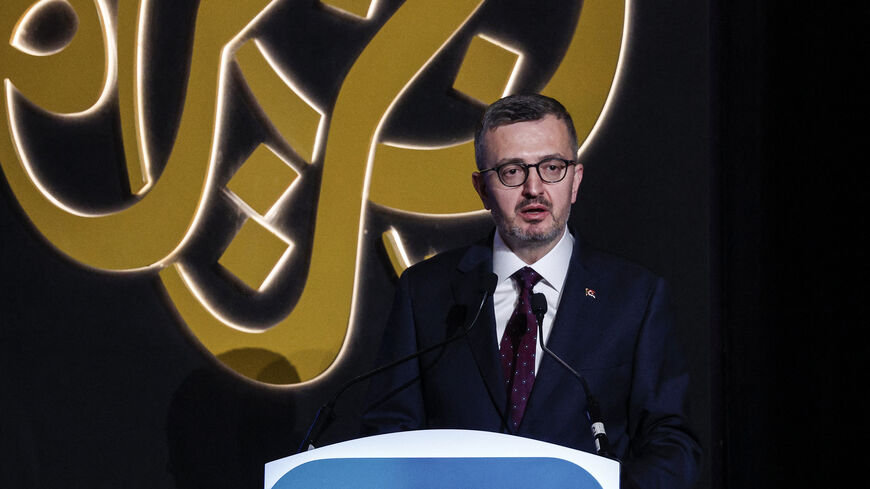
Despite the sharp rhetoric toward Israel, Ankara has so far adopted a restrained position toward the Abu al-Duhur strikes. Burhanettin Duran, head of the Turkish Presidency’s Communications Directorate, said Thursday that Turkey would not “fall for the games of” the Israeli government.
Gonul Tol, founding director of the Middle East Institute’s Turkey program, said Ankara’s response reflected a calculation that direct confrontation with Israel would carry significant political and economic risks.
“No matter how harsh Turkey’s rhetoric is, it is acting with restraint,” Tol told Al-Monitor. “Turkey needs to remain calm here for the sake of its own interests.”
Tol said Ankara would also be wary of how US President Donald Trump might respond to a direct Turkish-Israeli confrontation. More broadly, she added, another conflict in Syria would run counter to Turkey’s efforts to attract foreign investment and encourage reconstruction in the country.
“Starting a battle with Israel, especially in Syria, is not going to help,” Tol said. “That means Turkey’s threshold here has to be high, and I think it will remain to be high.”
Prospects for US deconfliction efforts
Meanwhile, Israel’s concerns over Turkey’s expanding military footprint in Syria may carry some weight, particularly given the lack of clarity over what had previously been agreed between Israel and Syria. It remains unclear whether the Syrian side pledged to keep Turkey’s military footprint in check during talks between Damascus and the Jewish state. Syria and Israel have spent much of the past year in US-mediated talks over a security arrangement, while Israeli and Syrian officials were also in direct contact over Turkey’s military role. However, talks stalled amid irreconcilable demands on both sides and against the backdrop of the Iran war, which required Israel’s full attention.
There could be merit to both Ankara’s accusations and Israel’s security concerns, according to Aron Lund, a senior analyst at the Swedish Defense Research Agency.
“But I’d wager this is at least to some degree tied to the Israeli elections,” he told Al-Monitor.
According to Lund, Barrack’s statements following the strikes also “indicate that Israel is seen as chiefly responsible for the escalation.”
The US envoy described the strikes as an “unnecessary escalation.” He later told Reuters on Wednesday that Washington was “actively working to establish” a new deconfliction mechanism between the two countries.
Another factor likely to complicate deconfliction efforts is Israeli mistrust of Barrack. The US envoy is widely perceived in Israel as a biased interlocutor rather than an impartial American mediator.
“Barrack’s condemnation of Israel was not neutral,” said Gilboa. “Barrack serves as the American mediator between Israel and Syria, but from the Israeli perspective, instead of representing American interests, he represents the interests of Turkey, Syria and Lebanon,” he argued.
Turkish officials, in turn, appear increasingly confident that the wider international environment favors restraint rather than further Israeli escalation.
“The international community now wants peace and stability in the region,” the Turkish official said. “Netanyahu’s aggressive policies, which are isolating Israel, have now begun to harm Israel and the Israeli people as well.”
Yet the failure of the Azerbaijan-mediated deconfliction mechanism established between Turkey and Israel in April 2025 to prevent the Abu al-Duhur strikes has underscored the limits of the existing channel and the potential need for more direct US involvement to define and enforce the two sides’ red lines in Syria.
“Ultimately, what Syrian leaders must be hoping for is a US endorsement of Turkey’s presence coupled with some hard, American-imposed red lines for Israel in Syria,” Lund said. “If a deconfliction mechanism is to work, we’d probably need to see more explicit, hands-on US involvement. I don’t think this is anywhere near settled yet."
Turkey has more at stake in avoiding an escalation in Syria, where it maintains troops, close ties with Damascus and a growing interest in reconstruction and economic stability. Israel, by contrast, has repeatedly shown a willingness to use force to uphold what it considers its security red lines.
Neither Israel nor Turkey wants a confrontation, according to Gilboa, “but given their conflicting interests, the risk of a conflict erupting does exist.”
Meanwhile, the confrontation also highlights Damascus’ limited ability to control military activity on its own territory. “For Syria, this seems worrying,” Lund said. “The country is being openly treated as an arena for the struggles of others, a place you can carve up into spheres of influence. Its inability to control its own fate is on full display.”