Trump weighs releasing billions to Iran after blasting past payments
As mediators scramble to broker a peace deal, a key hurdle remains the release of Iranian assets frozen under US sanctions.


You're reading an excerpt from AL-MONITOR Washington. To read the full newsletter, sign up here.
WASHINGTON — Efforts to end the war with Iran have stalled in part over its demand that the United States release billions in frozen overseas assets, leaving President Donald Trump weighing a move he once sharply criticized.
“The dumbest deal perhaps I’ve ever seen in the history of deal-making,” is how Trump once referred to President Barack Obama’s 2016 decision to authorize a $1.7 billion payment to Iran. Officially, the release of funds settled a decades-old debt over undelivered military equipment to Iran but was widely understood as a concession to secure the release of four detained Americans.
The $1.7 billion, the first $400 million of which was loaded onto wooden pallets and flown to Tehran, sparked an uproar among Republicans. Before he became Trump’s top diplomat, Sen. Marco Rubio condemned Obama's "illicit ransom payment” to the world’s leading sponsor of terror.
The funds now under discussion, however, dwarf that amount.
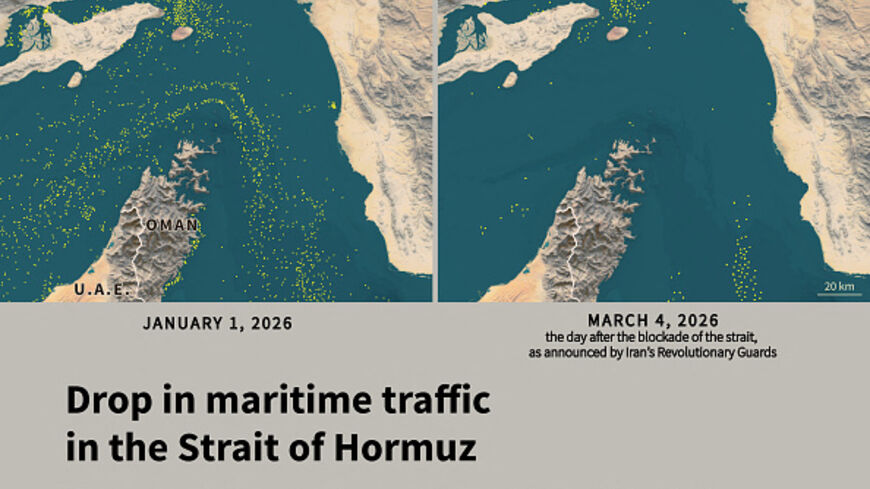
For weeks, Iranian and US negotiators have been discussing an interim deal to formally extend their ceasefire by 60 days, reopen the Strait of Hormuz and launch a new round of nuclear negotiations. Trump has repeatedly claimed a deal is close but this week’s tit-for-tat strikes have raised fears the two sides could return to full-scale war.
As part of that deal, Iranian state media and US sources familiar with the talks say Tehran is seeking the immediate release of $12 billion of its frozen assets upon signing the memorandum of understanding, with an additional $12 billion tied to implementation benchmarks as the strait is reopened and nuclear talks get underway.
Mohsen Rezaei, the senior military adviser to Iran's supreme leader, described the release of the funds as a “trust-building” gesture from the United States.
“Twenty-four billion dollars is not much for America if he wants to reach an agreement with Iran,” Rezaei told CNN in a June 5 interview. “This is our own, not America’s money.”
An Iranian official told Al-Monitor on condition of anonymity that the $24 billion is “only a part of Iran’s frozen funds, so Iran expects some other confiscated assets to be freed as well.”
Iran is estimated to have somewhere between $100 billion and $120 billion held in accounts across countries including India, Qatar, Iraq and Japan. The funds are considered frozen because the risk of US sanctions deters foreign banks from facilitating transactions that would benefit Iran. The bulk of these Iranian oil revenues and other funds accumulated after Trump withdrew from the nuclear deal in 2018 and reimposed sweeping sanctions.
Negotiators from Qatar, where some of the funds are held, traveled to Tehran on Wednesday to bridge the remaining gaps on the frozen funds and other sticking points.
Iran's trapped cash
Decades of Western sanctions have crippled trade, isolated Iran from global markets and pushed the rial to historic lows. The war has further battered Iran’s economy, cutting off billions in lost oil revenue and destroying critical energy and industrial infrastructure.
“Cash is what they need desperately right now to survive economically,” said Miad Maleki, a former Treasury official who is currently a senior fellow at the Foundation for Defense of Democracies.
"It would be a light lift for the US government to let Iran use these funds for non-sanctionable trade, such as the purchase of food or agricultural commodities,” Maleki said. “No sanctions relief is needed, just a green light” to the banks processing the transactions.
But if the Trump administration intends for Iran to use the unfrozen funds on transactions that would otherwise trigger sanctions, such as purchasing parts for petroleum refineries, it would need to either lift the relevant sanctions or grant waivers to the countries holding the funds, he said.
Biden-era precedent
Trump has prior experience in this area. Two years into his so-called maximum pressure campaign of sanctions, his first administration in 2020 briefly operated a banking channel via Switzerland in an effort to facilitate the flow of humanitarian goods to Iran.
The Biden administration drew on that model years later to secure the release of five Americans detained in Tehran. In September 2023 it approved the moving of $6 billion in frozen Iranian oil revenue from South Korea to Qatar, waiving secondary sanctions so that banks in Germany, Ireland, Qatar, South Korea and Switzerland could help facilitate the transfer. Once in Qatari banks, the funds could only be used by Iran to import food, medicine and humanitarian goods from vetted providers under US oversight.
Hamas attacked Israel less than a month later, prompting the Biden administration to reach a quiet understanding with Qatar to block Iran from using the newly freed-up funds. As a result of that experience, Iran is currently demanding irreversible control of its released assets, said Ali Vaez, director of the International Crisis Group's Iran Project.
“If Biden had not decided to withdraw access to Iran’s restricted access after Oct. 7, the humanitarian channel that Trump constructed in his first term could have been used again,” Vaez said. “But Iran doesn’t accept anything other than cash now.”
Vaez said a face-saving option under negotiation is for Qatar to provide Iran with a line of credit in lieu of granting direct access to the funds, which would let Trump technically claim the Iranian funds remain untouched.
Whether that satisfies hawks in Trump’s party is another question. Already, some of his allies in the Senate have warned about reaching a deal that grants any concessions to Iran.
“Based on our modeling, a lot of these potential bargaining chips look similar to those available during the Obama, Trump I and Biden administrations,” said Alex Zerden, a former Treasury Department official who founded the risk advisory firm Capitol Peak Strategies.
Zerden said there are ways for the Trump administration to structure potential relief to avoid the appearance that Iran is receiving them as a result of US action, including by relying on third-party intermediaries or using non-traditional forms of value, such as in-kind services and goods.
“There are a lot of creative solutions available,” Zerden said.