



South Lebanon village mourns dead in new war with Israel


Gravediggers in a southern Lebanon village prepare tombs for the dead in Israeli strikes during the latest Israel-Hezbollah war, near those killed in the previous conflicts between the foes.
In front of recent graves bearing three huge portraits in Deir Qanun al-Nahr, Shourouk Hariri, 32, wept for her twin brother and volunteer rescuer Ahmad, one of his colleagues, and her uncle, a local civilian.
"We arrived in the village yesterday and went straight to the place where Ahmad was killed, before coming here to the cemetery," said Hariri, dressed in black like her 10-year-old daughter by her side.
"We came here to understand what happened... we still can't believe he's gone," she told AFP.
Displaced south Lebanon residents have started to return to their devastated villages and towns since an agreement announced between the United States and Iran to end the Middle East war and which is supposed to include Lebanon.
Death has touched every family in the normally peaceful village, located in the hills not far from the coastal city of Tyre.
Ahmad Hariri, also a photographer, left behind a wife and three-year-old daughter.
Another uncle, Ali Hariri, said an Israeli strike killed his nephew and two other local first responders on May 22 as they tried to assist a family following an earlier raid along a road.
"We were a team of eight first responders, and we lost three. They were killed while carrying out their duty," said Hariri, wearing a pin of the three slain rescuers from the Risala Scouts Association, a group affiliated with Hezbollah's ally the Amal movement.
- 'Martyrs and scholars' -
The village is known for its olive oil, but also as the hometown and resting place of Hashem Safieddine, who Israel killed days after he was chosen to succeed Hezbollah chief Hassan Nasrallah following the longtime leader's assassination in 2024 in a previous war.
"Deir Qanun is the village of martyrs and scholars," said Hussein Ghassani, a rescuer with the Hezbollah-affiliated Islamic Health Committee, near a gaping hole for fresh graves.
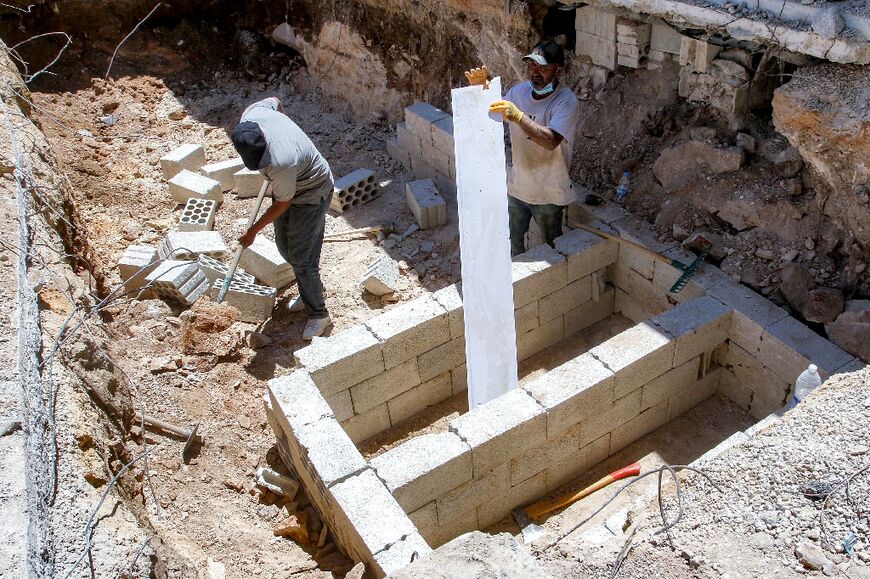
"We are waiting to bury 17 or 18 martyrs, and there are still young men who we haven't yet found," he said.
The dead are being buried near the graves of Hezbollah fighters killed in this war, the previous round of hostilities and the 2006 Israel-Hezbollah war.
The militant group drew Lebanon into the Middle East conflict on March 2 with rocket fire at Israel in support of its backer Iran, triggering heavy Israeli strikes and a ground invasion that Lebanon says have killed more than 3,800 people.
Municipal official Hassan al-Husseini said several dozen Israeli attacks since March had killed at least 55 people from the village of around 11,000.
"In every family, if it's not a brother, it's a cousin" who has been killed, he said, adding that at least 50 homes had been destroyed and 150 others rendered inhabitable.
Israel's army also issued evacuation orders for Deir Qanun al-Nahr, and Husseini said only around 400 residents remained in the days before the US-Iran agreement.
- 'We will overcome' -
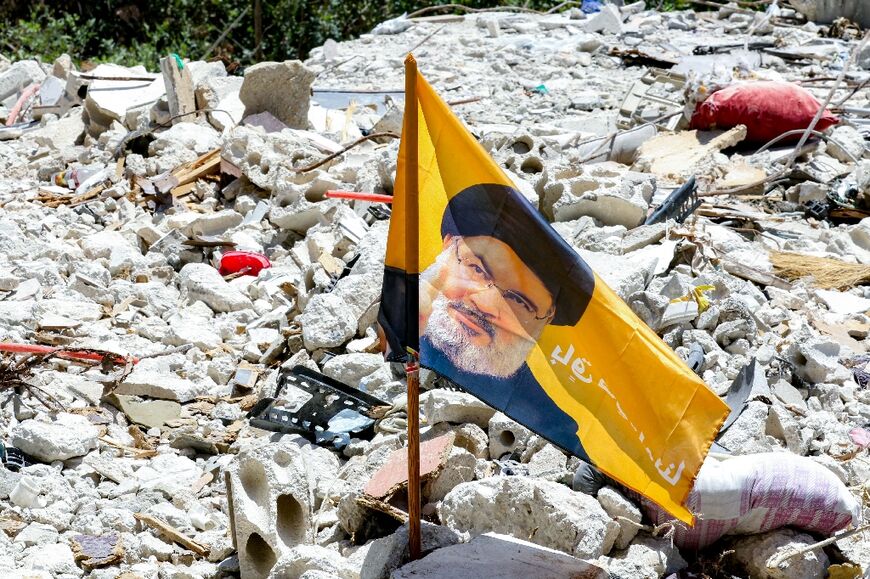
On a small street, a Hezbollah flag and a portrait of Nasrallah sat on a pile of rubble where an Israeli strike last month killed 14 people, nearly all from the same family, including three women and four children.
"That was my cousin Mohammad Abbas Najdi's home. He was with his wife, children, son-in-law and their children", said farmer Ali Hassan Najdi, 64.
"They pulled out bodies, but also human remains. They were scattered up to that other house over there," he said, as distant artillery fire rang out.
Israeli forces attacked Deir Qanun al-Nahr relentlessly "because it has caused them suffering", he said, proudly recalling that according to Hezbollah, its first-ever suicide attacker against Israeli troops was from the village.
On November 11, 1982 guerrillas led by a teenage Ahmed Kassir blew up the Israeli military headquarters in Tyre, killing dozens of Israeli troops.
Hezbollah was born in response to Israel's 1982 invasion of Lebanon.
Along the village's main street, lined with ruined shops and charred vehicles, Dalal Safieddine, 54, inspected her store, which like her home had been damaged.
"I've lost five family members," all cousins and Hezbollah members, she said.
"We are a resistance family," said the mother of three.
"It's normal to make sacrifices. But in the end, we will overcome."
This one's on us.
The story doesn't end here.
Our correspondents are already on the next chapter. Read everything they file, from $2/week.
See Offers