



Marco Rubio in Gulf to reassure allies hit hard by Mideast war


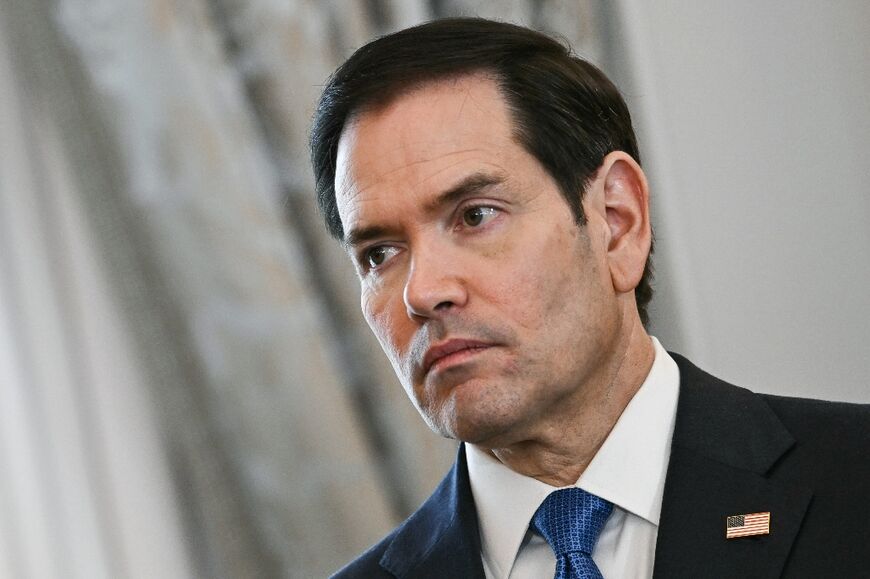
US Secretary of State Marco Rubio arrived in Abu Dhabi on Tuesday, the first stop on a tour of Gulf states aimed at showing solidarity with key allies hit hard by the Middle East war.
The delicate mission comes with Gulf countries having paid a heavy economic price for the US and Israel's decision to go to war with Iran against their wishes, prompting Tehran to lash out at its regional neighbours.
Iran's closure of the Strait of Hormuz cut off the majority of Gulf states' oil and gas exports, while its drone and missile attacks shattered their sense of safety and undermined the status of Qatar and the United Arab Emirates in particular as stable, peaceful havens for business and tourism.
It marks the first visit by a senior US official to the region since the signing last week of an initial deal between Washington and Tehran aimed at ending the war for good.
US Vice President JD Vance has taken the lead on those negotiations, which began at the weekend in Switzerland, with Rubio yet to comment.
The diplomat arrived in Abu Dhabi on Tuesday evening, where he said no country was allowed to impose tolls or fees on the Strait of Hormuz.
"It's an international waterway. No country is allowed to charge tolls or fees on an international waterway. That's existing international law," he said as he arrived in the United Arab Emirates.
"I don't think we have anybody to convince around here in that regard. I think all the countries in this region would agree with us."
Before the war, a fifth of global oil and liquefied natural gas travelled through the strait without charge.
Iran is now pushing to charge some kind of fee for ships passing through.
The US State Department earlier said Rubio would discuss the agreement with Iran, as well as efforts to ensure free transit of the Strait of Hormuz and peace and stability in the region.
His next stop is Kuwait on Wednesday followed by Bahrain on Thursday, where he will attend a meeting of the six-member Gulf Cooperation Council.
- 'Empowered Iran' -
Analysts said that while relations remained strong, regional governments still had cause for concern.
Steven Cook, of the Council on Foreign Relations think tank in Washington, said the Gulf Arab nations feared Iran emerging more powerful from the war.
"Few Gulf states believe the war should have happened in the first place, and they are all concerned that the United States empowered Iran as a result."
HA Hellyer of London's Royal United Services Institute, meanwhile, said: "I think that Rubio is probably going in order to try to reassure all of these Gulf partners... we're here and we stand by you."
"I don't know how much of it will change the equation, because again none of them are looking to push the US out or anything like that, so it's not as though anything he's going to do is going to impact that.
"The key variable that he can't shift them about is the actual reliability of the United States."
The memorandum of understanding between Washington and Tehran provides for a 60-day negotiating period to secure a permanent deal, prolonging the period of uncertainty for the Gulf.
Meanwhile, the text says nothing of Iranian missiles or drones.
- US not 'dependable' -
Gulf leaders have enjoyed close relations with US President Donald Trump, both in his first term and now, pledging to invest billions in the US.
Nevertheless, analysts say they were left to themselves to fend off Iranian attacks and are now looking for new partners, even as they recommit to the US.
"They will deepen as much as possible their relationship with the United States, but at the same time I think what they will do is diversify their security relationships across the board, because they simply don't view the United States as being dependable and predictable," said Hellyer.
Another question is the nature of the $300 billion reconstruction fund for Iran that last week's deal says Washington will undertake to develop "with regional partners".
"The United Arab Emirates is not aware of any alleged $300 billion fund and is in no way involved in it," an Emirati official told AFP on Tuesday on condition of anonymity.
This one's on us.
The story doesn't end here.
Our correspondents are already on the next chapter. Read everything they file, from $2/week.
See Offers