



Muted Palm Sunday in Syria after violence in Christian town


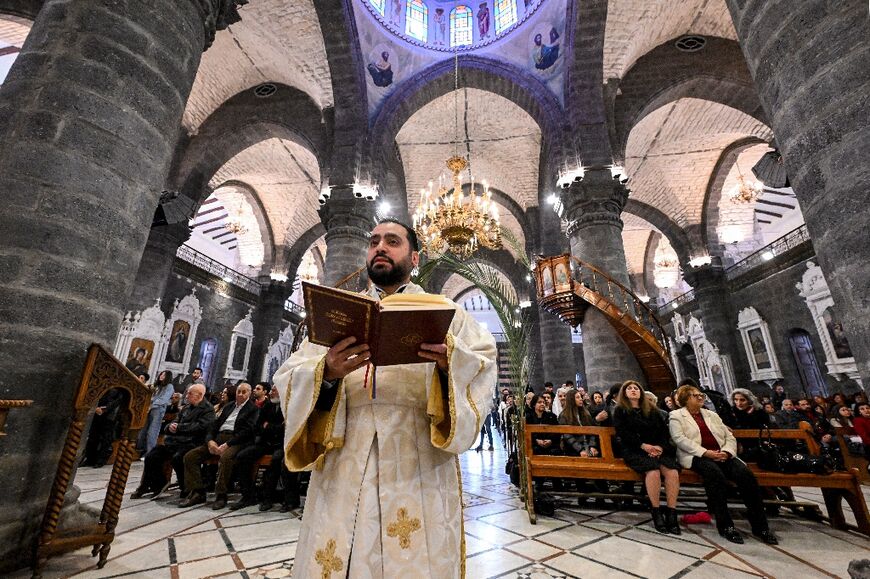
Worshippers attended a muted Palm Sunday service at a Greek Catholic cathedral in Damascus after the city's churches decided to limit celebrations to prayers only after violence hit a Christian town.
On Friday night, Suqaylabiyah, one of the largest Christian communities in central Syria, was attacked, with shops vandalised and cars burned.
In the capital on Sunday, Fadi Shammas, a 37-year-old engineer, carried his infant daughter Nala, who wore a white dress.
"This is her first Palm Sunday," he told AFP. "We wish the situation was more relaxed and people weren't afraid."
Security forces deployed at the outer entrance to the church compound, and some roads leading into the Old City were closed.
People slowly filled pews decorated with olive branches, and lit candles in silence.
"We are hopeful for the future, but things need more time for people to feel more at ease," Shammas added.
In the alleyways of the Old City, there were none of the scenes residents remembered from previous years.
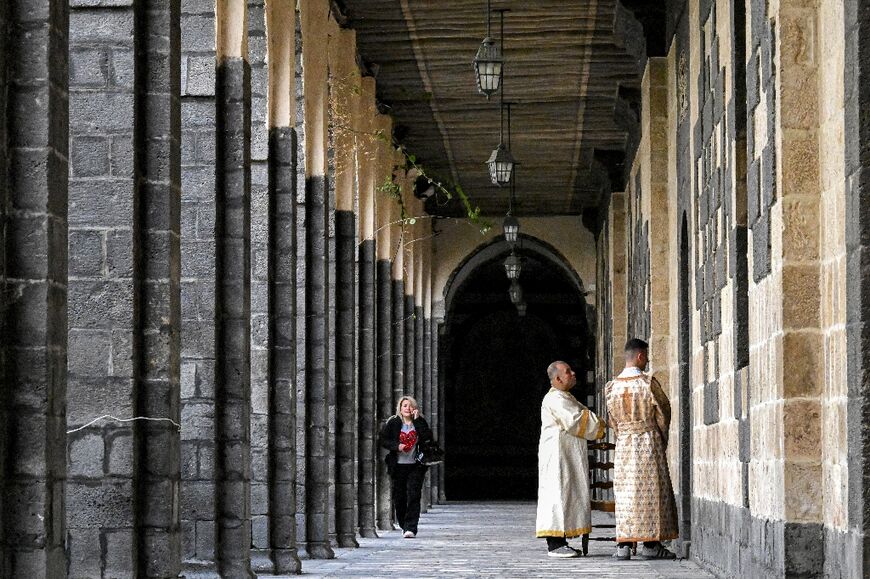
Troops of uniformed scouts used to parade, playing drums and brass instruments, as children waved olive branches amid crowds of worshippers and onlookers.
Syria's Islamist authorities vowed to protect minorities after ousting longtime Syrian ruler Bashar al-Assad in 2024, but a suicide bombing in a Damascus church last year fuelled Christian fears.
Christianity's presence in Syria has dwindled from approximately one million people before the civil war broke out in 2011 to fewer than 300,000 because of waves of displacement and emigration, according to expert estimates.
- 'Hold on to hope' -
"Given the current discouraging circumstances, we have decided, in coordination and agreement with all the churches, that Easter celebrations this year will be limited to prayers only inside the churches," the Greek Catholic Patriarchate in Antioch and the East said in a statement on Saturday.
The decision was taken after Friday's attack on Suqaylabiyah.
The Syrian Observatory for Human Rights said that "masked gunmen launched an attack, coming from Qalaat al-Madiq and neighbouring villages", assaulting civilians and vandalising property.
The official SANA news agency said security forces intervened to break up a "mass brawl" in Suqaylabiyah between young men, and that calm was restored after a number of arrests.
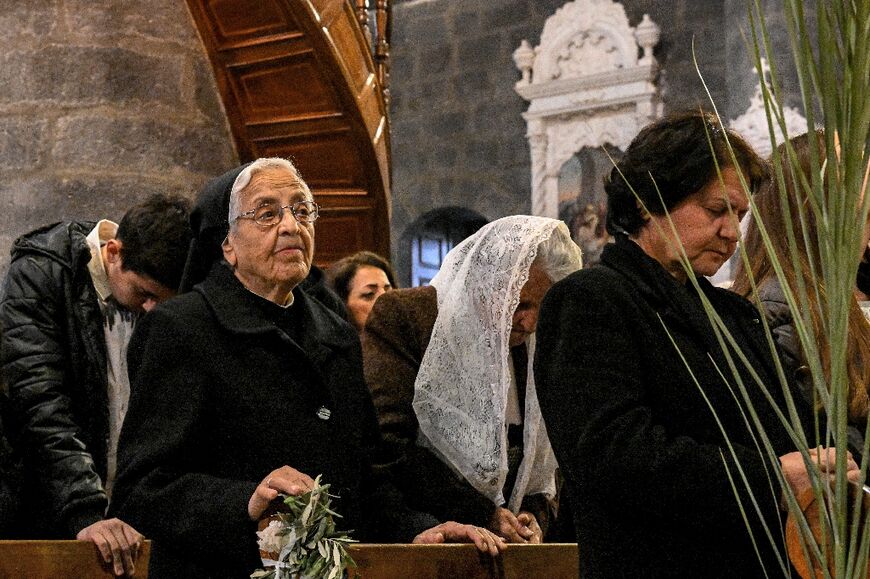
In his Palm Sunday sermon at the Cathedral of Our Lady of the Dormition, Youssef Absi, patriarch of the Melkite Greek Catholic Church, said: "In the painful circumstances and conditions we are going through today... fatigue, sadness, distress and pain, Palm Sunday calls us to hold on to hope."
Outside in the churchyard, the silence was broken by the sound of children running and playing, as their parents took pictures of them.
Lawyer Milad al-Sabaa, 36, stood watching his five-year-old son Akram play.
"This year the situation is unstable, and it's not appropriate for scout troops to patrol," Sabaa said.
"We limited ourselves to religious services, and we hope next year the situation will be calmer."
- 'One fear to another' -
Dozens of people held a silent sit-in on Saturday in Suqaylabiyah, raising banners. One read: "No to uncontrolled weapons... Yes to a Syrian state that includes all its components", local media reported.
Sectarian violence such as the killing of hundreds of mostly Alawite civilians in March 2025 stoked the fears of minority communities.
And in July, sectarian clashes erupted in the Druze-majority southern province of Sweida.
The international community has urged Damascus to respect freedoms, protect minorities and involve all sections of society, including women, during Syria's delicate transition.
The new authorities are trying to present an image of openness.
"During the years of war there was fear, and now there is fear," 57-year-old employee Nabil Samara said on Sunday at the cathedral.
"People go from one fear to another. People want stability and to live in peace."
This one's on us.
The story doesn't end here.
Our correspondents are already on the next chapter. Read everything they file, from $2/week.
See Offers