



Israeli first responders on 'maximum alert' under Iran missile fire


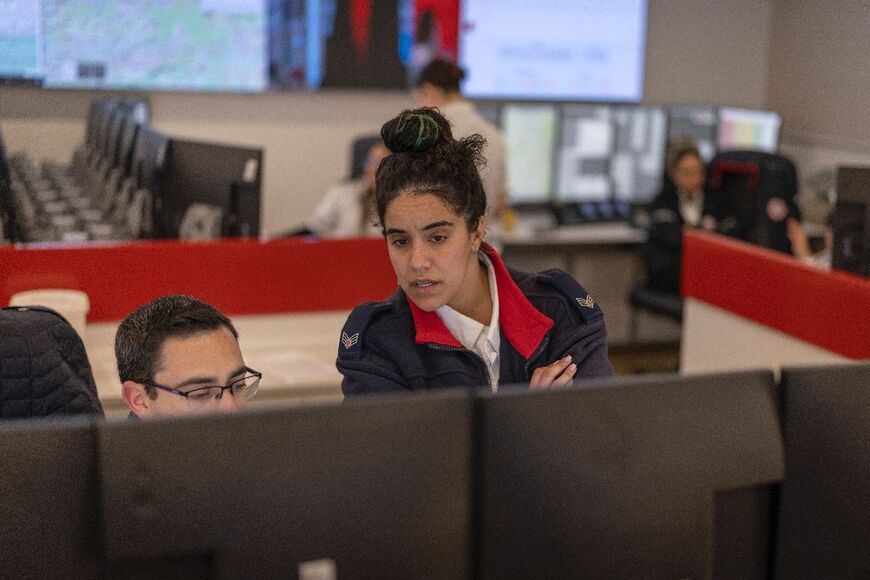
At 10:56 pm an alert announcing the approach of an Iranian missile sounds, and a brief, heart-pounding wait begins in the operations room at Magen David Adom (MDA) as first responders get ready to deploy.
In this nerve centre for Israel's equivalent of the Red Cross, three floors underground in Ramla, near Tel Aviv, a paramedic adjusts her helmet then picks up the phone to dispatch her colleagues: four debris impact sites have just been reported.
All eyes are fixed on screens displaying the number of calls to 101, the number for the national emergency response organisation.
A sudden influx of calls could signal that there are "deaths and injuries", whispers MDA official Ilan Klein, surrounded by dozens of tense-looking colleagues.
At 11:07 pm, moments after the first alert, 16 calls light up the switchboard.
"It's starting," Klein says, sitting at the heart of the sprawling 45,000-square-metre (484,000-square-foot) complex housing the MDA's national crisis hub.
This is where the emergency responses are coordinated in conjunction with the police, fire brigade and army before teams on the ground across the country are sent out.
This time, there are no deaths or injuries reported, and by 11:12 pm, the alert is lifted.
Israeli first responders have been operating at full capacity since the start of the war in the Middle East on February 28, when joint US and Israeli strikes on Iran sparked retaliatory barrages of missile fire.
Israel's Iron Dome air defences, a highly effective public warning system and a large number of underground shelters means the casualties have been relatively limited.
While authorities in Iran have announced more than 1,200 deaths since the start of the war, so far 11 people have been killed in Israel.
Many of the calls the MDA gets are for people injured in falls as they rush for shelter, or for those suffering from panic attacks.
- 'Maximum alert' -
"Our biggest challenge is to try to maintain the same level of regular service each day during a time of war," Klein explained.
"We have to be able to help a victim of a missile blast, and also be ready to deal elsewhere with a woman who is about to give birth."
He said that in the past dozen days the MDA has "increased its numbers on the ground fourfold".
Founded in 1930, even before the founding of the State of Israel in 1948, the MDA counts 35,000 volunteer staff, including 10,000 first responders, and 3,000 full-time employees.
In normal times "we receive 6,000 calls a day, or one every 18 seconds", said Klein, also a trained paramedic.
Since the start of the war with Iran, that number has "more than doubled".
The first two days of the war saw responders rush to some of the deadliest incidents in Israel so far -- one in the central city of Beit Shemesh that left nine people dead, and another in Tel Aviv that killed one and wounded 50.
"After we hear the initial boom we'll leave our safe room, and we'll make sure that we have our helmets on and our flak jackets. Then we'll go towards the scene," explained paramedic Ori Lazarovich.
After years of conflict that have seen innumerable rockets and drones fired at Israel, its first responders are well-drilled in how to react.
Since the first 12-day war between Israel and Iran in June 2025, the responders say they have seen more serious injuries due to the use of bigger missiles and cluster munitions by Tehran.
"We are on maximum alert: a hundred percent of the Magen David Adom fleet is mobilised 24 hours a day," said 27-year-old Lazarovich.
Around 2,000 ambulances and 600 vehicles and motorbikes are ready to respond quickly across Israel at any moment.
The MDA headquarters was built in 2024, after the attack by Hamas on Israel on October 7, 2023 that unleashed the war in Gaza.
Hanging in the entry, a poster pays tribute to seven of the organisation's volunteers who were killed in the Hamas attack.
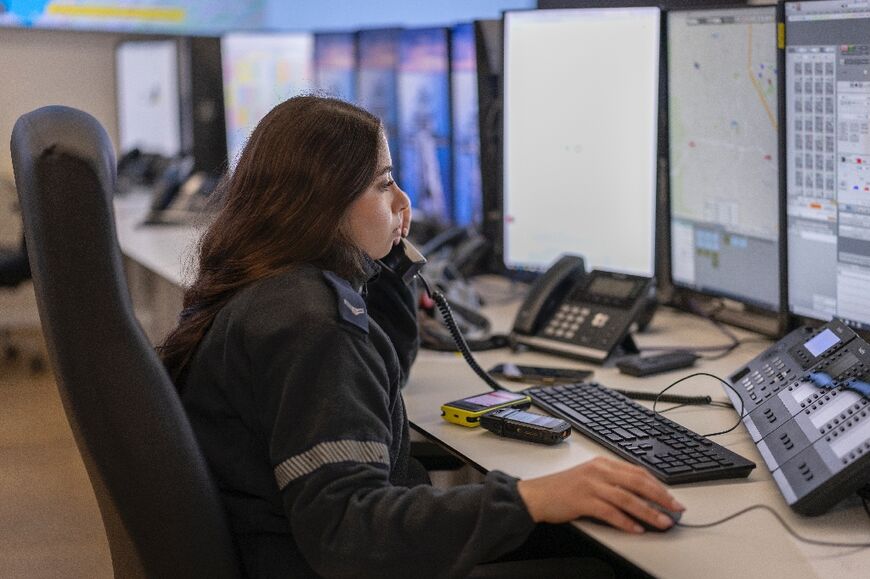
The centre cost $200 million to build and was financed by individual donations from the United States, as the MDA receives no subsidies from the state and survives on health insurance pay-outs and private contributions.
Sitting in front of his screen, 27-year-old Michal Raz still manages to smile despite the strain.
"I've known this my whole life," she said of the air alerts that have become common in Israel in recent years, "but I'm still scared when I hear sirens."
This one's on us.
The story doesn't end here.
Our correspondents are already on the next chapter. Read everything they file, from $2/week.
See Offers