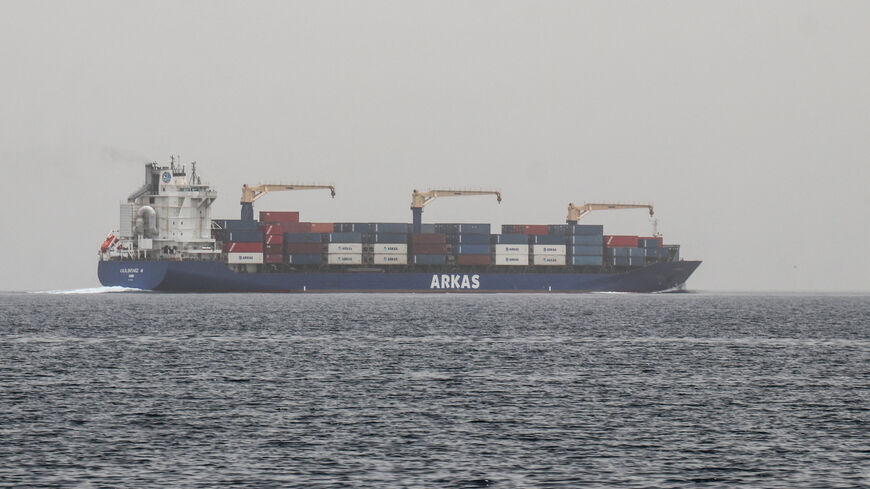
Hormuz traffic slows as Iran threatens to set 'ships on fire'
Maritime intelligence company Lloyd’s List reported on Sunday that no traceable passages have been made by major crude tankers through the Strait of Hormuz since Saturday night.


A senior Islamic Revolutionary Guards official on Monday increased threats to vessels seeking to traverse the Strait of Hormuz, further heightening risks to supply chains and maritime security in the crucial waterway.
Brig. Gen. Sardar Ebrahim Jabbari told Iranian media Monday that “anyone who wants to pass, our self-sacrificing heroes in the IRGC Navy and the Army will set those ships on fire." He added, “Don’t come to this region. We will not allow a single drop of oil to leave the region."
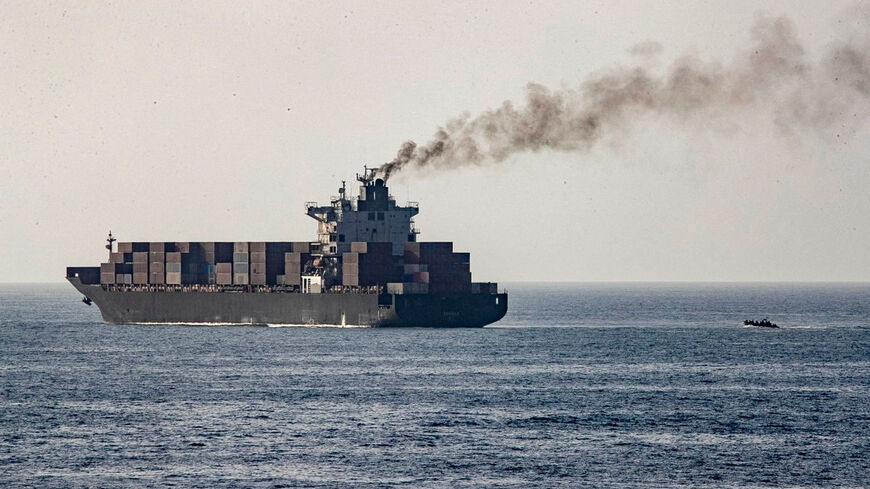
Even before the new threat, hundreds of tankers continued to avoid the Strait of Hormuz as the war between Iran, Israel and the US raged on, prompting the Joint Maritime Information Center to raise the threat level in the vital waterway to critical.
In a statement on Sunday, the JMIC said the move followed several attacks on commercial vessels in the waterway and surrounding areas amid an escalation in the Middle East conflict. Israel and the United States launched air strikes on Iran Saturday morning, killing the country’s supreme leader, Ayatollah Ali Khamenei. Iran has responded with barrages of missiles mainly targeting Israel, Gulf countries and US military bases in the region.
Maritime intelligence company Lloyd’s List reported Sunday that no traceable passings have been made by major crude tankers through the strait since Saturday night. Around 72 ships passed through the chokepoint on Sunday, down from 116 on Saturday.
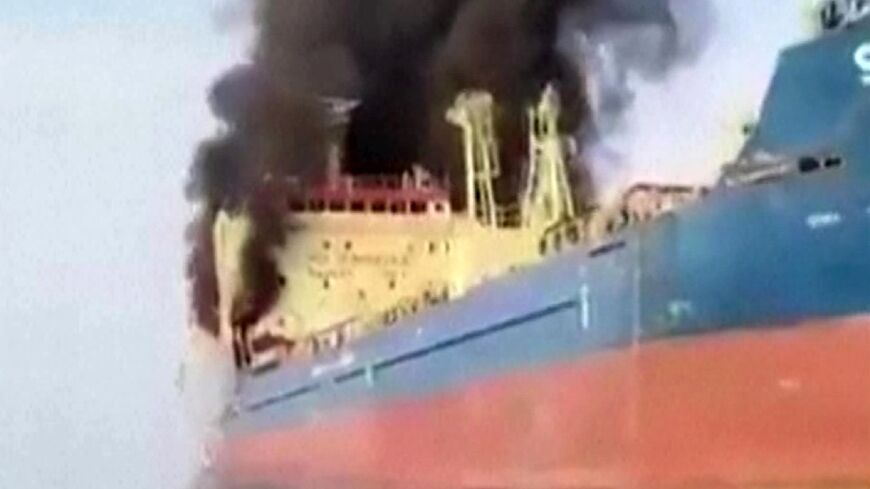
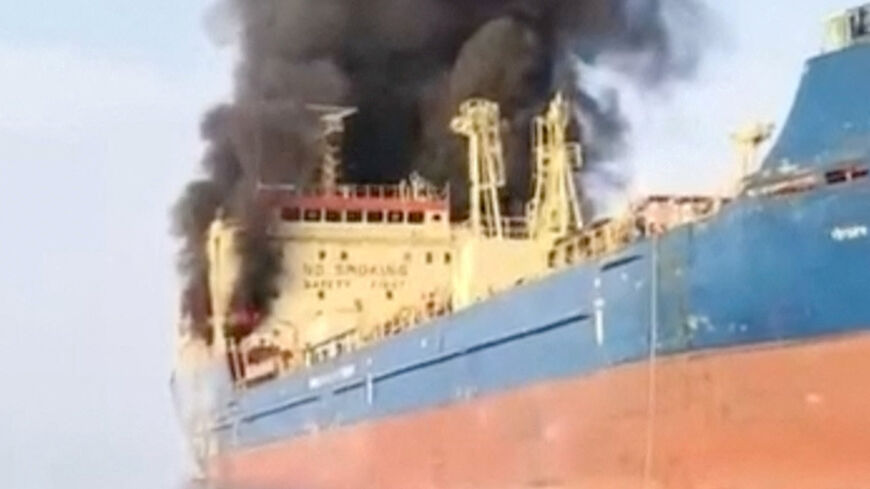
Details: There have been several reports of ships coming under attack in the Strait of Hormuz since Sunday. Oman’s Maritime Security Center reported Sunday that an oil tanker was attacked off the coast of Musandam. All 20 crew members were evacuated, and four were injured in the attack.
A projectile hit the Marshall Islands–flagged product tanker MKD VYOM, killing a crew member on board as the ship sailed off the coast of Oman, manager V.Ships said Sunday.
"The vessel suffered an explosion and subsequent fire after being struck by a suspected projectile while off the coast of Muscat, Oman, on 1 March," V.Ships Asia said in a statement.
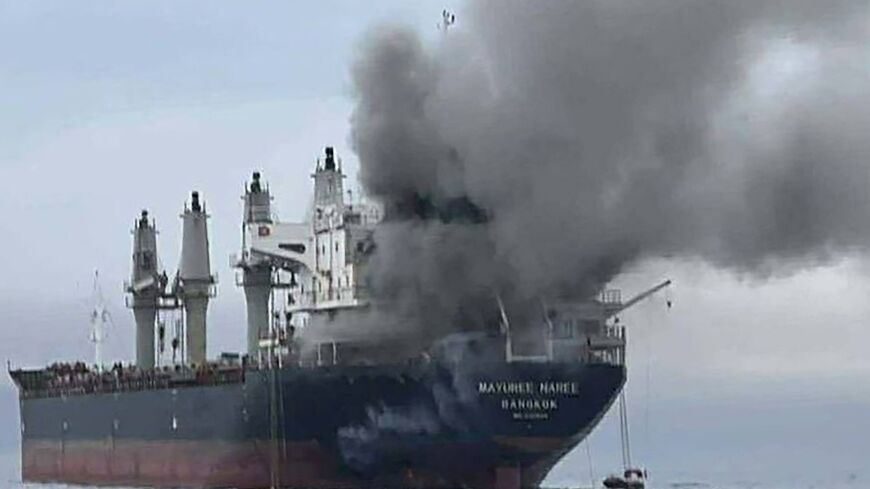
In a separate incident, another vessel north of Muscat was "struck by an unknown projectile, causing a fire," the United Kingdom Maritime Trade Operations said in a statement.
The UKMTO reported two more attacks Monday off the coasts of the United Arab Emirates and Bahrain.
The first was an incident off the coast of Sharjah, in the UAE, where an "unknown projectile" exploded near a vessel. The UKMTO said there were no casualties.
The second was off the Port of Bahrain, where the company security officer reported that the vessel had been struck by two projectiles, causing a fire. The fire was extinguished and the ship remains in port, with all crew safe and evacuated, the agency said.
State of play: Several shipping companies have publicly announced that they are suspending routes through the Strait of Hormuz as a result of the war. Among them are Danish container shipping giant Maersk and German carrier Hapag-Lloyd.
Maersk decided "to pause future Trans-Suez sailings through the Bab el Mandeb Strait for the time being," the company said in an online advisory Monday.
"The safety of our crews, vessels and customers' cargo remains our key priority," it added.
Maersk said that effective immediately, the company was suspending all new bookings between the Indian subcontinent and the Upper Gulf markets of the UAE, Bahrain, Qatar, Iraq, Kuwait and Saudi Arabia (Dammam and Jubail only). Other trade corridors would continue running, Maersk said.
French shipping group CMA CGM instructed its vessels on Saturday to take shelter and stop transiting the strait.
Japan’s NYK Line and Mitsui O.S.K. Lines, among the world’s largest ship operators, have halted all of their vessels transiting the strait.
Meanwhile, the world’s biggest container shipping company, MSC, on Sunday instructed its vessels' crews to stay in “designated safe shelter areas” rather than approach the region, effectively suspending passage through the Strait of Hormuz.
Chinese liner giant Cosco advised the crews on its vessels that had entered the Gulf to complete operations only "where safe to do so" and hover or anchor as soon as possible.
Why it matters: Located between Oman and Iran, the Strait of Hormuz is a crucial waterway for global energy markets. In 2024, around 20% of the world’s petroleum liquid shipments passed through the strait.
Iran has never officially closed the waterway, though its officials have repeatedly threatened to do so. A prolonged closure would likely reverberate across global markets, with some countries facing more acute effects than others.
India would be among the most exposed, given that it imports nearly 85% of its crude, much of it passing through the strait, Pankaj Srivastava, senior vice president at energy research firm Rystad Energy, told CNBC.
“Rising [oil] prices will weigh on the balance of payments and could put further pressure on the rupee,” Srivastava added.
Brent prices reached a 52-week high Monday, at one point increasing more than 8% to $80 a barrel.
China, the world’s largest crude importer, sources around 40% to 50% of its oil from major Middle Eastern producers including Iran, Saudi Arabia, Iraq, the UAE and Kuwait. Nearly all of that crude flows through the Strait of Hormuz, as there is no alternative sea route linking the Gulf to East Asia. Existing Gulf pipelines largely run westward toward Europe, not eastward toward Asian markets.