Hamas sits out Iran war as Gaza, Gulf interests take priority
Hamas has so far stayed out of the escalating Iran war, despite its longstanding alliance with Tehran, reflecting a cautious strategic calculation.


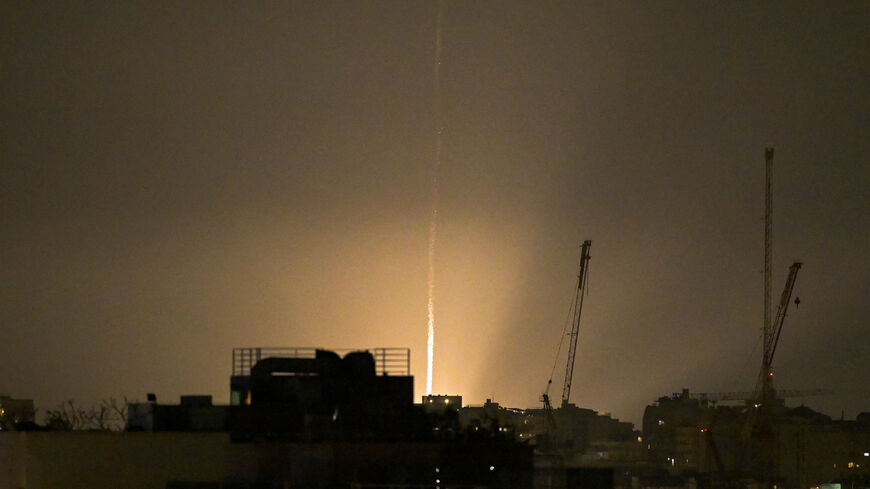
The Israeli and US airstrikes launched against Iran on Feb. 28 quickly pushed the Middle East to the brink of a wider war. Within hours, Tehran responded by firing missiles and drones at targets in multiple countries around the Gulf and at Israel, sending shockwaves across an already tense region. Already war-torn Gaza has largely been absent from the equation in this most recent round of fighting.
Despite rushing to condemn what it described as Israeli “brutality and savagery” and “American support” for it, Hamas has so far chosen not to join the conflict, other than announcing its backing of the Islamic Republic. The situation in Gaza and internal factors have shaped Hamas’ calculus and informed its decisions on the war still raging in the Gulf.
Hamas reiterated this position on Saturday, issuing a strongly worded statement calling on Iran to stop targeting neighboring countries.
“While affirming the right of the Islamic Republic of Iran to respond to this aggression by all available means in accordance with international norms and laws, the movement calls on the brothers in Iran to avoid targeting neighboring countries,” Hamas said in a statement.
Since the October cease-fire in the Hamas-Israel war in Gaza, millions remain displaced in the Palestinian territory, with limited access to the basic needs of housing, food, and healthcare.
The Hamas-aligned political analyst Ibrahim Al-Madhoun told Al-Monitor that Hamas views direct intervention in the Iran war as complex as well as difficult, with the potential to trigger overwhelming consequences in a Gaza shattered by some two years of relentless war between the Palestinian group and Israel.
“Hamas’s current priorities are to implement the [ceasefire] agreement, prevent further war on Gaza, and oversee reconstruction,” Madhoun said.
Iran-Hamas ties tested
Shiite Iran has been a main supporter of Sunni Hamas since the 1990s, primarily with the mutual goal of opposing the Oslo Accords signed by Israel and the Palestine Liberation Organization in 1993. According to the Congressional Research Service (CRS), Iran has at times provided Hamas financial support amounting to $300 million per year.
The 2011 Syrian revolution, pitting civilians and rebel forces against the Iranian-backed government of President Bashar al-Assad, severely tested the Hamas-Iranian relationship. A year after the outbreak of war, the political leadership of Hamas chose to leave Damascus, signaling its opposition to Assad’s conduct of the war.
Iran and Hamas mended relations after the brief war between Israel and the Palestinian group in 2014 and formally reaffirmed them in 2017, when a high-profile Hamas delegation, led by the late Saleh al-Arouri, visited the Iranian capital, Tehran.
Cairo-based academic Mukhaimar AbuSaada argues that Hamas-Iranian relations were put to the test on Oct. 7, 2023, when Muhammad al-Deif, leader of the Izz ad-Din al-Qassam Brigades, announced Hamas’ attack on southern Israel, an operation codenamed Al-Aqsa Storm, and called on Islamic nations to join them in the fight.
“Iran didn’t provide the level of support Hamas was hoping for,” AbuSaada said. “Even when Hezbollah joined the battle, it did so as a supporting front rather than as a primary combatant.”
In the current war, no rockets have been fired from Gaza toward Israel. Hamas has, however, issued multiple statements expressing support for the Iranian regime. It also sent condolences following the assassination of Supreme Leader Ayatollah Ali Khamenei and congratulated his son, Mojtaba Khamenei, after his appointment to succeed his father in office.
Hamas remains the de facto ruler in Gaza despite Israel’s military effort to remove it from power. Police officers are visible across Gaza, municipal authorities provide some services on a limited scale, and Hamas continues to partially pay salaries for local authorities.
Many members of Hamas’ leadership remain in Qatar, which — like nearly all Gulf countries — has been targeted by Iranian missile strikes in the current war. The presence of senior Hamas figures there places the group in a difficult position as regional tensions escalate. Direct involvement in a broader conflict could expose its leadership to additional pressures from host countries. As a result, Hamas may be more cautious about joining the war, despite issuing statements in support of Iran.
The postwar axis
Still, the fate of the Hamas-Iranian relationship hinges on the outcome of the ongoing war, which Israel says is intended to weaken and eventually topple the government in Tehran, which analysts say, could take years. If Israel and the US manage to replace the regime, Hamas and other armed groups will face serious strategic challenges.
Israel has urged opposition groups to take to the streets and remove the regime from power, but Iran’s police chief, Ahmad-Reza Radan, warned on state television that anyone who does so “at the enemy’s request” will no longer be regarded as a protester but as an enemy, Reuters reported. The security forces have their “fingers on the trigger,” ready to confront them.
Since Hamas 2023 attack on Israel 7, the so-called Axis of Resistance — Hamas, Hezbollah, the Houthis, and Iraqi militias — has suffered several severe blows, including the assassination of Hezbollah leader Hassan Nasrallah in September 2024 and the fall of the Assad regime in Syria the same year as well as the targeted killing of key leaders across the armed factions operating with Iranian support against Israel.
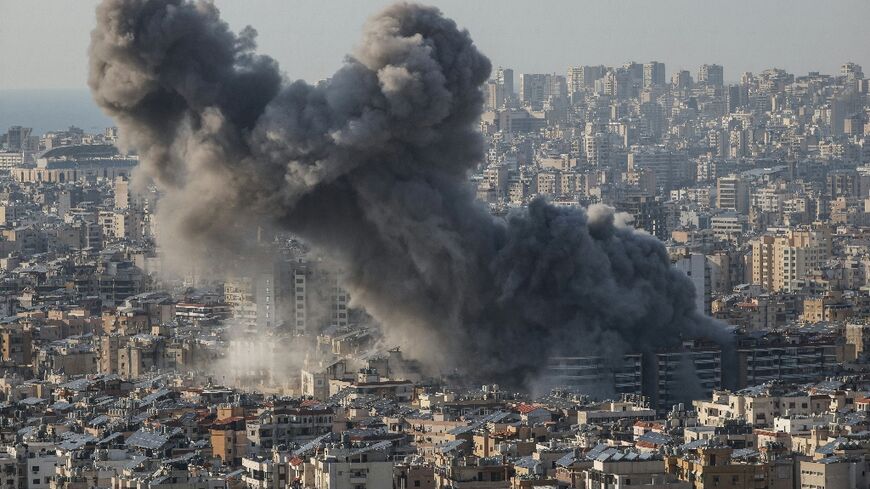
Among the axis members, Hezbollah chose to join the current war on March 2, two days after the US and Israel launched their attack, killing Supreme Leader Ayatollah Ali Khamenei on the first day. The Lebanese militant group has since been firing rockets toward communities in northern Israel on a daily basis. Israel responded with air attacks on Beirut and southern Lebanon, says it is targeting Hezbollah infrastructure.
Madhoun said that it is too early to gauge the impact of the Iran war on Hamas.
"If Israel and the United States fail to achieve their goals, with Hamas maintaining its maneuverability and ability to regroup, the Axis of Resistance would emerge stronger from this war,” he said.
Observers wonder how Mojtaba Khamenei might influence Iranian policy toward the armed groups in the region that Tehran has supported over the past decades. Mojtaba served as his father’s chief of staff for many years and was his closest advisor on strategic and security matters. He was also close to leaders of the Islamic Revolutionary Guard Corps, and his father consulted him as a potential successor, not merely an ordinary advisor, according to Iranian media.
Israel-based commentator Muhammad Majadli said there might not be any real change in the short term, as Mojtaba may still be influenced by his father's policies and positions, and may be driven by a desire for revenge.
"Mojtaba is relatively young, which could make him bold in the long term — either by taking more extreme decisions or, conversely, by reaching a peace agreement that might not have been possible before his rise," said Majadli.