



45 million more face hunger threat from extended Mideast war: UN


An extra 45 million people could face acute hunger if the Middle East war rages on beyond June, swelling the number worldwide to a "terrible" high, the United Nations warned Tuesday.
The war, now in its third week, and its shockwaves on food and fuel costs could price families out of staple foods far beyond the region, the UN's World Food Programme said.
"The escalating humanitarian fallout from the conflict in the Middle East is growing more concerning by the day," warned WFP deputy executive director Carl Skau.
"Our analysis projects that if the Middle East conflict continues through June," and oil prices remain above $100 a barrel, "an additional 45 million people could be pushed into acute hunger by price rises," he told a Geneva press conference.
"This would take global hunger levels to an all-time record, and it's a terrible, terrible prospect," he said, with a nearly 320 million people -- already a huge number -- currently acutely food insecure.
"Really it is again taking this to a whole other level," said Skau.
"The consequences are falling on the world's most vulnerable people who are already living in dire conditions. They do not have the margins to cope with a new jump in living costs."
Skau called for countries to make more humanitarian resources available.
- 'Stretched to the limit' -
The United States and Israel launched their war on Iran on February 28, with Tehran in turn striking targets in Israel and Gulf nations. Lebanon was drawn into the conflict when Iran-backed Hezbollah attacked Israel.
WFP is providing hot meals and bread to tens of thousands of people in Lebanon, and is seeking $77 million for its operations in the country over the next three months.
Skau said the agency was already facing a "perfect storm" before the war erupted.
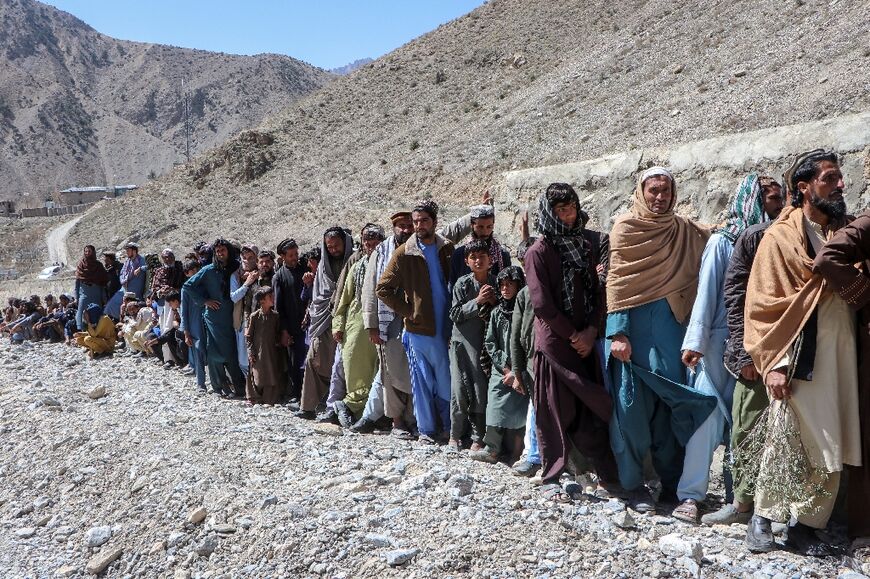
"Hunger has never been as severe as now," he declared.
The nearly 320 million people in acute food insecurity marks a three-fold increase in five years, driven by extreme weather events, conflict and pockets of famine.
Meanwhile WFP faced a 40-percent cut in its resources last year, as international funding dried up.
"We are basically stretched to the limit", said Skau, and the Middle East is making WFP's operations "much, much more expensive".
He said WFP's operating costs had surged -- notably through soaring fuel prices and longer supply chain routes -- with shipping costs up 18 percent and trucks running on pricier fuel.
The disruption to fertiliser exports through the Strait of Hormuz comes just as sub-Saharan Africa heads into a planting season, and poses a "major risk" to countries like Somalia and Kenya, he said.
"In Somalia we have clear indications that we're heading into a famine: we have two consecutive droughts," he said, but WFP is struggling to assist around 700,000 people in the country and "we just don't have the funding".
The agency has cut life-saving food rations for people in famine conditions in Sudan, and is now only able to support one in four acutely malnourished children in Afghanistan, "which is now the world's worst malnutrition crisis", said Skau.
"People are dying in Afghanistan due to the lack of assistance."
This one's on us.
The story doesn't end here.
Our correspondents are already on the next chapter. Read everything they file, from $2/week.
See Offers