Syrian Kurdish officials say 66 Turkish ISIS fighters transferred for relocation to Iraq
The detainees were handed over from SDF custody to the US-led coalition for transfer to Iraqi prisons.
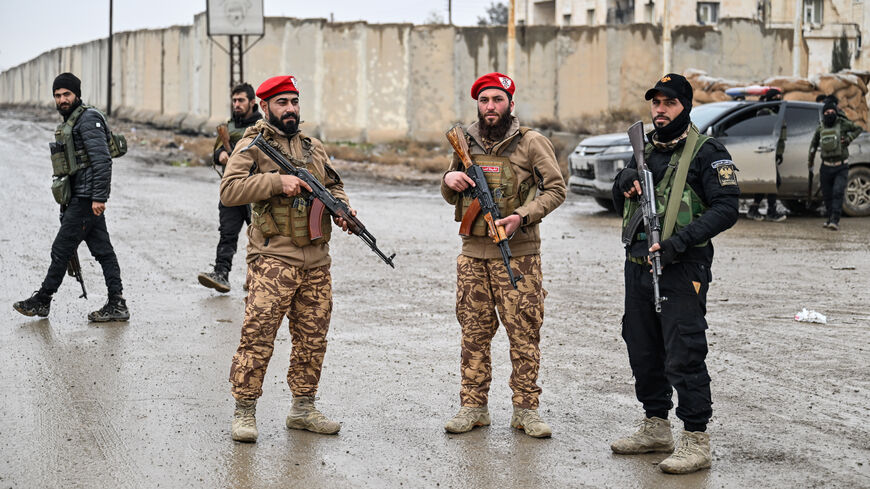
ROJ CAMP, Syria — Some 66 Turkish nationals who fought for the Islamic State and were under the custody of the Kurdish-led Syrian Democratic Forces in northeast Syria were handed over from detention facilities in Hasakah to the US-led coalition for transfer to Iraq, a senior Syrian Kurdish official and a Syrian Kurdish counterterrorism official speaking on background told Al-Monitor.
The figure stands in sharp contrast with those cited by the Turkish media, which put the number of Turkish ISIS fighters in the process of being transferred to Iraq at 2,000.
“The 2,000 figure is not accurate,” the senior Syrian Kurdish official told Al-Monitor. The names of the Turkish ISIS prisoners are known to the US-led coalition but could not be shared with Al-Monitor for security reasons. The counterterrorism official said that around 100 ISIS fighters of “Turkish origin” had been in SDF custody. “Some of them lacked documentation and other attributes clearly identifying them as being from Turkey, but were likely to be from Turkey, nonetheless,” the official said.
An unknown number of Turkish nationals joined ISIS as it swept across large swaths of Iraq and Syria to establish its blood-soaked caliphate in 2013. Many are thought to have been killed in coalition airstrikes and fighting on the ground with Iraqi forces and the SDF ahead of the jihadis’ final territorial defeat in the Syrian town of Baghouz in 2019.
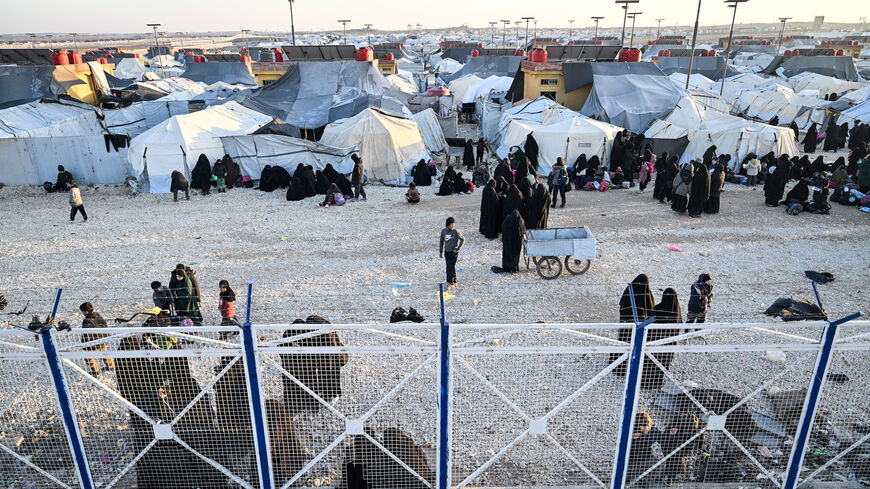
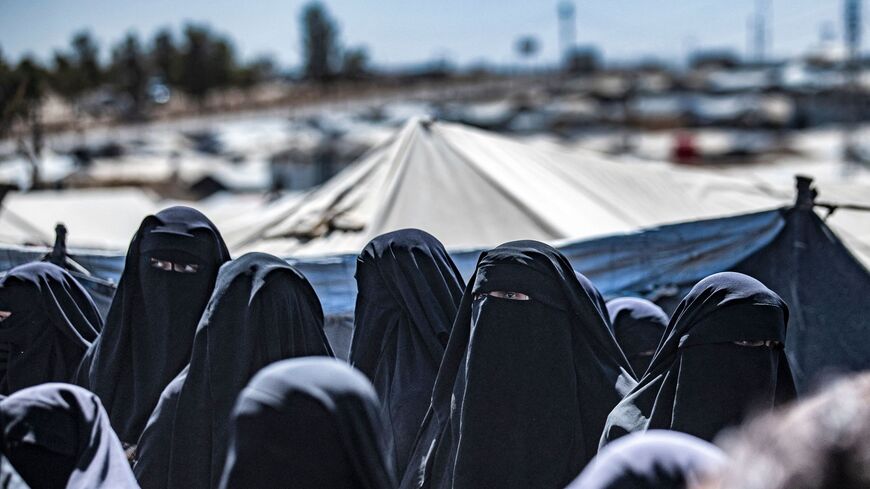
According to the latest UN figures obtained by Al-Monitor, some 1,003 Turkish wives, widows and children of ISIS fighters are being held in the al-Hol camp in Hasakah. The camp was taken over by Syrian authorities on Jan. 20 amid rioting at the sprawling complex.
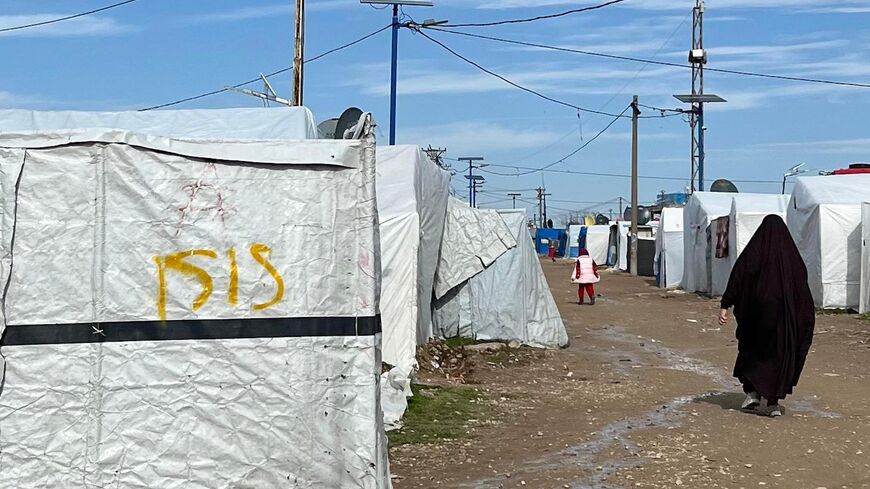
A further 50 Turkish families are at the smaller Roj camp, which remains under SDF control.
Roj camp authorities told Al-Monitor in January that Turkish authorities had been mulling the repatriation of its citizens. A Turkish detainee who declined to provide her name confirmed to Al-Monitor that camp officials had photographed Turkish nationals held at Roj in August last year and had asked for their documents, saying, “Turkey will take you back,” but that “nothing happened” thereafter.
Ilham Ahmed, the de facto foreign minister of the Kurdish-led administration in northeast Syria, corroborated the account on Tuesday, telling Al-Monitor, “We don’t know why Turkey did not follow through.” Ahmed also confirmed that 66 Turkish ISIS fighters had been handed over to the US-led coalition from prisons in Hasakah in late January.
The Turkish Foreign Ministry did not respond to Al-Monitor’s request for comment on the numbers and status of Turkish nationals being held over alleged ISIS links.
In a Jan. 23 interview with NTV news, Turkish Foreign Minister Hakan Fidan dodged the issue, maintaining that Turkey’s policy was to encourage and facilitate the repatriation of third-country nationals associated with ISIS.
More than 4,500 suspected ISIS detainees have been relocated from Syria to Iraqi prisons by coalition forces since Jan. 20.
The men are among an estimated 7,000 such prisoners, including Iraqis, Syrians, Europeans, North Africans and Asians.
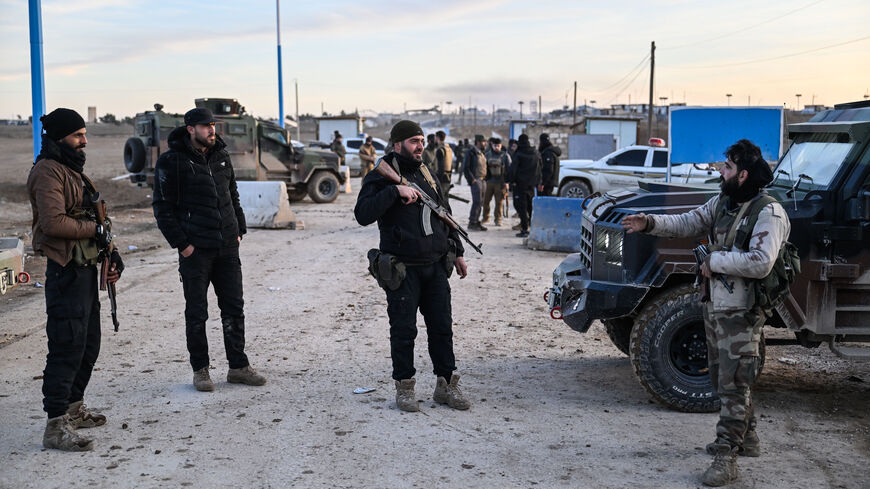
The decision to relocate them was prompted by the chaos that engulfed several detention facilities as Syrian government forces clashed with the SDF. More than 100 detainees took advantage of the conflict to escape a prison in Shaddadi alone. The Syrian government said 82 of the ISIS fugitives had been recaptured. The SDF put the number of escapees far higher at 600, with both sides blaming the other for the breakout. The senior Syrian Kurdish official noted that Turkish prisoners may have been among those who fled.
A US-brokered truce that took effect on Jan. 30 continues to hold, as Damascus and the SDF continue to implement the provisions of a broader accord for the integration of Syrian Kurdish military and civilian structures with the central government.
Red flags, angry mothers
Maj. Gen. Saad Maan, a spokesperson for the Iraqi government’s security information unit, told the state-run Iraqi News Agency that 4,583 detainees had been brought to Iraq so far. On Monday, the Iraqi judiciary announced that it had started investigative proceedings for 1,387 detainees it received as part of the US operation.
“The established principle is to try all those involved in crimes against Iraqis and those belonging to the terrorist ISIS organization,” Maan said. “The process of handing over the terrorists to their countries will begin once the legal requirements are completed.”
The Supreme Judicial Council of Iraq announced over the weekend that none of the detainees from 42 different countries would be extradited until investigations into their alleged crimes were completed. The probes were formally launched on Sunday and are expected to be completed within six months, Iraqi authorities say.
Rights groups are raising the alarm over due process in Iraq, where the death penalty continues to be applied. Western governments have long been assailed for refusing to repatriate nationals held at ISIS prisons and camps. Letta Taylor, an associate fellow at the International Center for Counter-Terrorism, told Reuters the mass transfer of ISIS detainees to Iraq had “mind-boggling legal implications, none of them positive.”
Back at Roj camp, many mothers aired worry over the fates of their sons who had been separated from them at the age of puberty on the grounds that they could be radicalized in the camps. An unspecified number are being held at two rehabilitation centers, Houri and Orkesh, as well as at maximum security Panorama prison in Hasakah in what rights groups say is a blatant violation of international humanitarian law. All remain under SDF control.
“No individual legal determination has been made for the vast majority of those children detained in the camps, centers or prisons and there is no evidence of any understanding that it is in absolute contravention of international law to detain children indefinitely in what appears to be a cradle-to-grave cycle,” the UN observed in a July 2023 assessment.
Damascus authorities are due to assume control of Roj under the terms of the integration agreement with the SDF.
Jihan Hanna, the Syrian Kurdish official who managed al-Hol camp until its transfer to Syrian government authorities, acknowledged in a recent interview with Al-Monitor that separating children from their mothers was “a mistake” but that coalition forces had encouraged the practice and overseen the transfers of the children, often with violent resistance from their families.
The Kurdish-led administration in northeast Syria called for an international tribunal to be set up in the territory under its control to prosecute ISIS detainees. But governments wary of engaging with and legitimizing a non-state actor labeled as a terror entity by NATO member Turkey showed no interest in the idea.
Turkey, a member of the global anti-ISIS coalition, was long accused of turning a blind eye to thousands of aspiring ISIS fighters and their families who crossed the Turkish border to enter Syria. Ankara denies the claims, citing the continued attacks mounted by ISIS cells. Three Turkish police officers were killed in a gunfight that lasted eight hours on Dec. 29, when they raided an ISIS cell in the town of Yalova. Six militants said to be affiliated with the Islamic State’s Khorasan Province (ISKP) arm, which was founded to operate inside Pakistan and Afghanistan, died in the clash.
ISKP is using Turkey as a recruitment and financing hub, according to its own monthly publication. It is regarded as one of the deadliest of some 23 IS affiliates operating across the globe.
Turkish President Recep Tayyip Erdogan said that Turkish security forces carried out nearly 1,400 raids of “ISIS structures” in 2024 alone.
ISIS resurgence
Three US soldiers and a US interpreter were killed on Dec. 13 when an ISIS gunman ambushed them near the historic city of Palmyra in Syria. The attack marked the first US fatalities since the fall of the Assad regime a year prior and raised troubling questions about the ability of Syria’s interim government, led by former jihadi Ahmed al-Sharaa, to counter the persistent ISIS threat.
Sharaa’s militant base is opposed to joint action with the United States against fellow Muslims, even though many members spurn ISIS’ barbarous methods and ideology.
Sharaa provided critical intelligence to the US-led coalition even before his rise to power, paving the way for several successful operations against ISIS operatives in the province of Idlib, where he ran his “Salvation Government.”
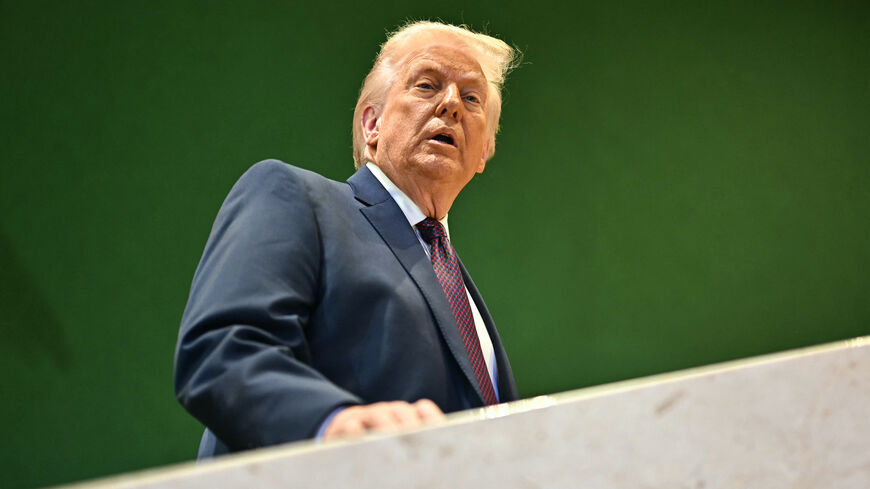
On Monday, Syrian Foreign Minister Asaad al-Shibani and Syria’s intelligence chief, Hussein al-Salama, met in the Saudi capital Riyadh with senior officials and members of the anti-ISIS coalition. Syria formally joined the coalition in November last year ahead of Sharaa’s landmark White House meeting that month with US President Donald Trump.
Iraq’s elite Golden Division and the SDF are acknowledged as having been the US-led coalition’s most effective partners against ISIS. A scheme to create a joint unit formed by the SDF and Syrian government forces that was floated last year has since fallen by the wayside, Ahmed told Al-Monitor.