



ISIS brides face uncertain future as Damascus clashes with Syria’s Kurds
With Syrian government forces taking over nearby al-Hol and security breaking down, families of ISIS fighters at Roj Camp live in fear and uncertainty.

ROJ CAMP, Syria — "ISIS," the acronym of the Islamic State, is scrawled in bold yellow paint over the side of a tent in this desolate camp housing the wives and children of jihadi fighters who came to Syria over a decade ago to establish their “caliphate.” The future of an estimated 1,700 families from 52 countries who live here was always uncertain, but never more so since fighting erupted on Jan. 6 between the Syrian Kurdish militia administering the camp and the government of Syria’s new Islamist president, Ahmed al-Sharaa. What began as clashes for control over two majority Kurdish neighborhoods in Aleppo rapidly escalated into a humiliating defeat for the Kurdish-led Syrian Democratic Forces, which lost more than two-thirds of the territory under their control. The latter includes the Arab-dominated areas of Raqqa and Deir Ezzor, where most of Syria’s oil wealth is found.
A four-day truce that was struck on Jan. 19 was formally extended by two weeks on Sunday amid concerted efforts by Washington to restore calm, while US forces began ferrying ISIS prisoners from several facilities to Iraq.
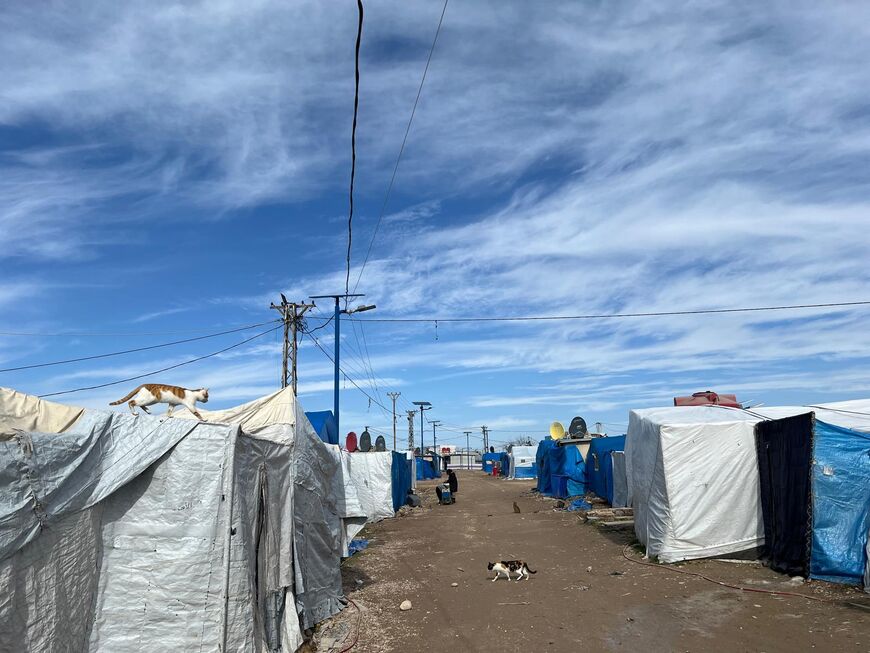
A scene from Roj Camp where the families of ISIS fighters are being held, Jan. 25, 2026. (Amberin Zaman/Al-Monitor)
The surprise move came as the chaos engulfing the region led to a breakdown in security at the detention facilities, allowing more than 100 ISIS detainees to flee from at least one of them and an unknown number of others to escape from al-Hol camp, the largest of the two internment camps for ISIS families in the eastern part of Hasakah province.


