



In Lebanon, a Hezbollah-run camp houses people escaping Syria


"They drove us out at gunpoint," says Lebanese citizen Zeinab Qataya, who fled her adopted home in Syria after the fall of Bashar al-Assad and returned to her country to live in a camp built by Hezbollah.
The construction of the Imam Ali Housing Compound has proved controversial, but Lebanese and Syrian families pushed out of villages just over the border in Syria say they now rely on the Iran-backed movement for safety.
Hezbollah has acknowledged intervening in Syria's civil war on Assad's behalf starting in 2013 from their foothold in the Qusayr area, home to border villages like Zeita where thousands of Lebanese Shiites have lived for decades.
The militant group was driven out of Syria during the campaign that toppled Assad, but it still holds sway in this pocket of northeast Lebanon, whose government has since vowed to disarm them.
"They burned our homes," says Qataya, a 56-year-old who fled Zeita for the Hezbollah-run compound.
"What matters to us is... being able to return home safely."
- Images of martyrs -
More than half a million Syrian refugees returned to their country from Lebanon after an Islamist coalition's victory over Assad in 2024.
The residents of the Imam Ali Housing Compound, meanwhile, were coming the other way.
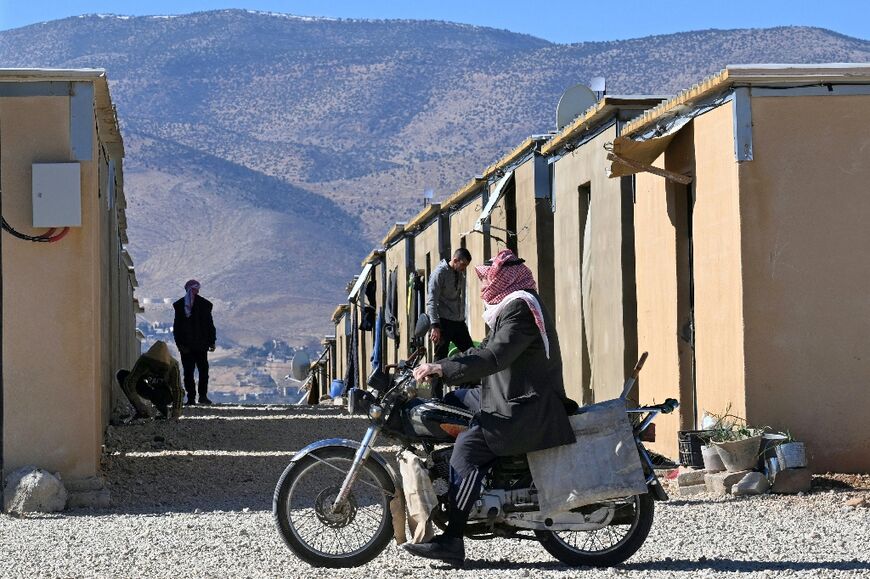
"The compound houses between 700 and 1,000 people," said a Hezbollah official accompanying an AFP team in a guided tour of the camp in the Hermel area.
"They are mostly Lebanese, with some Syrians," all coming from border villages the group controlled before Assad's fall, he said, speaking on condition of anonymity.
The Lebanese nationals living in Syria had retained their citizenship, but made the area around Qusayr their home, living and working alongside local Sunni residents.
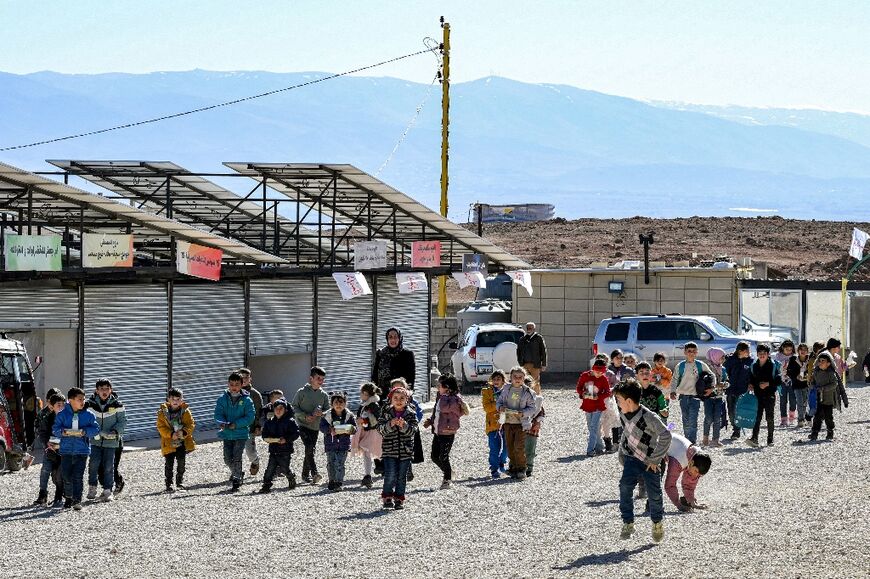
In the dry mountain winds, children returned from a Shiite religious celebration in Hermel and ran past the camp's store and barber shop to their ad hoc school.
The walls of the local mosque had images of slain Iranian generals, including renowned covert operations commander Qassem Suleimani, glued on them.
Portraits of killed Hezbollah chief Hassan Nasrallah and current leader Naim Qassem hung from housing units.
Hezbollah played a key role in Syria's 13-year civil war, fighting alongside Assad's forces.
When it first established itself in Qusayr, thousands of Syrians were forced to flee, but it hastily retreated from the country after Assad's ouster.
The border in the area is porous and poorly demarcated, which contributed to Lebanese nationals settling in Syria and facilitated the smuggling for which the region is known.
- Iranian donations -
In the compound, few residents were willing to speak to journalists, viewing them with suspicion.
Under Assad, Syria was part of Iran's "axis of resistance" against Israel and enabled the transfer of weapons and money from Iran to Hezbollah
The new authorities in Damascus have rejected Iranian influence and attempted to cut off the pipeline to the Lebanese movement.
Much of the Hermel compound's funding comes from private donations from Iran, the Hezbollah member said.
According to the group's al-Nour radio, the complex comprises 228 housing units.
When it was built last year, some media outlets critical of Hezbollah accused it of using the compound to harbour officials from the Assad government.
"We are not harbouring regime remnants here," said Ali al-Masri, an official in the Hermel municipality, calling the allegations "utter nonsense" and insisting that most in the camp were civilians.
In January, Lebanon's military said that it carried out a raid after "some media outlets and news websites circulated information about the harbouring of wanted individuals and the presence of weapons inside a compound" in Hermel.
The raid, it said, "did not result in any arrests or seizures".
- 'Living happily' -
According to the UN, around 115,000 people have entered Lebanon from Syria since the fall of Assad, many of them since the sectarian massacres that targeted the Alawite minority on the Syrian coast in March.
Around a million Syrian refugees who previously fled the civil war remain in Lebanon.
Khodr Ghurab, a 62-year-old van driver, said he was displaced from Zeita on December 8, the day Islamist-led rebels reached Damascus and Assad fled to Russia.
Ghurab, a father of four, accused the Lebanese state of not helping them, "as if we were not Lebanese".
"In Syria, education and transport were free... we were living happily."
This one's on us.
The story doesn't end here.
Our correspondents are already on the next chapter. Read everything they file, from $2/week.
See Offers