



Activist group Palestine Action wins legal challenge against UK ban


The High Court in London on Friday upheld a challenge to a UK government ban on activist group Palestine Action under terror legislation, saying it had interfered with the right to freedom of speech.
The 2025 ban put Palestine Action on a blacklist that also includes Palestinian militants Hamas and the Lebanese Iran-backed group Hezbollah, and sparked a severe backlash.
And it made it a criminal offence to be a member of the group or to demonstrate support for it - punishable by up to 14 years in prison.
Following a legal challenge by co-founder Huda Ammori, a three-judge panel on Friday found the ban was "disproportionate" and resulted in a "very significant interference with the right to freedom of speech and free assembly".
Judge Victoria Sharp, reading out a summary of the judgement in court, said only "a very small number" of Palestine Action's activities "amounted to acts of terrorism".
But UK interior minister Shabana Mahmood said she was "disappointed" and would appeal the ruling while Jewish representative bodies said they were "deeply concerned".
Palestine Action remains banned to allow the government to contest the decision, judges said, setting February 20 for a new hearing.
London's Metropolitan Police force said they would stop arresting the group's supporters pending the appeal and concentrate on gathering evidence.
The proscription led to nearly 3,000 arrests, primarily for people carrying placards defending the group, according to protest organisers Defend Our Juries.
Hundreds have also been charged and face court hearings.
"We won," said Ammori on social media after the ruling.
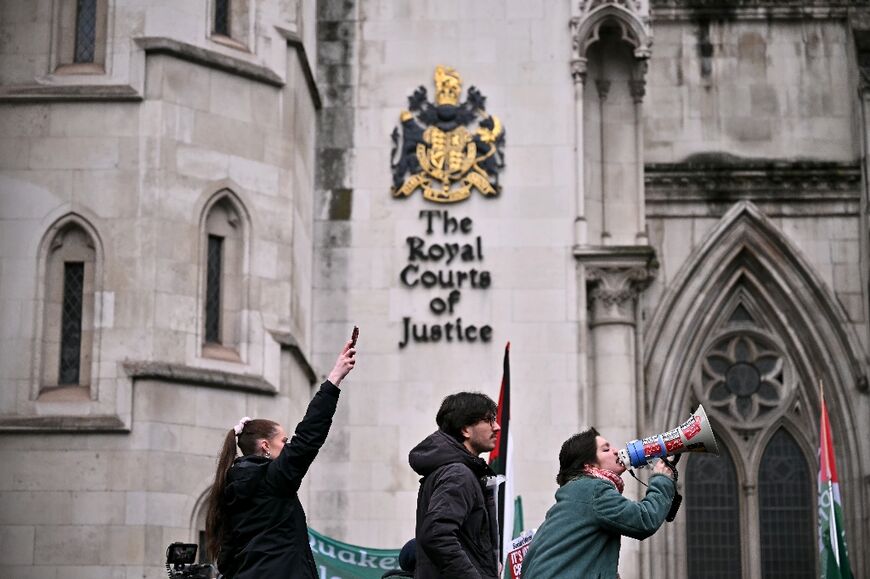
Outside the court, people waving Palestinian flags and wearing keffiyah scarves cheered and hugged each other.
One protester with a megaphone held up a placard saying: "Palestine Action is BACK!".
- 'Over the moon' -
Niall Pemberton, a 58-year-old retiree who has been arrested four times at pro-Palestine Action demonstrations, told AFP he was "over the moon".
"I think it shows that we were right that direct action groups should not be proscribed as terrorist organisations," he said.
The Board of Deputies of British Jews and the Jewish Leadership Council, however, said Palestine Action had repeatedly targeted Jewish-linked institutions and businesses "in ways that cause fear and disruption far beyond the immediate protest sites".
They called on the government and police to provide "clarity" on how they intended to ensure Jewish communities were "protected from intimidation and criminality" following the ruling.
The government banned Palestine Action in July, days after activists protesting against Israel's military assault on Gaza broke into an air force base in southern England and caused millions of pounds worth of damage to two aircraft.
United Nations rights chief Volker Turk has previously called the move "disproportionate and unnecessary".
The UK government had insisted that some of the supporters of the group "don't know the full nature of this organisation".
"The proscription of Palestine Action followed a rigorous and evidence-based decision-making process, endorsed by parliament," Mahmood said in a statement after the judgement.
But the court concluded "the claimant's claim is allowed. Subject to any further representations on relief (the appropriate remedy), we propose to make an order quashing the Home Secretary's decision to proscribe Palestine Action".
- 'Right the wrongs' -
In a recent interview with Britain's Channel 4, Ammori insisted the organisation "was about saving lives in Palestine".
"It's the very opposite of what a terrorist organisation is to most people," she added.
"Together we took action at great personal risk ... We helped make this proscription unenforceable," protest organisers Defend the Juries said in a statement after the ruling.
It called for a meeting with Mahmood and Metropolitan Police chiefs "to right the wrongs of the ban".
Set up in 2020, Palestine Action's stated goal on its now-blocked website is to end "global participation in Israel's genocidal and apartheid regime".
It has mainly targeted weapons factories, especially those belonging to the Israeli defence group Elbit Systems.
This one's on us.
The story doesn't end here.
Our correspondents are already on the next chapter. Read everything they file, from $2/week.
See Offers