Lebanon's FM snubs Iran, turns down invitation to visit Tehran: What to know
Youssef Rajji declined an invitation from his Iranian counterpart to visit Tehran, saying, "The appropriate conditions for such a visit were not present.”


BEIRUT — Lebanese Foreign Minister Youssef Rajji declined an invitation from his Iranian counterpart to visit Tehran on Wednesday, further straining ties between the two countries at a time when US-led pressure is mounting on Beirut to disarm Hezbollah.
What happened: Rajji said in a post on X that he sent a letter to Foreign Minister Abbas Araghchi, informing him that he would not visit Iran “under the current circumstances.”
“I clarified that declining the invitation did not mean a refusal to engage in dialogue, but rather that the appropriate conditions for such a visit were not present,” he wrote.
Instead, the top Lebanese diplomat suggested meeting in a neutral third country. He also expressed his readiness to start a new era of “constructive relations” between the two countries “based solely on mutual and absolute respect for the independence and sovereignty of each country and non-interference in its internal affairs in any form, regardless of the justifications.”
في ردي على رسالة الوزير الإيراني عباس عراقجي، أبلغته اعتذاري عن عدم قبول دعوته لزيارة طهران في ظل الظروف الحالية، وان الاعتذار عن تلبية الدعوة لا يعني رفضاً للنقاش، إنما الأجواء المؤاتية للزيارة غير متوفرة.
— Youssef Raggi (@YoussefRaggi) December 10, 2025
وجددت دعوته للقاء في دولة ثالثة محايدة يتم التوافق عليها، والاستعداد…
In an apparent jab at Hezbollah, Iran’s largest proxy in the region, Rajji stressed, “Building a strong state cannot be achieved unless the state, through its national army, alone possesses the right to bear arms and holds the exclusive authority to decide on matters of war and peace.”
He concluded his message by saying that Araghchi was always welcome to visit Lebanon.
Background: Last Thursday, Araghchi invited Rajji to visit Tehran in the near future to discuss bilateral relations and regional developments.
According to a statement from the Iranian Foreign Ministry, Araghchi sent a letter to his Lebanese counterpart emphasizing Iran’s “ongoing support for Lebanon’s territorial integrity, sovereignty, national unity and the country’s security and stability, especially in the face of the Israeli regime’s acts of aggression.”
Araghchi had extended a similar invitation to Rajji last month. In a Nov. 22 post on X, the Iranian official referred to remarks Rajji made in an interview with the local MTV station, during which he invited Araghchi to negotiate contentious issues in a neutral country.
In response, Araghchi said, “There is no need for a third country. I invite my colleague Youssef to travel to Tehran, and if I am invited to travel to Beirut, I will gladly accept,” reiterating that Iran does not interfere in Lebanon’s internal affairs.
Why it matters: Rajji’s rejection comes amid growing diplomatic friction between Iran and Lebanese officials following repeated Iranian criticism of Lebanon’s efforts to confiscate Hezbollah’s weapons.
The top diplomat had lashed out at Iran on Nov. 27 after Ali Akbar Velayati, Supreme Leader Ayatollah Ali Khamenei’s top adviser on international affairs, said that the “ongoing attacks and crimes committed by the Zionist entity against Lebanon show that the presence of Hezbollah has become more important for Lebanon than daily bread.”
“What is more important to us than water and bread is our sovereignty, our freedom and the independence of our internal decision-making, free from ideological slogans and transnational regional agendas that have devastated our country and continue to drag us further into ruin,” Rajji wrote on X.
In April, the Lebanese Foreign Ministry summoned Iran’s ambassador to Beirut over comments he made about Hezbollah’s disarmament, calling them a “clear conspiracy against states.”
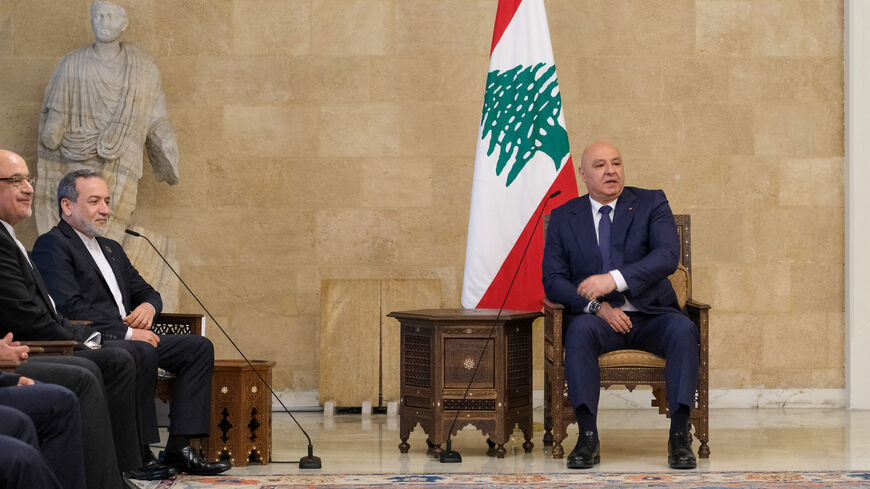
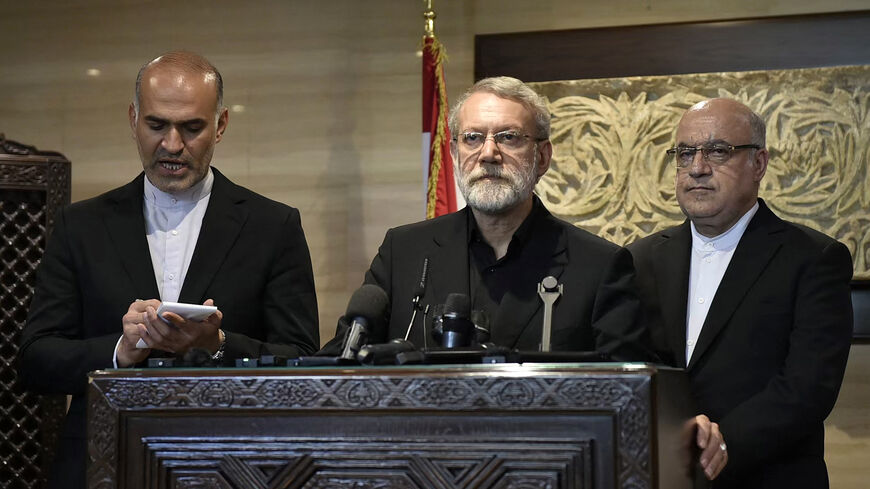
Rajji had met with Araghchi during the latter’s trip to Beirut in June. However, he refused to meet with Iran’s top security official, Ali Larijani, when he was in the Lebanese capital in August, citing Iran’s interference in Lebanon’s internal affairs.
Know more: Tensions remain high as Tehran’s influence appears to have weakened in Lebanon after Hezbollah suffered heavy losses during its 13-month war with Israel that ended with a US-brokered ceasefire in November 2024.
The Lebanese military has dismantled hundreds of Hezbollah sites and weapons depots in southern Lebanon as part of the ceasefire agreement. It is also moving forward with its plans to take control of all weapons outside the state’s authority before the end of this year amid growing US pressure.
Hezbollah has refused to hand over its weapons. In a televised speech last Friday, Secretary General Naim Qassem stressed Hezbollah’s right to defend itself as “non-negotiable,” saying, “No one in the world can prevent defensive capability; this is settled.”
“The Israeli attacks are not targeting Hezbollah’s weapons or the resistance, but are instead preparing the ground for a gradual occupation,” he added.
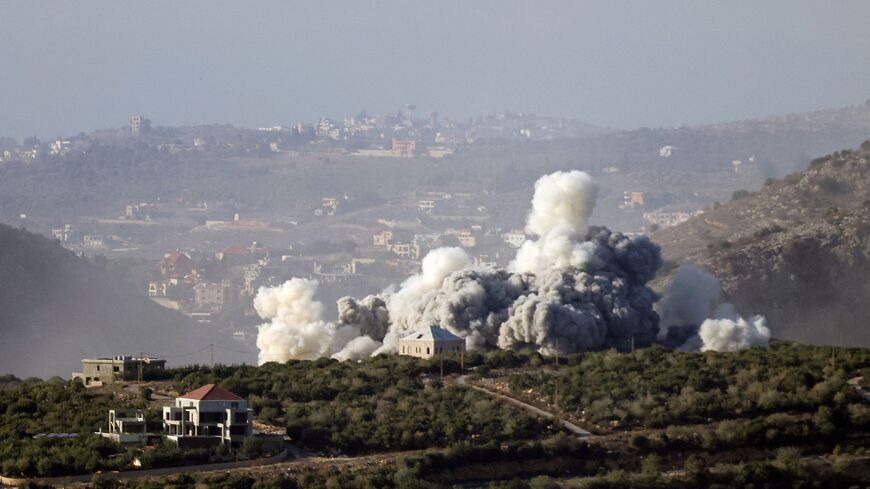
Israel has ramped up its airstrikes in south and east Lebanon in recent weeks, targeting what it says are Hezbollah’s efforts to rearm in violation of the ceasefire.
Last week, Lebanese and Israeli civilian officials held rare talks in Lebanon’s southern city of Naqoura — the first civilian-level talks in decades — as part of Washington’s efforts to avert renewed conflict.
The two parties are scheduled to hold another round of talks on Dec. 19.