Phosphate production poisoning Tunisian city
The phosphate refinery in Gabes offers employment opportunities, but it is also responsible for environmental degradation causing harm to public health, including high rates of cancer and kidney disease.


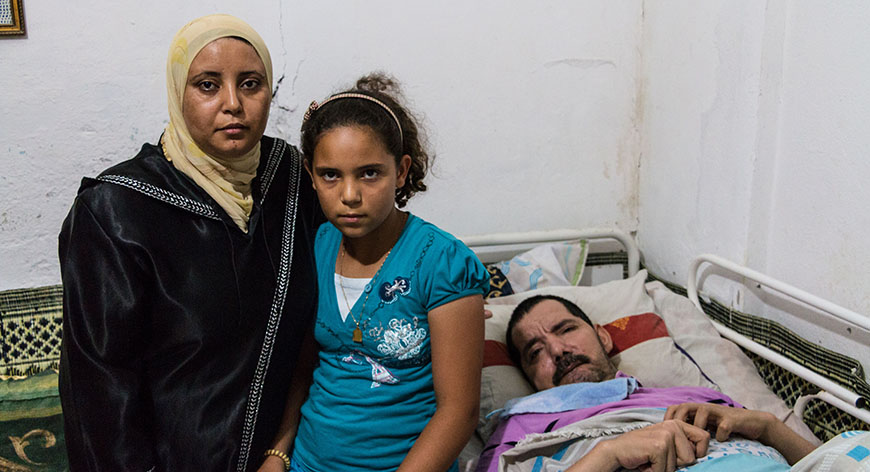
GABES, Tunisia — Wrapped in sheets on his bed, Atef Talmoudi, 46, is bathed by fluorescent light and surrounded by framed placards engraved with the word “Allah.” Nearly paralyzed, unable to speak and his hands balled into gentle fists, Talmoudi's dark eyes stare at the wall beside him. His wife and teenage daughter sit on the edge of the bed, faces blank, as they speak about his condition.
Talmoudi had worked much of his adult life as a fisherman in the Gulf of Gabes, an area of the Mediterranean once known for its rich marine life. According to his friends and neighbors, after years of working around the port, also the site of a state-run phosphate refinery, Talmoudi's health began to decline.
“After he got married, he deteriorated little by little. First he was exhausted. Then he began to tremble. Now, he can no longer speak,” said Mongi Chairat, one of Talmoudi’s neighbors who works in the phosphate refinery, sitting at his bedside.