



Turkey readjusts Gaza message
Turkey is softening its public stance on a proposed international stabilization force for Gaza, signaling flexibility as it seeks to balance a larger role in the ceasefire process with Israeli objections to Turkish troop involvement.
Greetings from Ankara.
With no snow on the ground and no pause in the headlines, this week in Turkey was anything but quiet.
This week’s edition takes a look at how Ankara is recalibrating its messaging on a proposed Gaza stabilization force amid Israeli objections alongside a roundup of the week’s top stories.
Here’s to hoping the weekend brings snow, or at least a little rain 🌨️☔
Ezgi (Follow me on X: @ezgi_akin)
What topics would you like to read more about in this newsletter? Please share your suggestions with me at eakin@al-monitor.com.

Leading this week
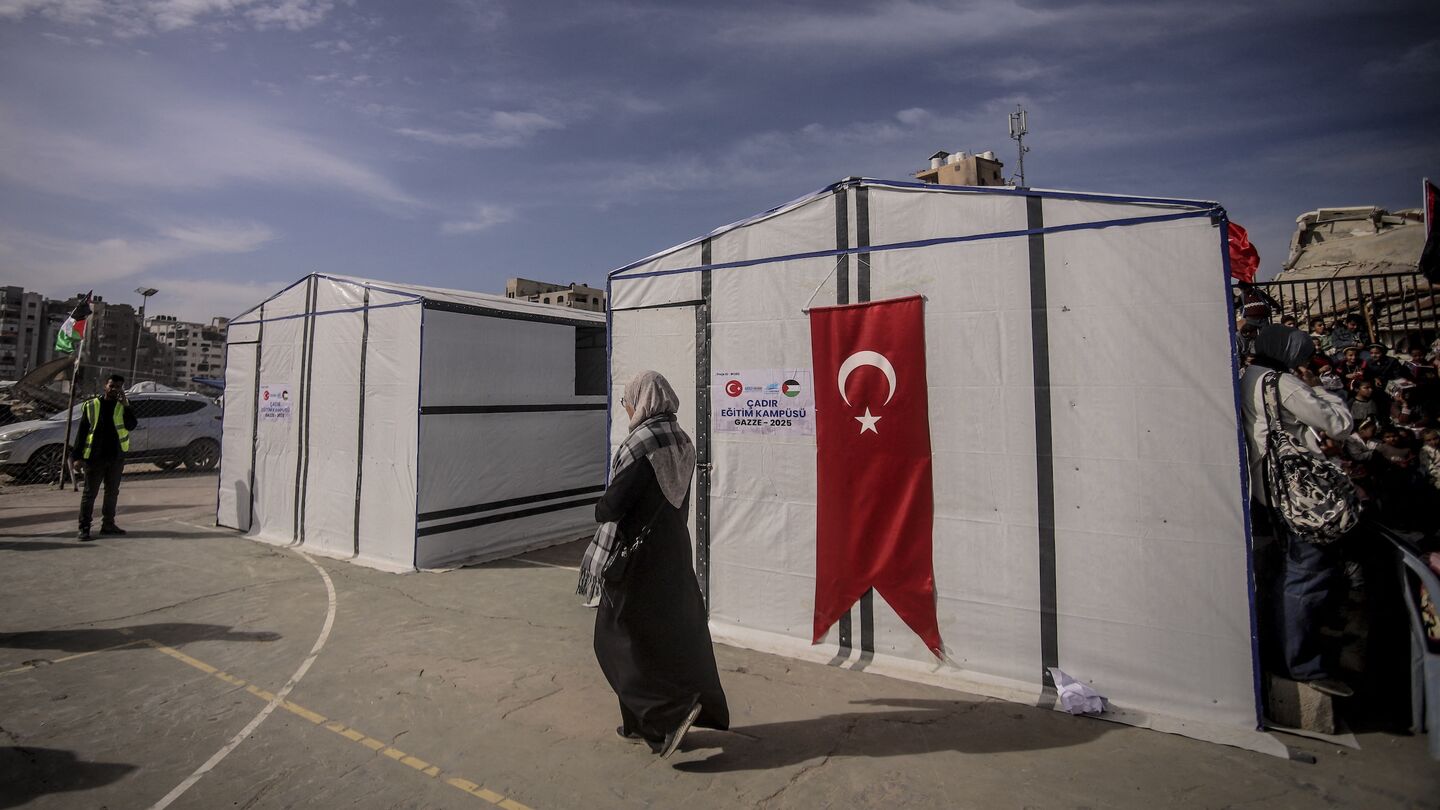
A woman walks past temporary classroom units at the UDEF Education Campus in Gaza City, Gaza on Dec. 9, 2025. — Saeed Jaras / Middle East Images / AFP via Getty Images
Turkey has softened its public messaging on a proposed international stabilization force for Gaza, signaling new flexibility as it seeks to navigate Israeli objections to potential Turkish troop involvement.
On Thursday, Turkish Foreign Minister Hakan Fidan downplayed questions of leadership and composition of a proposed force for the Palestinian enclave under US President Donald Trump’s peace plan, suggesting they were not Turkey’s main priority.
“We’re ready to participate in the ISF. The Israelis are objecting openly,” Fidan told TRT World in an exclusive interview. “But for us, to be honest … whoever is doing this, it’s a secondary question.”
He added that Ankara’s priority was implementation of the ceasefire plan and stabilizing conditions on the ground.
The ISF is a proposed multinational force that would oversee Israel’s phased withdrawal from Gaza and train vetted Palestinian police officers. Turkey, which played a direct role in efforts to persuade Hamas to accept Trump’s ceasefire plan, has repeatedly signaled eagerness to take part in the force.
Israel, in turn, has strongly opposed Turkish involvement amid the tensions between the two Mediterranean powers over the Palestinian conflict.
Earlier this month, Fidan portrayed Ankara’s potential role as a political anchor for other Muslim-majority contributors, arguing that Turkey’s involvement could lend public legitimacy to deployments that might otherwise face domestic backlash.
“They know we can play a leading role and make it easier for them in terms of public support,” he said on Dec. 6, speaking on the sidelines of the Doha Forum.
As President Recep Tayyip Erdogan has long been a champion of the Palestinian cause, Ankara has sought to expand Turkey’s role in the ceasefire process in order to strengthen the country’s international standing.
A potential Turkish troop deployment in Gaza would also bolster the government’s domestic support in a country where the Palestinian issue resonates strongly.
Israel, meanwhile, has strongly objected to Turkish involvement in a Gaza force, arguing that Ankara’s political stance toward Hamas could allow Turkey to shape postwar governance and security arrangements in the Palestinian enclave in ways Israel views as unfavorable.
Israeli Foreign Minister Gideon Saar openly opposed potential Turkish troops in October, saying, “Countries that want or are ready to send armed forces should be at least fair to Israel.”
Turkey does not designate Hamas as a terrorist organization, unlike the other NATO allies, and has hosted senior Hamas political figures, who have split their time between Turkey and Qatar in recent years.
Fidan’s comments on Thursday suggest that Ankara is signaling flexibility over its potential role in the ISF as Washington pushes to move to the next phase of its Gaza plan, including the establishment of the ISF.
The Turkish foreign minister’s remarks came ahead of his meetings with US Middle East envoy Steve Witkoff as well as Qatari and Egyptian officials in Miami on Friday for discussion of the ceasefire process.

Other top stories
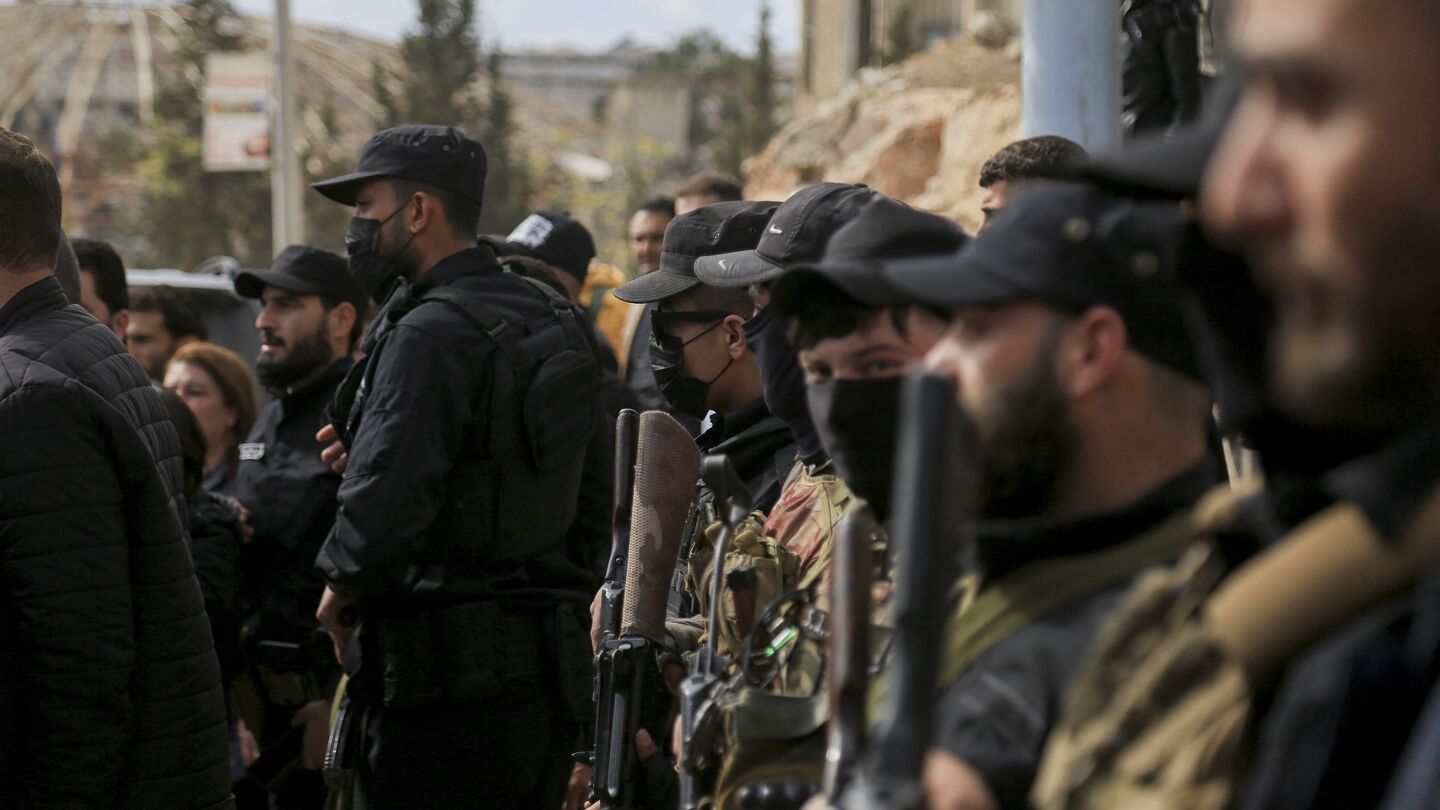
Armed personnel of SDF and public security forces of the new Syrian government stand guard in al-Ramun district of Aleppo, Syria, on April 3, 2025. — OMAR ALBAW/Middle East Images/AFP via Getty Images
Palmyra aftershocks: Amberin Zaman zoomed in on potential ramifications of the Dec. 13 Palmyra attack that killed two US troops and a civilian interpreter. The attack is already reshaping Syria’s power balance, intensifying pressure on the Kurdish-led Syrian Democratic Forces to integrate with Damascus, Amberin observed. Trump’s pledge of “very serious retaliation” and the administration’s overt backing of interim President Ahmed al-Sharaa signal a clear shift, with Washington doubling down on engagement with Damascus as the SDF slips from being its primary partner to a subordinate piece of a broader US-Syria strategy. For Turkey, the emerging US tilt toward Damascus revives long-standing questions about the SDF’s future and Ankara’s own room to maneuver in Syria.
Unwanted visitors from above: I reported on how Ankara moved quickly to defend its air-defense posture after F-16s shot down an unidentified drone near the capital and officials offered few details on its origin or the tracking timeline. Analysts say a drone making it inland toward Ankara raises uncomfortable questions about early detection as Black Sea spillover grows. That unease deepened Friday after authorities said a Russian-origin Orlan-10 reconnaissance drone was found in northwestern Turkey, fueling fresh questions about the scale and frequency of unmanned incursions.
Somali drills and ambitions: Barin Kayaoglu explores how Turkey’s move toward oil and gas drilling in Somalia could anchor Ankara more deeply in the Horn of Africa while heightening competition with regional and Gulf powers vying for influence.
Riyadh vs. Abu Dhabi, mic on: Meanwhile, don’t miss this must-listen podcast by Amberin with Joyce Karam that unpacks the escalating Saudi-UAE clash in Yemen, the regional stakes behind the fallout and how much leverage the Trump administration really has to contain it.
Red lines, songs of resistance and shared tables: On the culture front, it’s been a week of sharp contrasts. Turkey’s broadcasting watchdog moved to investigate the HBO Max series "Jasmine" over alleged violations of “national values,” as critics warned again of tightening red lines around artistic expression. Later this week, the watchdog ruled that the series violated Turkey’s “national and moral values” and ordered its removal from the platform’s Turkey catalog, imposing the maximum administrative fine on the streaming service.
Meanwhile, Amberin reported from northeastern Syria on Kurdish artists and women performers using music and dance as a front line of resistance in a rapidly shifting political landscape.
Finally, Nazlan Ertan’s weekly newsletter offered a reminder of culture’s quieter power, from communal tables in Eskisehir to exhibitions and books that celebrate memory, creativity and everyday life.
What we're watching
I’m watching Alice Roberts trace the vast and messy footprint of the Ottoman Empire by rail, starting near Turkey’s Syrian border, crossing Anatolia and the Balkans and ending in Budapest at the empire’s far western edge.
This one's on us.
The story doesn't end here.
Our correspondents are already on the next chapter. Read everything they file, from $2/week.
See Offers