Turkey's Libya maritime win no guarantee for Saddam Hifter's presidential ambitions
Turkey’s push to broker Libyan reunification has gained momentum with the ratification of a maritime deal, but political divisions and competing regional interests could limit Ankara’s influence.


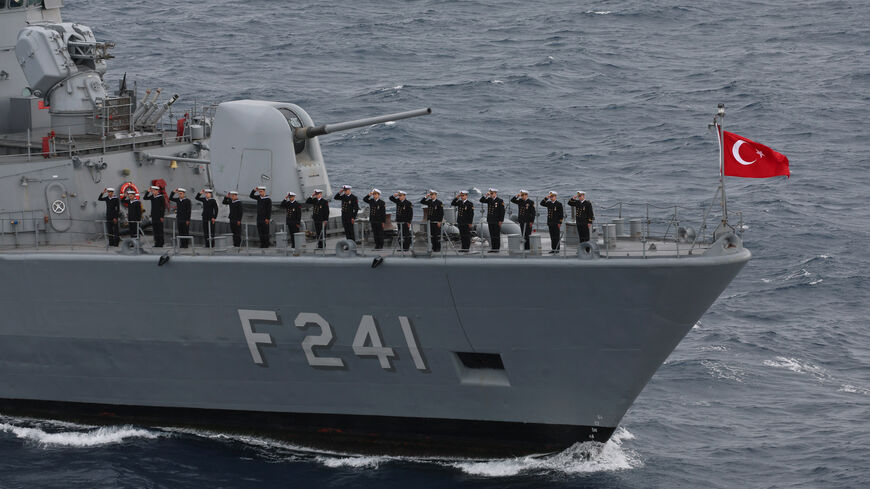
The Oct. 20 ratification by the Libyan House of Representatives of a controversial 2019 maritime deal that it had long rejected — one that effectively recognizes Turkey’s maritime boundaries in the Eastern Mediterranean at the expense of Greece, Cyprus and Egypt — is being widely hailed as proof of Turkey's inexorable rise as a regional superpower.
Analysts caution, however, that Libya’s political divisions and the competing agendas of regional stakeholders will ultimately expose the limits of Turkey’s leverage and that talk of imminent reunification brokered by Turkey may well prove immature.
Speculation of a breakthrough grew amid news that Ankara was hosting a meeting on Friday between Saddam Hifter, the deputy commander of the eastern-backed Libyan National Army (LNA) who was instrumental in getting the maritime accord approved, and Abdussalam Zubi, the acting defense minister of the Tripoli-based Government of National Unity.
The pair were expected to discuss an agreement to unify their two militaries, part of a broader effort to end Libya’s division.