


Abdul El-Sayed wins in Michigan, makes history as first Muslim senator
El-Sayed's victory came after an unusually fractious campaign that laid bare divisions within Michigan Democrats.
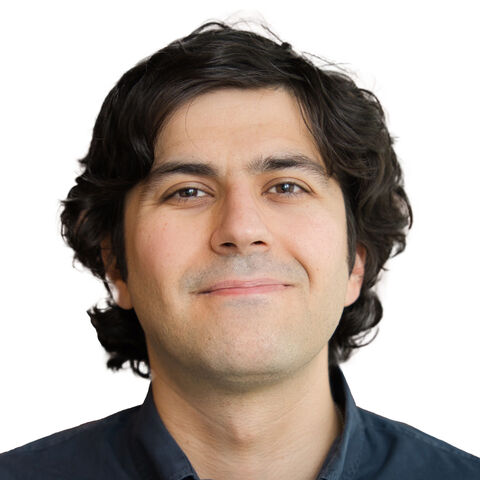

NEW YORK/WASHINGTON — Democratic nominee and son of Egyptian immigrants Abdul El-Sayed won Michigan’s Senate election, becoming the first Muslim American elected to the US Senate.
El-Sayed, 42, defeated Republican nominee and former congressman Mike Rogers, winning 51.9% of the vote with 85% of votes counted, The Associated Press reported.
El-Sayed was born and raised in the Detroit suburbs to parents who immigrated from Alexandria, Egypt. He studied at the University of Michigan, where he played on the lacrosse team, before earning a medical degree from Columbia University and a doctorate from the University of Oxford. El-Sayed worked for several public health institutions in Michigan before running for the Senate.
He has been married to psychiatrist Sarah Jukaku since 2006. The couple has two daughters.
El-Sayed's Muslim faith became the target of Islamophobic attacks during the campaign. In August, Sen. Tommy Tuberville (R-Ala.) called El-Sayed a "terrorist," while other Republican leaders labeled him a "radical Islamist" and "jihadist sympathizer." In late October, President Donald Trump called El-Sayed a "jihadist."
The senator-elect has said he is not guided by any particular ideology, telling journalist Roland Martin in July, “I’m a scientist, not a socialist.” Unlike some other young progressives in the Democratic Party, El-Sayed rejects the democratic socialist label, and he told CBS in August that he believes in capitalism.
Criticism of US foreign policy, particularly Washington’s support for Israel, featured prominently in his campaign.
After a bitter primary battle with Democratic Rep. Haley Stevens, El-Sayed faced an unusual twist in the general election when Stevens endorsed Rogers on Sunday, just two days before Election Day.
Michigan has the second-largest Arab American population in the United States after California, with the Arab American Institute estimating that the community numbers more than 392,000.
Michigan was home to upwards of 206,000 Muslim American voters in 2020, per the civic organization Emgage. Local media indicate there are around 7.4 million registered voters in the state, meaning Muslim Americans could account for roughly 3% of the electorate.
Pro-Palestine, Israel critic
Alongside domestic issues, El-Sayed made opposition to US support for Israel a key part of his campaign, pledging to end American military assistance to the state and impose an arms embargo covering both offensive and defensive weapons. He has regularly described Israel as an apartheid state that has committed genocide against Palestinians, allegations Israel denies.
The senator-elect has criticized Hamas as well, telling journalist Jim Acosta in August that he condemns the Palestinian group and that it has committed “war crimes.”
Asked by CBS journalist Ross Douthat on Sunday if he supports Israel’s right to exist, El-Sayed said “yes, if there is a shared understanding” of a two-state solution.
The issue became a major point of contention in his Democratic primary against Stevens. The divide continued after El-Sayed won the August primary, with Stevens publicly criticizing his comments on Israel and the campaign's handling of concerns about antisemitism.
Iran war opposition
El-Sayed has called for an immediate end to the US war with Iran and a return to diplomacy to prevent Tehran from pursuing nuclear weapons. The senator-elect’s campaign platform points to the 2015 nuclear deal with Iran as a model for resolving the issue, arguing that military intervention is neither effective nor justified.
In an October ad geared toward Republicans, El-Sayed said that he wants to “stop wasting our tax dollars on overseas wars.”
When asked by an Iranian-American student in September to stand with anti-government protesters in Iran and denounce the Islamic Republic, El-Sayed said he supports “democratic movements” but is against “regime change” abroad, adding that “it is the responsibility of the people of Iran to decide what their leadership should look like.”
Other MENA positions
El-Sayed has expressed criticism of US aid to other countries in the Middle East, telling reporters in late October, “I don’t think we should be funding foreign militaries generally. That’s Israel. It’s also Egypt. It’s also Saudi Arabia and Qatar and UAE.”
Egypt receives around $1.3 billion in annual US military aid, an arrangement established following the North African country’s 1979 peace treaty with Israel. Saudi Arabia, Qatar, and the United Arab Emirates do not receive US military assistance, but are major buyers of American arms.
El-Sayed has also condemned US military aid to Azerbaijan, emphasizing Armenian security and self-determination, and was endorsed by the Armenian National Committee of America for those positions.
By contrast, El-Sayed is supportive of US aid to Ukraine. Ukraine has received more than $68 billion in US security assistance since the Russian invasion in 2022, according to a June Congressional Research Service report.
El-Sayed has denied any connection to the Muslim Brotherhood, pushing back on allegations from Republicans. El-Sayed told Fox News in October that he “will support a terror designation for any organization that is engaged in or committed to political violence” in response to a question about the Trump administration’s January terrorist designations of Muslim Brotherhood affiliates in Egypt, Jordan and Lebanon.
On Syria, El-Sayed told Al Jazeera Arabic in October that he supports the removal of Assad regime-era sanctions on the country, which the Trump administration lifted last year.
This is a developing story and will be updated.
This one's on us.
The story doesn't end here.
Our correspondents are already on the next chapter. Read everything they file, from $2/week.