



Israel’s Mossad chief spearheads campaign against Iran in Syria
Mossad head Yossi Cohen delivered an aggressive speech against Iranian entrenchment in Syria, reflecting the forceful policy adopted by Prime Minister Benjamin Netanyahu.

It seems that the recent events on the northern front — with its ongoing conflicts between Iran and its proxies vis a vis Israel backed up by the United States — were set up by an experienced Hollywood script writer. On the night between June 30 and July 1, an extended aerial assault was carried out; the integrated, extensive attack against Iranian/Hezbollah targets in Syria was attributed by the foreign press to the Israeli air force. At the same time, according to Western reports, American planes attacked terror targets in the Aleppo region. Apparently, this was a targeted strike on a meeting of the officers of one of the al-Qaeda branches. The two airstrikes were carried out in an area full of Russian S-400 missiles that were not activated. The Syrians announced that they launched a large number of (less sophisticated) anti-aircraft missiles, one of which fell and blew up in Turkish Cypriot territory. This might mean that the attacking aircraft came from the West, probably from Lebanon’s aerial space.
This is the first assault against Syrian targets since the trilateral summit meeting of US, Russian and Israeli national security advisers that took place in Jerusalem June 25. At the moment that this article is being written, no Russian reaction to this assault has been registered. This strengthens the theory that the Russians are playing a double game: They publicly condemn the continued Israeli airstrikes but privately don’t oppose them and perhaps may even encourage them behind closed doors.
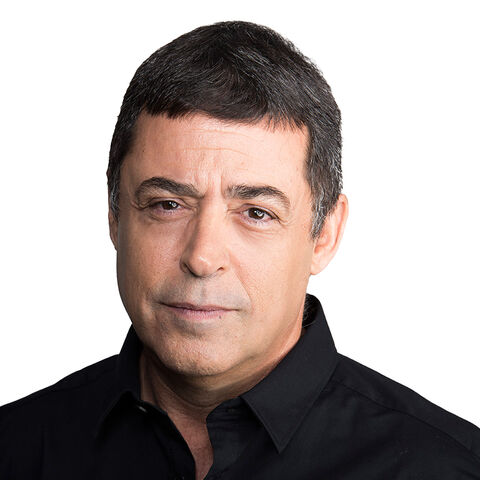
On Monday morning, after the flames died down and the dust settled, head of the Israeli Mossad Yossi Cohen delivered a rare speech at the Herzliya annual conference. Most of his speech focused on the Iranian conundrum: the Iranian efforts to establish themselves in Syria, and the war that Israel announced against this very intention. Cohen’s timing — his eyes are on a political career after his term in the Mossad — was perfect: the morning after a massive aerial attack attributed to Israel by Syria. When he finished, the Syrians had their turn to address the assault: “Don’t be complacent,” said Syrian Deputy Foreign Minister Faisal al-Mekdad. “In the future, Syria may well change its response to this type of Israeli aggression.” In other words: The era of Syrian restraint in the face of Israeli air force actions on Syrian territory is coming to an end. But according to what we see on the ground, it is doubtful whether this will actually happen.


