



Will first-ever primaries shake up Israel’s ultra-Orthodox?
For the first time since the establishment of Israel, an ultra-Orthodox party will hold primaries to determine its list for the next election instead of relying on rabbis to name them.
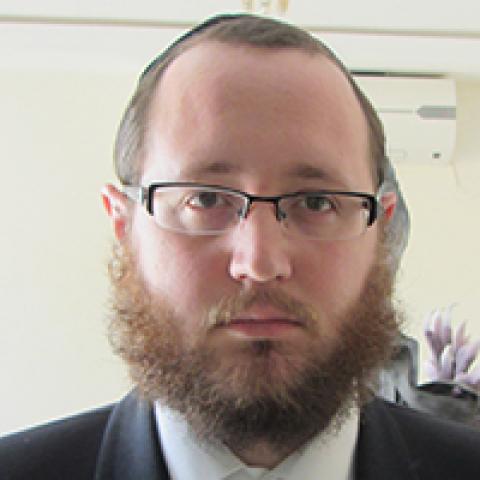

Former minister and Knesset member Eli Yishai, the former chairman of ultra-Orthodox Shas who ran in the last election in a new party (Yachad), revealed on Oct. 16 that the party will hold open primaries in advance of the next election. These primaries will determine Yachad's list for the Knesset. In the 2015 election, the Yachad list didn’t win the minimum votes for a seat in the Knesset, but Yishai is not giving up.
Yishai’s decision to hold primaries has shaken up the ultra-Orthodox community. Since the establishment of the state, ultra-Orthodox parties have never held primaries. The parties’ leading rabbis determine the lists of candidates, making an effort to represent the sector’s subgroups on the list.
Actually, secular parties like Defense Minister Avigdor Liberman’s Yisrael Beitenu, Yair Lapid’s Yesh Atid and even Finance Minister Moshe Kahlon’s Kulanu also don’t hold primaries — a point that is much critiqued in Israeli political discourse. Thus, the decision of a party that defines itself as ultra-Orthodox to hold primaries is undoubtedly an unusual move, since at least in the eyes of some party members it indicates the beginning of a much bigger change that could even lead to a revolution in the way all of the ultra-Orthodox parties’ lists are composed.
But such primaries could also affect Israeli politics in general. In recent years ultra-Orthodox politicians have proven to be "kingmakers," tilting the political balance between right and left and deciding the composition of the government. Opening ultra-Orthodox parties to primaries could shift voters from "flexible" ultra-Orthodox parties (who might join either a right-wing or a leftist government) to the clearly right-wing Yachad. Primaries could also influence the behavior of ultra-Orthodox politicians, as they would be accountable not only to the rabbis but also to their electorate.


