



What is Chechnya's Kadyrov up to in Middle East?
Chechen leader Ramzan Kadyrov has recently been engaging leaders in the Middle East, but not just with Chechnya's interests in mind.
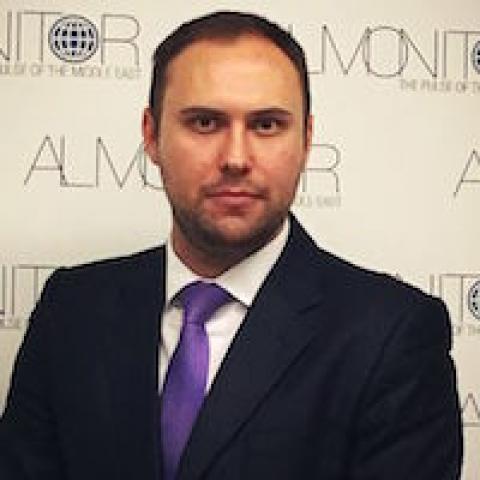

In recent years, Chechnya has been conducting a dynamic activity beyond Russia’s borders. Once a rebellious land, but now one of the most loyal republics to the Kremlin, it has built a number of economic and political contacts, including some of the most influential leaders in the Middle East. Its charismatic leader, Ramzan Kadyrov, positioned himself as a staunch “foot soldier” to Vladimir Putin willing to provide support — military and political alike — for whatever initiative the Russian president comes up with. Kadyrov has been extremely supportive of the Russian operation in Syria: He supported Chechen volunteers fighting for Assad as well as sending members of Chechen law enforcement to help guard Russian military facilities in Syria.
On Nov. 27, Kadyrov came to Saudi Arabia at the invitation of Deputy Crown Prince Mohammed bin Salman, also the defense minister and chairman of the Council on Economic Affairs and Development. The two discussed the issues of combating terrorism and religious extremism as well as relations between Russia and Saudi Arabia in the region. Kadyrov’s visit is timely: Russia is helping the Syrian government to gain more ground, and as interested regional parties are trying to figure out the future for Syria and themselves after the US election, some — especially those who feel their position is unlikely to get any stronger under the new administration — continue to seek better relations with Moscow. From that perspective, Kadyrov might be a Kremlin messenger. Having warm personal ties with Saudi leaders, a reputation of being a strongman and ambitions of becoming a renowned Islamic authority, he is well-positioned to better convey Russia’s interests to the Saudis as well as to negotiate thorny issues between Moscow and Riyadh.
Recently, Kadyrov has proved helpful to Russian diplomacy in the region. In October 2016, he came into the spotlight as a top middleman for getting three Russian sailors released in Libya. Members of the Russian tanker Mechanic Chebotaryov were captured by Libyan authorities in September 2015 on accusations of oil smuggling. The process of releasing the sailors was a lengthy, diplomatic effort: Two members of the crew were released within a month after the seizure in October 2015, but it took almost a year to free the other three. The Chechen leader boasted of his role in the negotiation process on his Instagram account, saying his personal aide, Adam Delimkhanov, had been directly in touch with the chairman of the Libyan Council, chairman of the Higher State Council and head of the Libyan investigation committee throughout the process. Kadyrov also noted that Russian Foreign Minister Sergey Lavrov was personally involved in the release, while sending the Kadyrov delegation to Tripoli was coordinated with the Russian Foreign Ministry. It is remarkable that the unique contacts the Chechen leader has built are being occasionally used by Moscow in its diplomatic activity, including double-track initiatives.
Those who are more suspicious of Kadyrov see these efforts as an attempt to enlarge his own power and gain Chechnya more “de facto international legitimacy.” One of Russia’s experts on the Caucasus, who preferred to be quoted on condition of anonymity, said, “To date, Kadyrov understands that the project of a successful and prosperous Chechnya can and should be implemented within the Russian Federation — no doubt he is not fostering separatist ideas. But as someone thinking about the future, he also understands that his “personal contract” with Putin may be reviewed at some point — not necessarily under Putin himself. Therefore, it makes sense to build relationships while there is such opportunity — just in case.”


