



Bereaved Israeli, Palestinian families call to stop war
Ben Kfir, who lost his daughter in a 2003 terror attack, recounts to Al-Monitor his efforts at explaining to Israelis that only a diplomatic agreement will end the violence: “The infrastructure of terrorism is poverty, ignorance, despair and hopelessness.”
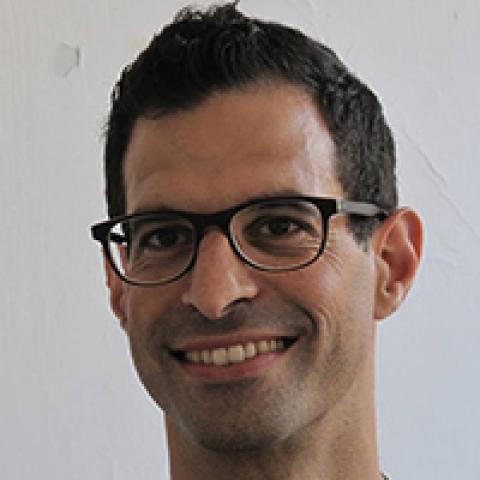

It’s quiet in the home of Ben Kfir in northern Ashkelon, which stands along the first row of houses across from the beach. Its wooden balcony overlooks the Mediterranean. “Wait until there’s a siren and you start to run,” Kfir says, explaining that the house is located in the center of a triangle of rocket strikes: “Pieces of Iron Dome [air defense system missiles] fell on the fence of a house to the north of here and destroyed it. A rocket landed to the south of here and destroyed a garden and the wall of a house. To the east, a rocket hit a supermarket. I sit on the balcony and count the rockets heading for Ashdod [some 10 kilometers (6.2 miles) to the north]. Sometimes they’re so close you can read their serial number.” He speaks calmly, but he’s the last person to accept the Gaza rocket threat as a heavenly decree. He refuses to sit by helplessly.
Kfir has already been dealt a terrible blow by the Israeli-Palestinian conflict. A Hamas suicide bomber murdered his daughter Yael in an attack near the Tzrifin military base in 2003. A bereaved father living 16 kilometers (10 miles) from the Gaza Strip, in a Qassam-stricken town, he took the stage on the night of July 26 at the Rabin Square rally and said, “Our prime minister never misses an opportunity to stand in front of every microphone and say that the terror infrastructure must be destroyed, and I certainly agree with him. But I believe that Hamas is not the infrastructure of terrorism. The infrastructure is poverty, ignorance, hopelessness, despair and the basic absence of security. These are not things the IDF [Israel Defense Forces] can handle, and as my 8-year-old granddaughter says, 'One doesn’t put out fire with fire.'”
He talks with heartbreaking yearning for his 21-year-old daughter who was murdered with her entire future ahead of her. He describes how he thought of murdering Palestinian laborers at a nearby construction site in revenge, but understood that the circle of violence was not the answer. The search for a different solution led Kfir to The Parents Circle Families Forum, an organization of some 600 Israeli and Palestinian families all of which have lost first-degree relatives as a result of the conflict. “The encounter with this group gave meaning to my life, and our joint work is what gives me strength to get out of bed in the morning. We have one goal — to prevent additional bereavement on both sides,” he says.
The text of the interview follows:


