



Netanyahu government 'Israelizes' east Jerusalem
While the idea of two capitals for two states is being discussed between the Israeli and Palestinian delegations, Jerusalem's mayor and the government promote building plans in east Jerusalem.
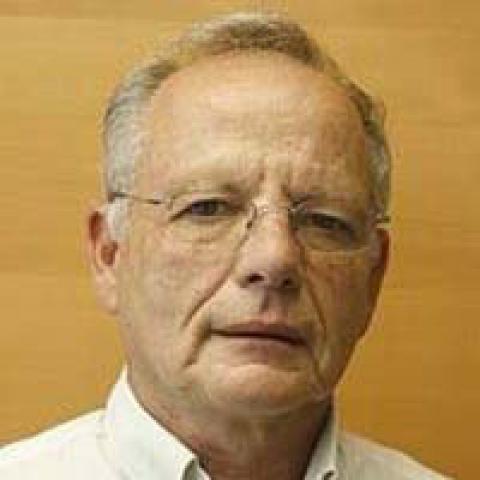

“It’s impossible to divide Jerusalem, because you can’t divide an idea.” — Chairman of Yesh Atid, Minister of Finance Yair Lapid.
If this thought, expressed by the leader of the second-largest political party in Israel, a party claiming to represent the Israeli mainstream, were an opinion shared by most citizens, then the statesmen and civil servants working night and day to reach a final status agreement to end the Israeli-Arab conflict were wasting their time. Lapid didn’t stop at inventing empty slogans; he took part in the decision of the prime minister, Benjamin Netanyahu, and Minister of the Interior Gideon Sa’ar to advance a series of construction plans in east Jerusalem, in parallel with the release of Palestinian prisoners. Why not? If you can’t divide the idea of Jerusalem, there’s nothing to prevent the building of new Jewish neighborhoods and the expansion of existing ones in all parts of the city.
The day after the construction plans were announced, on Oct. 30, a special conference organized by the Palestinian-Israeli Peace NGO Forum was held at the Jerusalem Cinematheque, titled, “Jerusalem: two capitals for two states: too late or still possible?” Although the UN special coordinator for the Middle East peace process, Robert Serry, who welcomed conference participants, said, “We must find a way to reach two capitals for two states in Jerusalem,” and even emphasized that his words reflected the explicit position of UN Secretary-General Ban Ki-moon, all of the academic and civil society experts who spoke after him sketched a gloomy picture that raised substantial doubts about this idea.
Danny Seidemann, a lawyer who is one of the most experienced and knowledgeable experts on negotiations regarding Jerusalem, argued that since 2010 we have witnessed a boom in settlement construction that hasn’t been seen since 1967. Seidemann emphasized that this was a strategic move meant to draw a border that would impose Israeli hegemony throughout the greater Jerusalem region. He spoke about a recent meeting he had with a senior official in the Israeli government (at the break he was willing to tell me that this was a defense official), who shared Netanyahu’s position. The official, said Seidemann, admitted to him that the planning and construction in the greater Jerusalem region were meant to achieve what he termed “a reshaping of the territory.”


