



Radical Islam Movement Gains Momentum Among Israeli Arabs
The leader of the extremist northern faction of the Islamic movement, Raed Salah, drew tens of thousands of Muslims to a rally in support of the Egyptian Muslim Brotherhood and against coexistence within Israeli society.
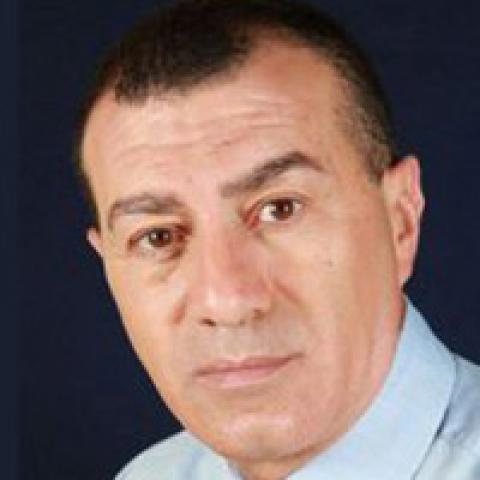

On Friday, Sept. 20, the annual rally of the northern faction of the Islamic movement in Israel was held in Umm al-Fahm, under the banner, “The Al-Aqsa Mosque is in Danger.” But Jerusalem was not at the center of the event — one of the largest organized by the movement in Umm al-Fahm — but rather the ouster of Egyptian President Mohammed Morsi and the Muslim Brotherhood in Egypt.
The northern faction of the Islamic movement in Israel has been led by Sheikh Raed Salah since the 1990s. Salah, whose father served as a policeman in the Israeli police, joined the Islamic movement while it was still unified under the leadership of Abdullah Nimer Darwish, but very soon became the leader of the movement’s extremist line, which opposed the institutions of the state of Israel. With this agenda, he was even elected mayor of Umm al-Fahm (1989-2001). In the eyes of Jewish Israelis, during his term the city seemed hostile, governed and supported by religious fanatics who identify with Hamas.
Raed Salah expressed this identification not just with declarations and statements but with deeds. After the signing of the Oslo Accords between Israel and the PLO (1993), which left Hamas outside the Palestinian political dialogue, he succeeded in gathering enough support to break away and tore the Islamic movement in two, with an extremist northern faction under his leadership, and a more moderate southern faction.
Over the course of years, he’s been arrested, tried and jailed several times, for such charges as collaborating with an enemy agent, after his movement transferred funds to Hamas during the second intifada, at the height of the period when suicide bombers were regularly sent to Israeli territory.


