



Naftali Bennett Brings New Start For Israel's National Religious Party
Will the young leader of the National Religious Party, Naftali Bennett, be able to overcome the old rabbinical establishment and restore his party's spirit of openness, wonders Nadav Perry.
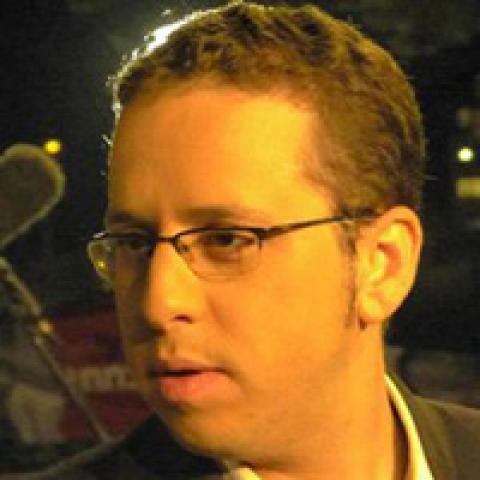

We should all keep in mind the same winning slogan that accompanied Minister of Trade and Industry Naftali Bennett over the past year on his journey from the realms of almost total anonymity to the peak he reached in the recent elections. “Something new is beginning,” the young Bennett promised his party membership when he ran in the primaries against its ossified, old-time leadership. “Something new is beginning,” Bennett promised voters during the general election campaign. Hundreds of thousands were in fact persuaded that the fresh young idealist represented a vibrant, new brand of religious Zionism, which for years had been kowtowing to ultra-Orthodox Judaism instead of fulfilling its historic role as a bridge between religious and secular Jews, and between religion and state. Now Bennett has to make good on his promises and to prove that a new beginning is, indeed, at hand.
During the early years of the state, the national religious movement represented all that was beautiful in the Jewish religion. While the ultra-Orthodox were quick to shut themselves off in their own ghettos and totally separate themselves from Israeli society, those wearing ''knitted skullcaps'' — the trademark of the national religious movement — tried to live in both worlds: studying religion as well as working, attending rabbinical colleges as well as serving in the military, praying in a synagogue as well as taking in a good movie. The early leaders of the National Religious Party (Mafdal) portrayed this combination best — people like Haim-Moshe Shapira and Yosef Burg, whose conduct and very being signaled a pleasing moderation.
The 1967 Six-Day War marked a historic change. The young generation of the religious-Zionist movement abandoned the “national” component in favor of a “nationalistic” one. Religious Zionism threw itself wholeheartedly into promotion of a massive settlement drive in the territories and the National Religious Party (Mafdal), which had previously struck a historic alliance with various incarnations of the Labor Party, ceased being a bridge and turned into a distinctly right-wing party.
The radicalization on the political and diplomatic front was accompanied by a turn toward religious extremism. Some of those defining themselves as “national religious” became “national ultra-Orthodox” and the moderate leadership was replaced by a small group of politicians and rabbis. This process of radicalization culminated in recent years with the conscious and voluntary decision of the national religious politicians to hand over veto powers to their rabbis. And thus, just like the ultra-Orthodox parties, and in total contradiction to its historic mission, Zionist-religious politics became politics by rabbis. The rabbis determined, the rabbis decided, and the politicians, gray and tired, became willing executors of their orders.


