



Lebanon's First Civil Marriage A Sign of Change
On April 25, 2013, the first civil marriage was officially registered in Lebanon, a move that could forebode a radical change in the longstanding political sectarian system, writes Jean Aziz.
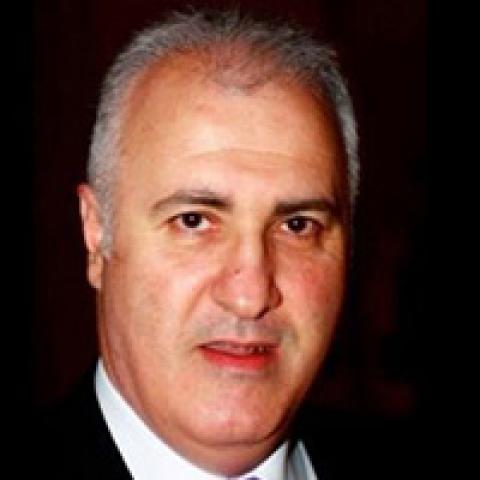

Months after the contract was signed [Oct. 10, 2012], the Lebanese Interior Ministry agreed on April 25, 2013, to register the first civil marriage contract "made in Lebanon." The issue does not end here for some religious officials, particularly those from the Sunni community. It also does not end here for activists defending human rights and civil society in Lebanon. It is a step that will be recorded in the history of Lebanon's political, legal and constitutional system, as will the names of those involved: Kholoud Sukkarieh and Nidal Darwish.
For the first time since 1936, when the French Mandate governing Lebanon instituted sectarian personal status laws in Lebanon, two Lebanese citizens were able to conduct a civil marriage on Lebanese territory — without being forced to resort to a religious authority, among the 18 authorities spread over the 18 legally recognized religious sects.
It was not a coincidence that Kholoud and Nidal signed their marriage contract — in the presence of a notary public — on Oct. 10. They wanted the date to correspond to the anniversary of the signing of the Universal Declaration of Human Rights in 1948.
Just over four months ago, the two — along with many other civil society activists and defenders of human rights in Lebanon — embarked on a fierce battle to confront the "religious authorities." This confrontation reached its peak on Jan. 28, 2013, when Sunni religious figures held a meeting at their official headquarters, Dar al-Ifta, headed by Sunni Mufti Mohammed Qabbani. Following the meeting, they issued a fatwa saying: "Every Muslim official, whether a deputy or a minister, who supports the legalization of civil marriage, even if it is optional, is an apostate and outside the Islamic religion. [Such officials] would not be washed, would not be wrapped in a [burial] shroud, would not have prayers for their soul in line with Islamic rules, and would not be buried in a Muslim cemetery." The fatwa's ruling that some Muslims are "apostates" has dangerous practical implications in some Islamic societies. For "spilling the blood of an apostate" — or a ruling to kill him — is permissible according to sharia or Islamic law, which punishes those who leave Islam with death. Nonetheless, Kholoud and her "husband" Nidal, continued their struggle, accompanied by an active and persistent civil society.


