



Why Khaled Meshaal Should Thank Israel
The Israeli military operation in Gaza positioned Khaled Meshaal, head of the Hamas political bureau, to be re-elected to the leadership of Hamas, writes Shlomi Eldar.
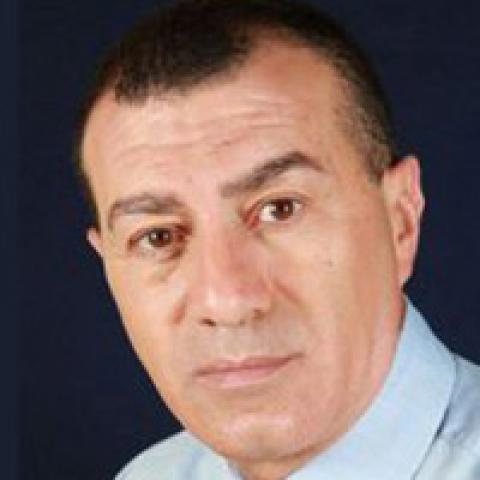

Once again, Israel determined who became the head of Hamas. In Cairo this Monday [April 1], Khaled Meshaal was elected unanimously to head the movement’s political bureau and to be the leader who ultimately determines its policies.
At a conference of the political bureau members in Khartoum just over a year ago, Meshaal announced that he would not run for the position again, effectively announcing his retirement. “I’m tired,” he said, “but I will continue serving as a loyal soldier in Hamas’ army of reservists.” The truth is that at that particular moment in time, Meshaal had plenty of reasons to announce his retirement, but none of them had to do with exhaustion. It makes much more sense to assume that he thought he would lose, given opposition by the movement’s leaders in Gaza to the diplomatic strategies he pursued.
Hamas official Dr. Mahmoud al-Zahar — and to a great degree Hamas Prime Minister Ismail Haniyeh, too — opposed the compromising attitude he adopted during the Cairo reconciliation talks with Palestinian Chairman Abu Mazen. There, Meshaal declared that Hamas would go from being a movement engaged in “armed resistance,” to one involved in a “popular uprising,” similar to the Arab Spring. Meshaal made the (correct) assessment that an armed struggle involving terrorist attacks and the firing of Qassam and Grad missiles at Israel would do nothing to alter Hamas’ standing. He realized that Israel is an established fact, and that the Palestinians would have to learn to live with it.
His problem was that this approach was deemed illegitimate and essentially off-limits to his colleagues in the movement’s leadership. In other words, Meshaal was on the verge of becoming a “dead horse” politically.


