MBS visits Egypt as Houthi attacks escalate
Squeezed by Houthi advances in the south and attacks on its main pipeline from the north, Riyadh is combining military pressure, regional coordination and diplomacy.


Leading this week
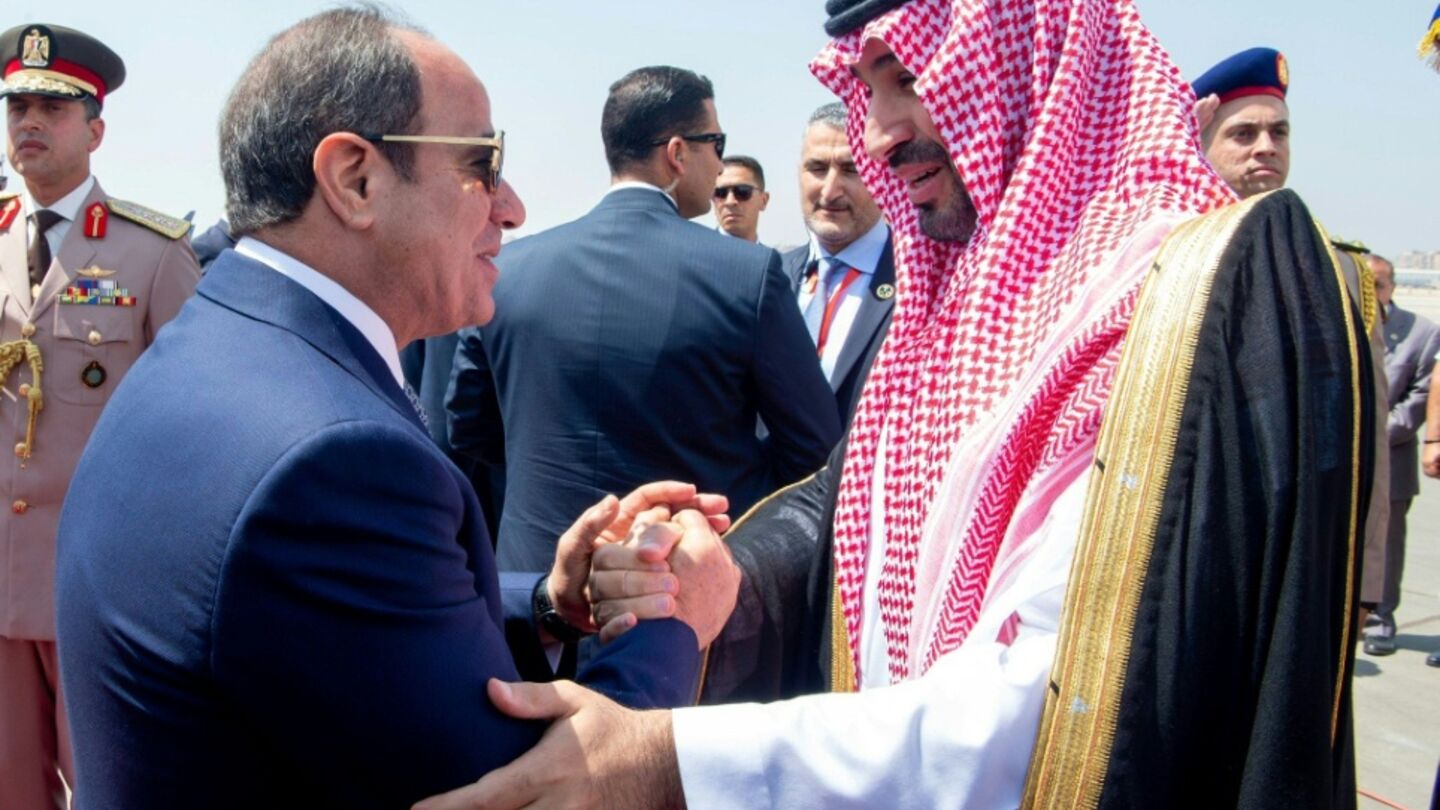
Egyptian President Abdel Fattah al-Sisi met the Saudi de facto ruler Crown Prince Mohammed bin Salman in Cairo — Ahmed NURELDINE/AFP
In Cairo on Tuesday, Saudi Crown Prince Mohammed bin Salman and Egyptian President Abdel Fattah al-Sisi stressed the need to protect navigation through the Bab al-Mandeb Strait and the Red Sea, according to the Egyptian presidency. Sisi also backed Saudi measures to defend the kingdom and efforts to reach a sustainable political solution in Yemen.
Context: The talks came amid a sharp escalation in the region. Over the past week, the Houthis seized high ground overlooking Bab al-Mandeb, while attacks on Saudi pumping stations forced the closure of the kingdom’s East-West Pipeline. Riyadh blamed the strikes on Iran-backed militias in Iraq.
Meanwhile, Gulf-Iran talks in Oman were postponed at Saudi Arabia’s request, according to Tehran. On Tuesday, Saudi authorities also briefly activated an emergency alert in Mecca — the first such warning in the city since the escalation began.
Why it matters: With tanker traffic through the Strait of Hormuz reduced to a trickle, the East-West Pipeline has become Riyadh’s critical bypass for moving crude from its eastern oil fields to the Red Sea.
The pipeline can carry roughly 4 million barrels per day — close to 4% of global crude supply — making a prolonged shutdown a significant risk to world oil markets. Estimates of the repair timeline vary, while analysts put available stocks at Yanbu at only a few days of exports.
The squeeze is already hitting production. Saudi Arabia told OPEC that output fell to 6.238 million barrels per day in August, its lowest level since 1990. A prolonged loss of export capacity would further squeeze oil revenues and add pressure to the funding of Prince Mohammed’s Vision 2030 economic agenda.
The options: Militarily, Riyadh could intensify airstrikes and support Yemeni government forces seeking to retake territory around Mokha and Dhubab. On Tuesday, Saudi Arabia vowed to respond “firmly” to Houthi attacks. But a wider campaign risks further strikes on Saudi cities and energy infrastructure, with no guarantee that Riyadh’s fragmented Yemeni partners can regain and hold the coast.
CENTCOM commander Adm. Brad Cooper met Prince Mohammed in Jeddah on Monday. Washington has so far offered intelligence sharing and targeting assistance rather than direct strikes.
Diplomatically, Riyadh could support the revival of the postponed Salalah talks involving Iran, Gulf states and Iraq. Tehran said Saudi Arabia requested the postponement amid the Yemen escalation, while Oman said more time was needed to build regional consensus. Any breakthrough, however, would likely require addressing Saudi concerns over attacks by Iran-aligned groups in Yemen and Iraq.
Egypt could expand maritime surveillance, intelligence sharing and political coordination in the Red Sea, though Cairo has not signaled direct military intervention in Yemen. Riyadh could seek additional security coordination and political backing from Turkey and Pakistan under their new defense pact, but the latest escalation has exposed the agreement’s limits: Pakistan says no military response has been discussed, and neither country has signaled any willingness to deploy forces to Yemen.
Economically, Aramco can draw down crude stocks at Yanbu and try to increase exports through Hormuz as conditions allow. Cargo already at Yanbu can also move north through the Suez Canal toward European markets. But none of these options fully replaces the role of the East-West Pipeline in moving crude from Saudi Arabia’s eastern fields to the Red Sea.

Other top stories
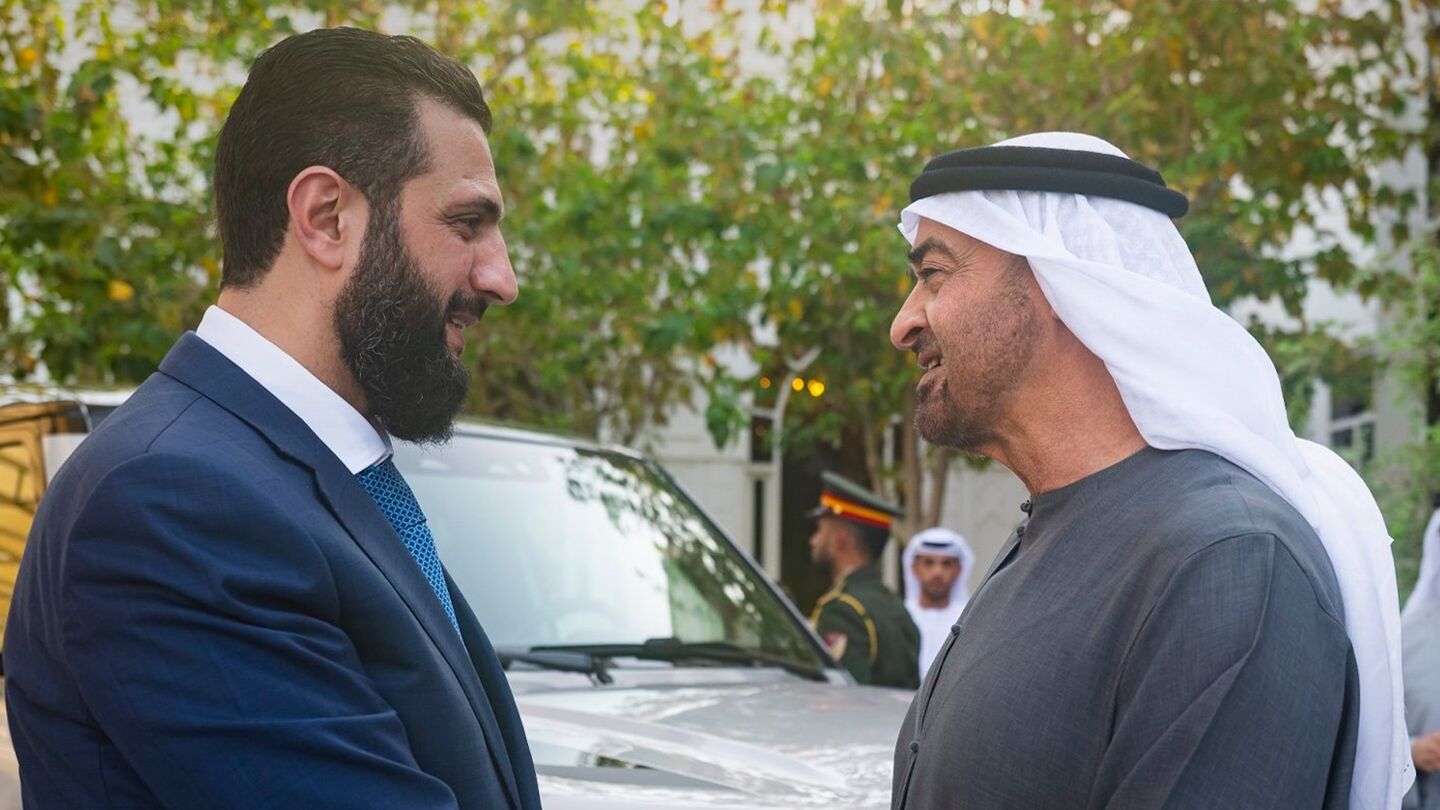
Syrian President Ahmed al-Sharaa meets with the President of the United Arab Emirates, Sheikh Mohammed bin Zayed Al Nahyan, in the UAE capital, Abu Dhabi, Sept. 15, 2026. — SANA
UAE hosts Syrian president in Dubai
Syrian President Ahmed al-Sharaa appeared at the Arab Media Summit in Dubai on Tuesday, marking his first visit to the emirate since taking office and his third trip to the United Arab Emirates this year. Sharaa pitched Syria as a potential trade and energy corridor linking the Gulf, via Iraq, to Mediterranean ports as restrictions in the Strait of Hormuz heighten interest in alternative routes. He highlighted DP World’s $800 million agreement to develop Tartus Port and link it to Jebel Ali, underscoring the UAE’s expanding role in Syria’s reconstruction and economic reintegration.
The visit also reflects Damascus’ effort to leverage its geography to attract Gulf investment and reposition Syria as a regional logistics hub. But that ambition contrasts sharply with mounting pressures at home: Sharaa’s Dubai appearance came against the backdrop of protests over fuel-price increases of up to 40%, highlighting the severe economic strain facing Syrians even after the lifting of US sanctions.
Saudi Arabia's rare earths, uranium discovery
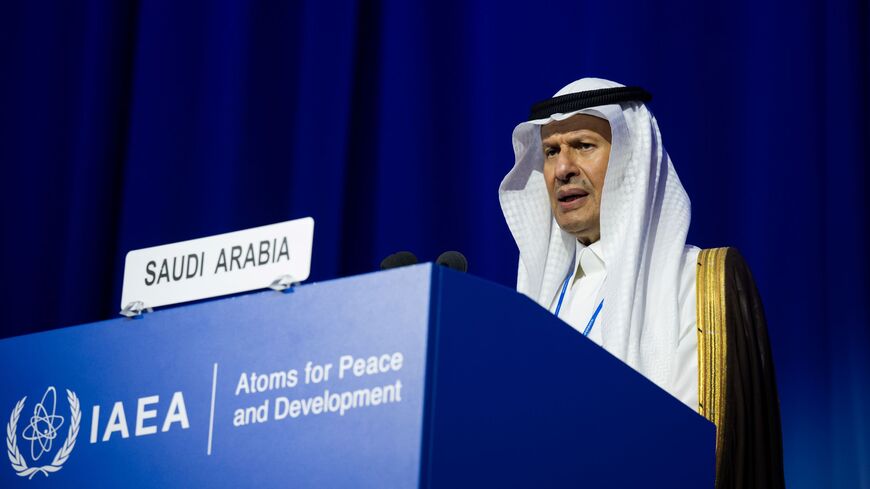
Saudi Arabia has identified an estimated 114 million tons of ore containing high concentrations of heavy rare earth elements, along with promising uranium deposits, at the Jabal Sayid copper mine in Medina province, Energy Minister Prince Abdulaziz bin Salman announced Monday.
The discovery could bolster Riyadh’s push to make mining a key pillar of its post-oil economy while positioning the kingdom within intensifying US-China competition over critical-mineral supply chains. Saudi Arabia estimates its untapped mineral wealth at $2.5 trillion and aims to increase mining’s annual contribution to gross domestic product to about $75 billion by 2030.
The find could also support Saudi Arabia’s nuclear ambitions following its civil nuclear agreement with Washington in July, although further exploration will be needed to determine whether the uranium deposits are commercially viable.

Defense brief
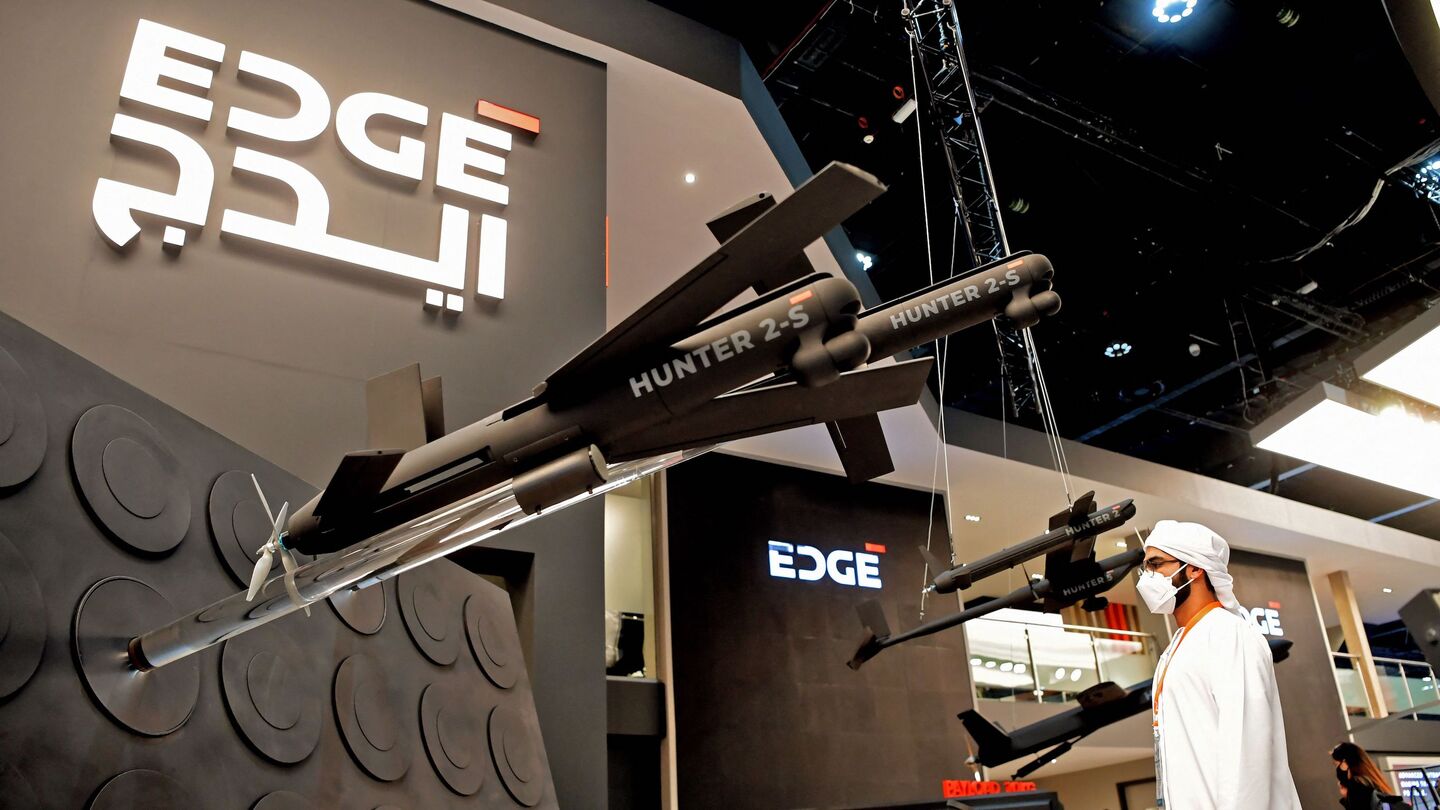
A visitor views Hunter 2-S "swarming drones" by EDGE on display at the UMEX Exhibition showcasing drones, robotics and unmanned systems at the Abu Dhabi National Exhibition Center in the Gulf emirate on Feb. 22, 2022. — AFP via Getty Images
EDGE delivers naval drones to Angola
EDGE Group has delivered six ANAVIA HT-100 NAVAL unmanned helicopters to the Angolan Navy following factory acceptance trials in Switzerland.
The delivery builds on a 1 billion euro ($1.1 billion) 2023 deal to supply Angola with three BR71 MK II corvettes based on the UAE’s Baynunah-class design. Each vessel will carry two HT-100s, extending the fleet’s maritime surveillance and reconnaissance capabilities.
The handover highlights EDGE’s shift toward integrated naval packages and a broader UAE strategy to use defense exports to build long-term strategic relationships in Africa. By combining Emirati shipbuilding with European technology, EDGE is positioning itself for larger, multiplatform contracts in a market traditionally dominated by established Western and Asian suppliers.

Economic brief
Etihad's traffic rebound
Etihad Airways’ passenger capacity is running 15% to 17% above last year’s levels as the Abu Dhabi carrier rebounds from disruptions caused by the Iran war, CEO Antonoaldo Neves said Monday. The airline recorded a 92% load factor in August and is targeting more than 87% for the remainder of 2026.
Strong demand is supporting continued fleet investment, including new cabins for its Airbus A321LR and forthcoming A330 aircraft. But the financial recovery is lagging the operational rebound: Etihad expects revenue to remain broadly flat this year and profitability near zero after March and April airspace closures disrupted operations.
The divergence underscores how quickly passenger demand can recover while conflict-related costs continue to weigh on earnings.
Amazon war damage
Amazon Web Services said Tuesday it cannot restore its Bahrain cloud region or data hosted in a UAE availability zone after attacks during the Iran war. In Bahrain, damage hit multiple data-center clusters designed to keep services running if one site fails, but AWS said the disruption exceeded the level of redundancy its systems were built to withstand.
The outage is a warning for the Gulf’s rapidly expanding cloud and AI sector, exposing the physical vulnerability of infrastructure underpinning billions of dollars in planned investment. AWS is due to open a three-zone Saudi region in December, backed by more than $5.3 billion, and has committed another $5 billion with state-backed HUMAIN.
The war could now force a rethink of regional data-center design, with greater geographic separation and more hardened infrastructure becoming central to resilience planning.
This one's on us.
The story doesn't end here.
Our correspondents are already on the next chapter. Read everything they file, from $2/week.
See Offers