Iraq turmoil deepens as presidential vote postponed indefinitely

Iraq's parliament on Monday indefinitely postponed a scheduled vote for the republic's president after most major political blocs boycotted the session.

The sweeping no-show deepens a political crisis in the war-scarred country which, almost four months after a general election, still hasn't chosen a new prime minister.

The assembly vote had been set for noon for the head of state -- a post with a four-year mandate held by convention by a member of Iraq's Kurdish minority, and currently occupied by Barham Saleh.

Iraqi ex-foreign minister Hoshyar Zebari (L) and President Barham Saleh

Iraq struggles to make use of Saddam's crumbling palaces

Scattered across Iraq lie more than 100 opulent palaces and villas built by former dictator Saddam Hussein -- some in use, many in ruins like much of the war-scarred country.

With their marble columns, ornate carvings and gaudy furniture, they reflected the megalomania and delusions of grandeur of Saddam, who visited some of them only once or twice.

In his Babylon residence, the feared strongman's profile is engraved in bas-relief like that of the Mesopotamian emperor he idolised, Chaldean dynasty king Nebuchadnezzar II.

Moqtada Sadr: Iraq's political, religious force

When he raises his index finger and frowns, Iraq holds its breath. The mercurial Shiite cleric Moqtada Sadr has yet again emerged as a powerful player in Iraqi politics, able to mobilise his loyalists.

Hundreds of them have, for three days, occupied the country's parliament with adherence to one guiding principle: obedience to Moqtada. He has urged other political factions to support the protest.

Supporters of the Iraqi cleric Moqtada Sadr raise a portrait of their leader, as they protest at a rival bloc's nomination for prime minister

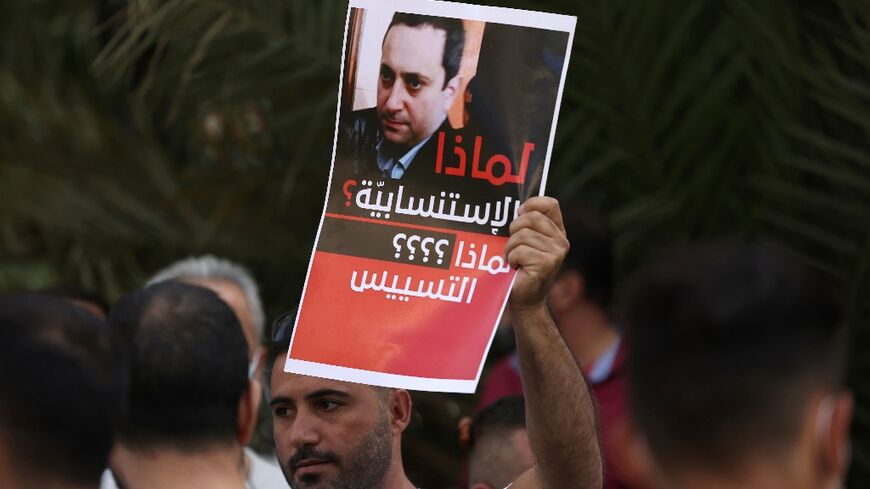
Tarek Bitar, Lebanon's judge with a grudge

By daring to charge powerful figures in the case of the devastating 2020 Beirut port blast this week, Lebanese judge Tarek Bitar has crossed all red lines and openly challenged an entrenched ruling elite.

Bitar decided to resume his investigation after a slew of lawsuits, mostly from politicians charged in the case, forced him to stop work for 13 months.

The daring judge made Lebanese history Monday when he charged the country's public prosecutor.

Lebanese judge Tarek Bitar has become a bugbear for Shiite activists, who accuse him of bias in his stewardship of the official investigation into alleged negligence in last year's devastating explosion in Beirut port

Still no answers three years after Beirut mega-explosion

One of history's biggest non-nuclear explosions rocked Beirut on August 4, 2020, destroying swathes of the Lebanese capital, killing more than 220 people and injuring at least 6,500.

Three years on, the probe into the traumatic disaster caused by a huge pile of poorly-stored fertiliser remains bogged down in legal and political wrangling, to the dismay of victims' families.

- The mega-blast -

The portside blast, one of the biggest non-nuclear explosions ever, killed more than 200 people, wounded thousands more and decimated vast areas of the capital

Fethullah Gulen: ex-Erdogan ally who became public enemy number one

A former ally of Recep Tayyip Erdogan, US-based Muslim cleric Fethullah Gulen spent years eluding the clutches of Turkey's president, who accused him of masterminding a failed 2016 coup.

After nearly 25 years living away from Turkey, Gulen died in hospital overnight, Turkish public television said, citing groups close to the 83-year-old preacher.

The head of the influential Hizmet group became the sworn enemy of the president.

Erdogan's government accused him of heading a "terrorist" organisation as well as organising the 2016 bid to overthrow the president.

Fethullah Gulen lived in self-imposed exile in the United States since 1999

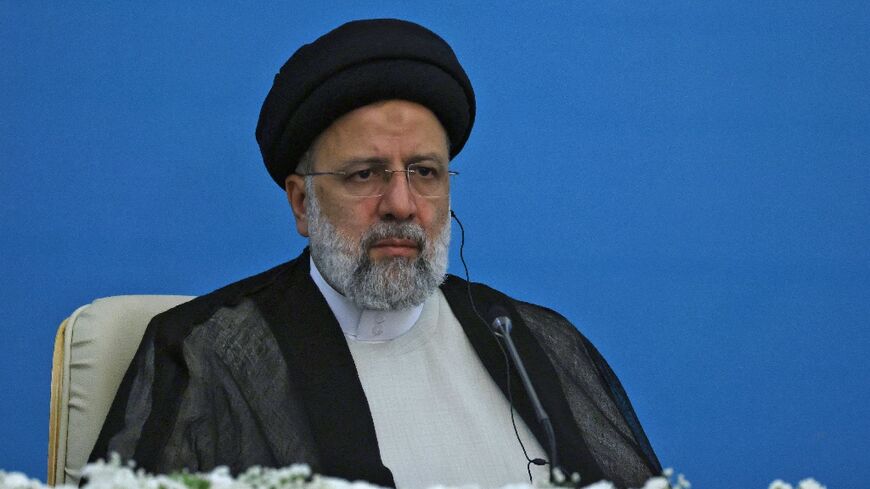
Iran's Raisi: ultraconservative president close to supreme leader

Always piously dressed in a black turban and religious robe, Iran's ultraconservative President Ebrahim Raisi has been in office during a tumultuous period of confrontation abroad and mass protest at home.

On Sunday, there were fears for the 63-year-old after Iranian state media said his helicopter had an accident in poor weather in a remote western mountain region, with no news on Raisi's condition.

Iran's President Ebrahim Raisi inherited the reins of a country in the grip of a deep social crisis against the backdrop of an economy strained by US sanctions

Five votes in four years: Israel's election addiction

Israel goes to the polls Tuesday for the fifth time in under four years, with veteran right-winger Benjamin Netanyahu seeking to make a comeback as premier.

The vote comes at a time talks to resolve the Israel-Palestinian conflict have long since stalled and as violence has flared again in the occupied West Bank.

AFP takes a look at four years of political turmoil that started at a time when Netanyahu, after a decade as prime minister, was dogged by corruption allegations which he denies.

- April 2019: Dead heat -

Israel goes to the polls Tuesday for the fifth time in under four years

Israel's 'Bibi' Netanyahu: making a comeback, or taking a last stand?

Israel's right-wing veteran Benjamin Netanyahu, who has served as the country's prime minister longer than anyone else, has described protecting the Jewish state from its enemies as his "life's mission".

His critics and allies alike concede that the gravel-voiced security hawk is a tireless campaigner in pursuit of an office -- the Israeli premiership -- which he believes he is uniquely qualified to hold.

Israel's former prime minister and leader of the Likud party Benjamin Netanyahu speaks at a rally in the central West Bank settlement of Ariel, on October 26, 2022

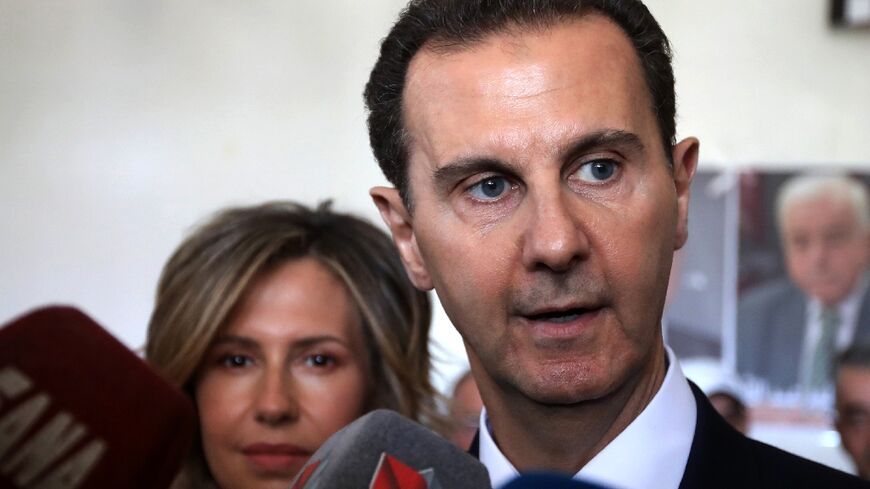
Syria's Assad: the president who led a bloody crackdown

Syrian President Bashar al-Assad oversaw a merciless crackdown on a pro-democracy revolt that morphed into one of the bloodiest wars of the century.

After facing down nationwide protests demanding his ouster and an armed rebellion that he all but crushed, he had until this month taken back control of much of Syria in the civil war that began in 2011.

Quiet but with a knack for holding power, President Bashar al-Assad has waged a bloody war to retain control of Syria