Tunisia judges protest after president dissolves watchdog

More than 200 judges and lawyers in black robes protested Thursday outside the main court in the Tunisian capital after President Kais Saied vowed to scrap a key judicial watchdog.

Judges have been on strike since Wednesday in the North African country, the birthplace of the 2011 Arab uprisings, in protest at Saied's weekend move to dissolve the Supreme Judicial Council (CSM) months after a July power grab.

At the rally in central Tunis on Thursday, police looked on as protesters chanted "restore the CSM" and "the people want an independent judiciary"

Tunisian judges have denounced President Kais Saied's move to dissolve a key judicial watchdog as a violation of rights and freedoms

Sudanese return to streets rallying against military coup

Thousands of Sudanese took to the streets Thursday in the latest mass rally protesting against last year's military coup that upended a transition to civilian rule, witnesses said.

Crowds waved flags and chanted slogans, warning each other to keep a look out for the security forces who have launched deadly crackdowns on previous rallies, leaving at least 79 people killed and hundreds wounded, according to independent medics.

A young boy waves a Sudanese flag as protesters block a street in Khartoum on January 20

12 hurt in foiled Huthi drone attack on Saudi airport

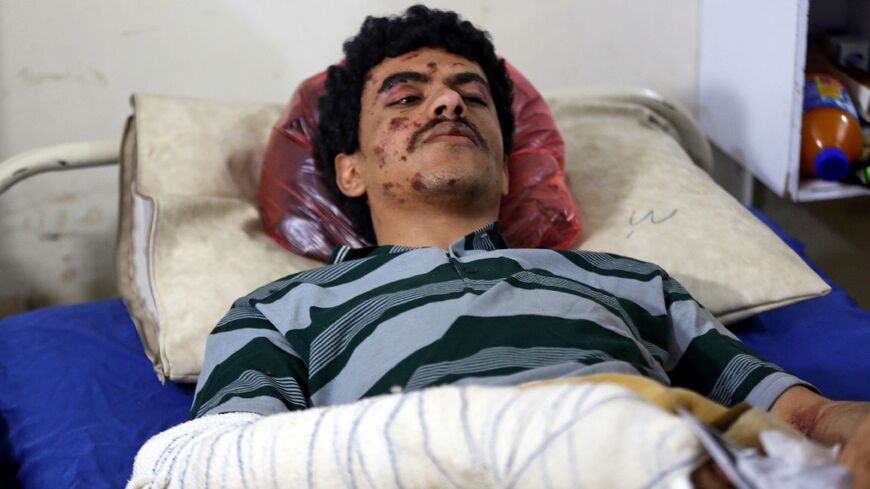
Twelve people were injured by falling debris on Thursday when the Saudi military blew up a Yemeni rebel drone targeting an airport close to the border, officials said.

Fragments fell to the ground after the interception of the drone over Abha International Airport, which has previously been targeted in similar assaults by the Huthi rebels.

The Huthis claimed responsibility for the attack in a tweet, saying they had targeted an airport "used for military action against Yemen" and warning citizens to "stay away" from such sites.

Abha airport, in southwestern Saudi Arabia, has repeatedly been targeted with drone or missile attacks by Yemen's Huthi rebels

Prince William plants trees, builds bridges on UAE visit

Prince William made a climate-focused visit to the United Arab Emirates on Thursday as post-Brexit Britain seeks to strengthen relations with the wealthy Gulf state.

The duke of Cambridge, second in line to the British throne, visited an Abu Dhabi mangrove park before heading off to Dubai's Expo, where the UK pavilion was marking a "national day".

Britain's Prince William, Duke of Cambridge, plants trees alongside two school children as he tours the Jubail Magrove Park in Abu Dhabi

Pollution clean-up aims to create Gaza's first nature reserve

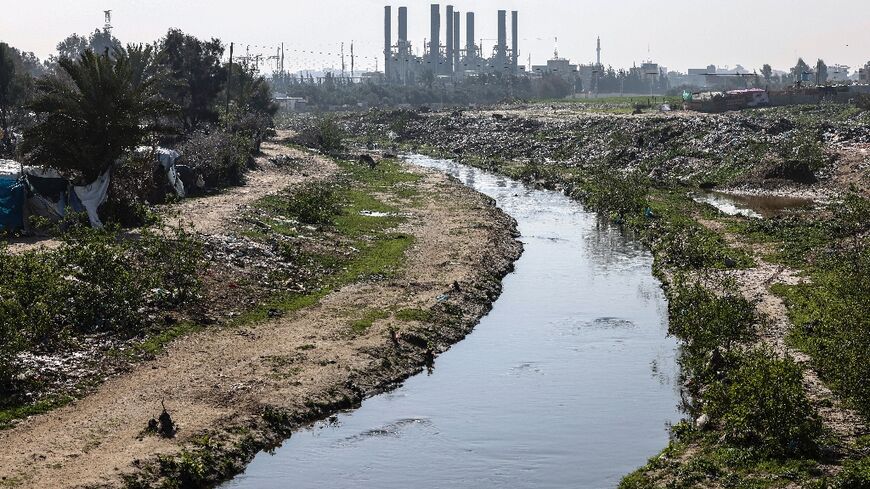
The road meandering towards Gaza Valley is notorious for the stench of pollution choking the plant and animal life that once flourished in the Palestinian enclave's biggest wetland.

That is expected to change after the sullied habitat was declared Gaza's first nature reserve, set for a UN-backed, decade long clean-up effort under the territory's Hamas Islamist rulers.

"The valley will return to its beautiful natural state" for local people to walk through and enjoy, said Jaber Abu Hajeer, the mayor of the area known as Wadi Gaza.

The United Nations Development Programme is backing a 10-year, $66 million effort that aims to clean up the Gaza Valley wetlands

Sanaullah Ghafari, IS operative in Washington's sights

Hoping to further destabilise the Islamic State group following its leader's death, US officials have turned their focus to an architect of the insurgents' bloody revival in Afghanistan since losing their "caliphate" in Syria.

Sanaullah Ghafari, also known as Shahab al-Muhajir, has led the Islamic State-Khorosan (IS-K) branch since June 2020, overseeing cells charged with carrying out terror attacks, establishing ties with local leaders and raising funds.

US President Joe Biden announced last week that IS leader Abu Ibrahim al-Hashimi al-Qurashi blew himself up during an American raid on his hideout in Syria

Yemen civilian deaths double since UN monitors removed: NGO

Civilian deaths and injuries in Yemen's civil war have almost doubled since UN human rights monitors were controversially removed in October, a non-governmental organisation said on Thursday.

The ejection of monitors had opened the door to "unchecked, horrific violations", the Norwegian Refugee Council said, urging their reinstatement.

It said 823 civilians were killed or injured in the four months before the end of monitoring, and 1,535 in the four months after their departure.

At least 70 people died in an attack on a prison in Yemen in January

Prince William makes climate-focused visit to UAE

Britain's Prince William visited an Abu Dhabi mangrove park at the start of a climate-focused visit to the United Arab Emirates on Thursday.

The duke of Cambridge will also learn about efforts to fight the illegal wildlife trade and will tour Dubai's Expo site on his first official visit to the wealthy Gulf state.

"Excited to be arriving in Dubai," he tweeted on Wednesday, along with a picture taken from an aircraft window.

Saudi coffee legacy percolates through the generations

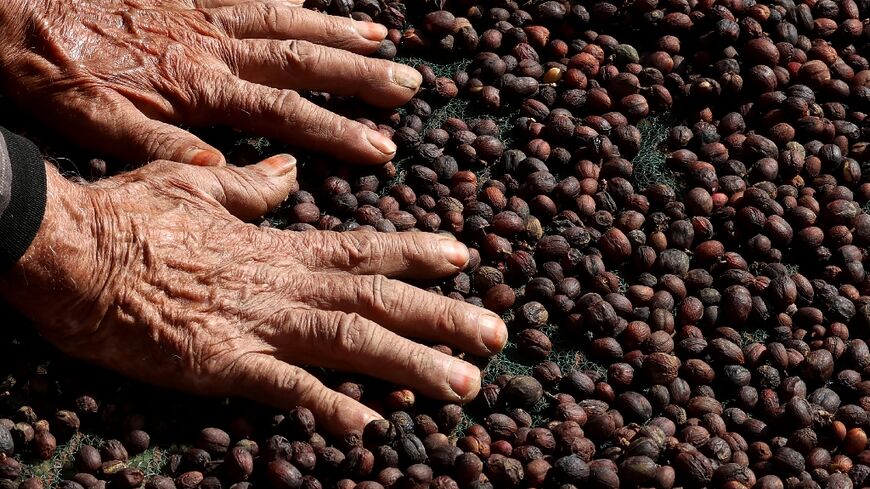
For Farah al-Malki, growing coffee plants in Saudi Arabia's southwestern region of Jizan is more than just a profession. It is a family tradition passed down from generation to generation.

The 90-year-old patriarch has a long history with coffee, which spread from Ethiopia to Yemen and then to the rest of the Middle East around the 15th century.

"My father inherited it from his grandfathers, and I took over and passed it down to my sons and then on to my grandchildren," Malki told AFP, as he watched his male relatives prune trees.

Saudi farmer Farah al-Malki, 90, checks his Khawlani coffee beans

In violence-shattered central Mali, victims recount their lives

Some are men of arms, who have taken up a gun out of need or for a cause. Others are just ordinary civilians, struggling to survive from one day to the next and make sense of the mayhem.

These are the people of central Mali, which in 2015 spiralled into jihadist violence, ethnic feuds and tit-for-tat killings.

Over 18 months, AFP interviewed eight individuals who come from very different backgrounds, yet who have all experienced the region's chapter of horror.

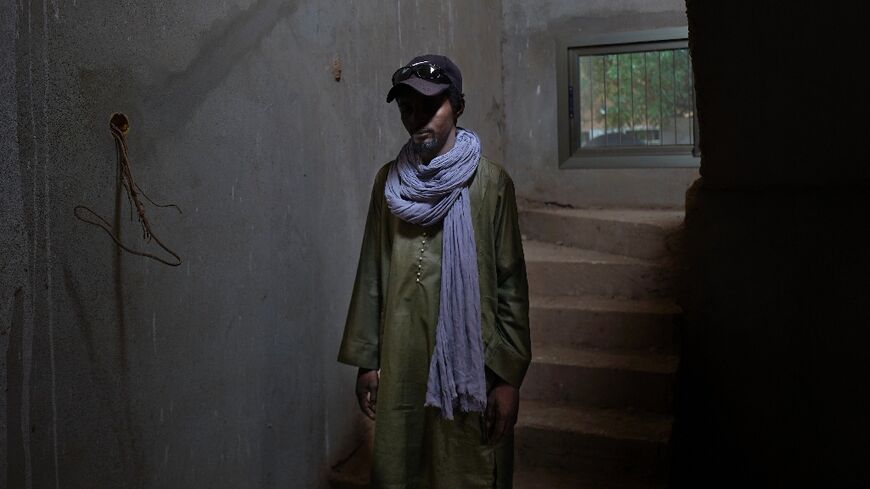
A life in the shadows: This man, who is anonymous, worked for eight months for the jihadists and then fled to a refugee camp in Mauritania. When he was photographed by AFP, he was hiding in a building that was under construction