World's tallest building engulfed as Mideast sandstorms hit UAE

The world's tallest building disappeared behind a grey layer of dust on Wednesday as sandstorms that have swept the Middle East hit the United Arab Emirates, prompting weather and traffic warnings.

The 828-metre (2,716 ft, 6ins) Burj Khalifa, which towers over Dubai and is usually visible across the busy financial hub, retreated behind a curtain of airborne dirt that shrouded much of the country.
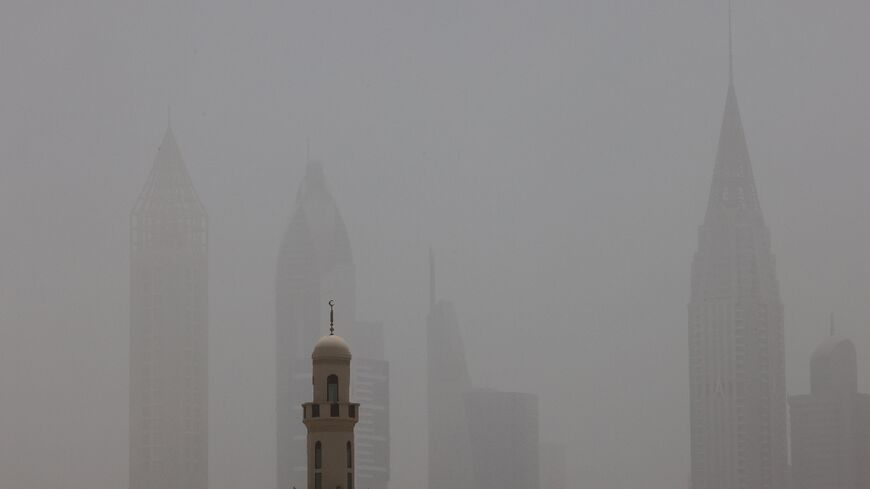
The dust storm obscured the Dubai skyline on Wednesday

Thousands join Jewish pilgrimage year after stampede

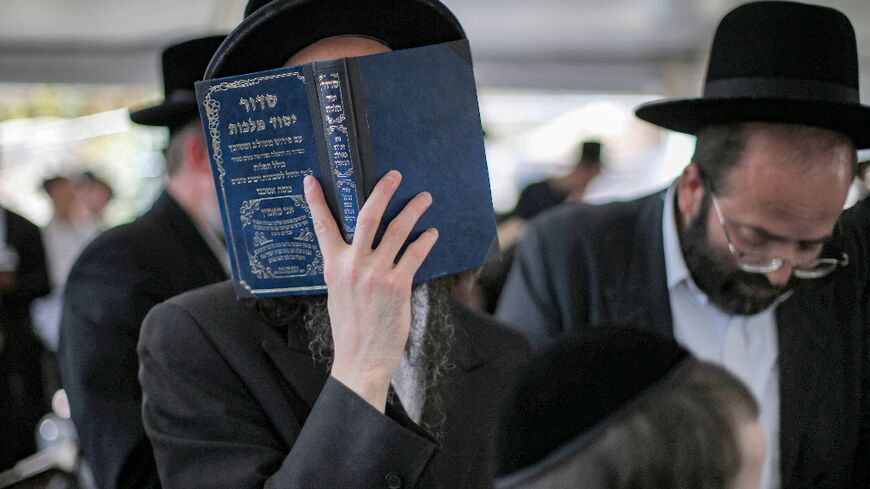
Thousands of Jewish faithful converged on Israel's Mount Meron on Wednesday for an annual pilgrimage, amid tightened safety measures a year after 45 people were crushed to death in a stampede.

Police said that more than 10,000 gathered at Mount Meron for the start of the pilgrimage, which runs until Thursday night.

Prime Minister Naftali Bennett has said his government made a "considerable investment" in new safety measures to ensure there is no repeat of last year, which was described as the greatest civilian disaster in Israeli history.

Ultra-Orthodox Jews pray at the gravesite of Rabbi Shimon Bar Yochai at Mount Meron in northern Israel

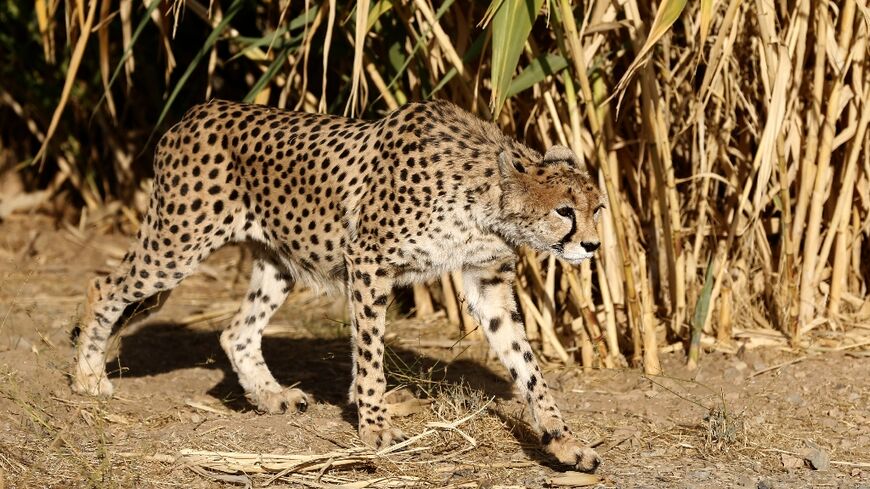
Second endangered cheetah cub dies in Iran: state media

The second of three Asiatic cheetah cubs born in captivity in Iran has died in a blow to conservation efforts for the critically endangered subspecies, state media reported Wednesday.

"The cause of death of the cub is being investigated and the result will be announced after the post mortem," environment department official Hassan Akbari told state news agency IRNA.

The announcement came just two weeks after a first cub from the litter died.

The cause of death was established as congenital malformation of the left lung, an environment department statement said.

A critically endangered Asiatic cheetah is seen in its enclosure at Pardisan Park in the Iranian capital Tehran in 2017. Just a dozen individuals are believed to survive in the wild

Robot hives in Israel kibbutz hope to keep bees buzzing

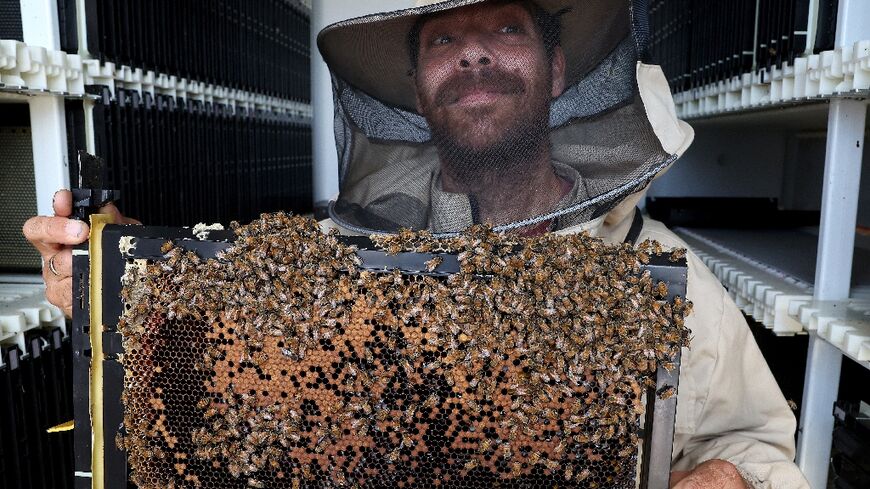
They function as normal hives, but apiaries built at a kibbutz in Israel's Galilee are decked out with high-tech artificial intelligence systems set to ensure longevity for these vital pollinators.

"There are two million bees here," said Shlomki Frankin as he walks into a 12-square-metre container in Kibbutz Beit Haemek in northern Israel.

Dubbed "Beehome", the project is the brainchild of an Israeli startup and houses up to 24 hives, explained Frankin, clad in a hat and veil to protect himself from stings.

Robot-equipped beehives at an Israeli kibbutz aim to reduce mortality rates as bee species worldwide face an increasing threat of decline

Pollution behind 1 in 6 global deaths in 2019: study

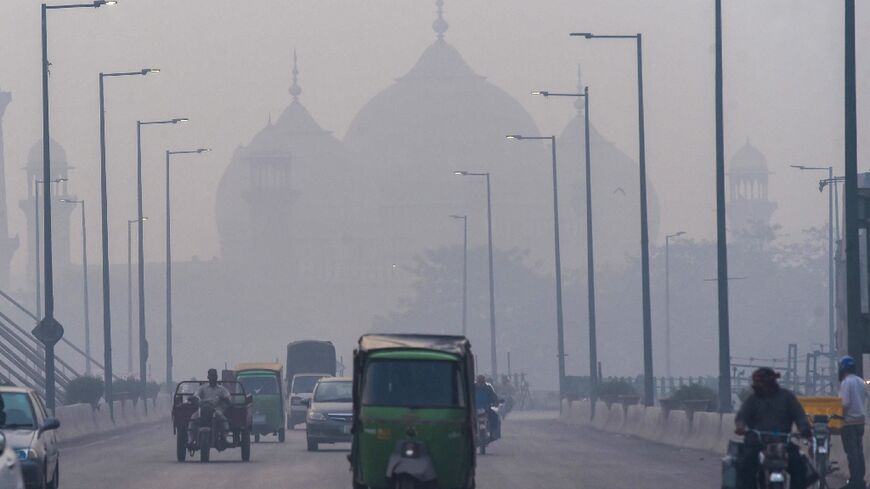
Pollution caused some 9 million people to die prematurely in 2019, according to a new global report published Wednesday, with experts raising alarm over increasing deaths from breathing outside air and the "horrifying" toll of lead poisoning.

Human-created waste in the air, water and soil rarely kills people immediately, but causes instead heart disease, cancer, respiratory problems, diarrhoea and other serious illnesses.

Outside air pollution is a growing threat

Pentagon finds no wrongdoing in 2019 Syria strike that killed civilians

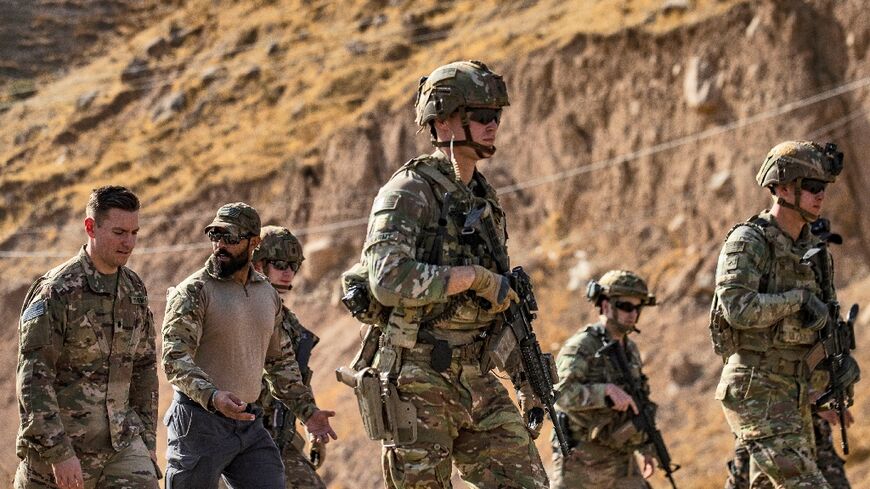
An investigation into a 2019 strike by US forces in Syria that killed numerous civilians found no violations of policy or wanton negligence, the Pentagon said Tuesday.

The internal US Army investigation focused on an operation by a special US force operating in Syria which launched an airstrike on an Islamic State bastion in Baghouz on March 18, 2019.

The investigation was sparked last year after the New York Times reported that in the original strike the US military had covered up dozens of non-combatant deaths.

US soldiers patrol an area near Syria's northeastern Semalka border crossing with Iraq's Kurdish autonomous territory, on November 1, 2021

Mideast sandstorms snarl traffic, close schools, harm health

Sandstorms across the Middle East have delayed flights, closed schools and hospitalised thousands -- a phenomenon experts say could worsen as climate change warps regional weather patterns.

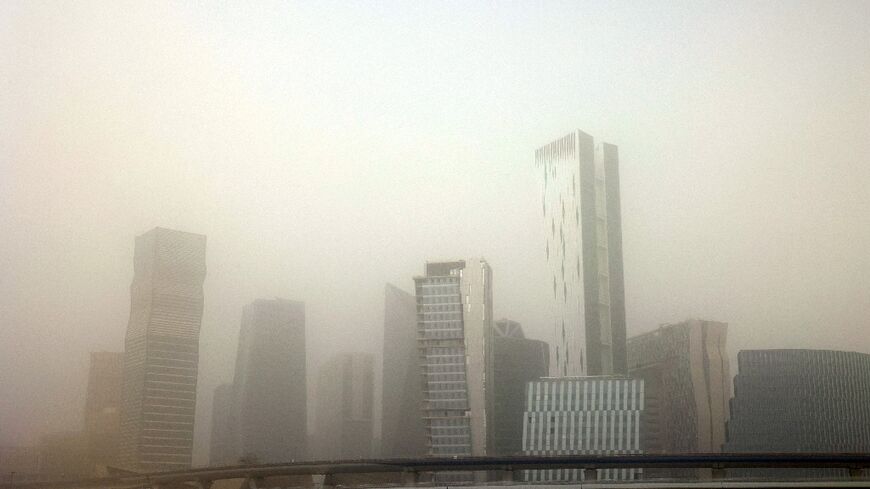
Saudi Arabia on Tuesday became the latest country blanketed with dust that slowed traffic and made iconic towers in the capital difficult to see from more than a few hundred metres (yards) away.

Emergency rooms in Riyadh hospitals had received some 1,285 people suffering from respiratory problems over 24 hours as a result of the sandstorm, the state-run Al-Ekhbariya channel reported.

The sandstorm badly hampered visibility in Riyadh

Sandstorm blankets Saudi capital in grey haze

A sandstorm engulfed Saudi Arabia's capital and other regions of the desert kingdom Tuesday, hampering visibility and slowing road traffic.

A thick grey haze made iconic Riyadh buildings such as Kingdom Centre nearly impossible to see from more than a few hundred metres (yards) away, though there were no announced flight delays or cancellations.

The kingdom's meteorology centre forecast "surface dusty winds" in the country's east and in Riyadh, "reducing horizontal sight", according to the official Saudi Press Agency.

The sandstorm badly hampered visibility in Riyadh

Hezbollah lose ground, reformists surge in Lebanon polls

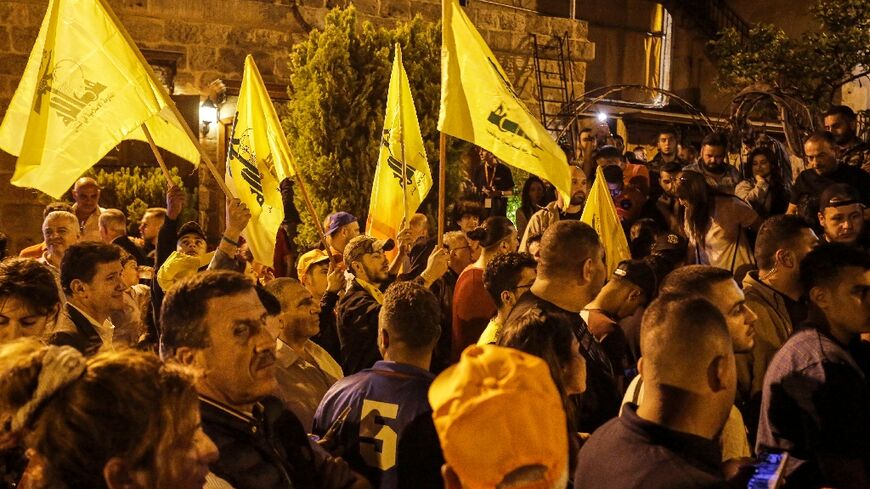
Shiite group Hezbollah and its allies lost their majority in Lebanon's parliament, official results showed Tuesday, while independents achieved a surprise breakthrough.

Full results announced by the interior ministry two days after the election revealed that no bloc will control the 128-seat assembly, a deadlock observers fear could usher in a tense period of political jostling.

The polls, the first since Lebanon was ravaged by its worst ever economic crisis and a cataclysmic explosion at Beirut port in 2020, were seen as a prerequisite for a crucial IMF bailout.

Hezbollah and its ally Amal swept the seats reserved for Shiites in the Lebanese parliament but losses for other allies cost them their majority

Dozens hurt in clashes at Palestinian funeral in Jerusalem

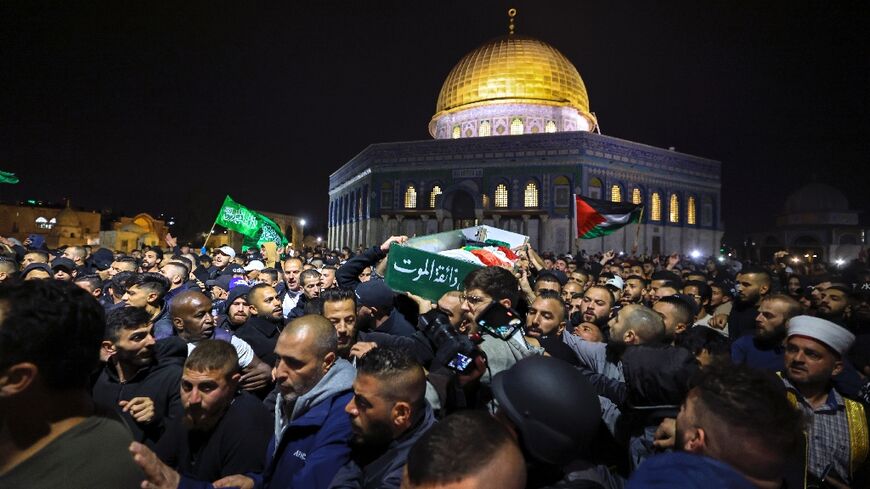
More than 70 Palestinians were wounded in overnight clashes with Israeli forces at a Jerusalem funeral, Palestinian medics said Tuesday, in unrest that police said included "violent riots" which threatened officers' lives.

The unrest unfolded as Palestinians were burying Walid al-Sharif, 23, who died on Saturday of wounds suffered during clashes last month at Jerusalem's flashpoint Al-Aqsa mosque compound.

Palestinian mourners carry the body of Walid al-Sharif in front of the Dome of the Rock mosque at the Al-Aqsa compound