


Who is Matan Kahana, Israel's new Knesset speaker?
Kahana’s election gives the opposition control of the Knesset’s legislative agenda and is the first concrete step toward cooperation between Eisenkot’s bloc and the Arab parties.
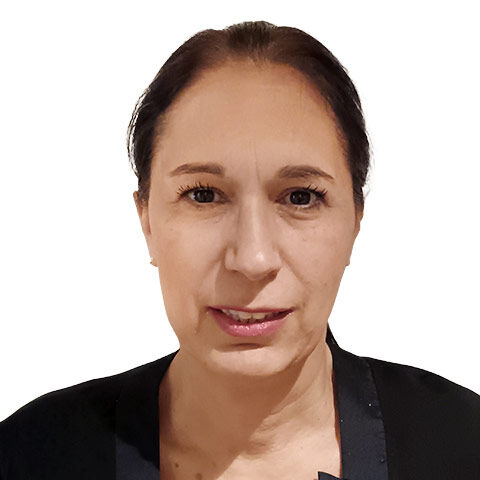

Israel's parliament elected opposition lawmaker Matan Kahana on Tuesday to replace Amir Ohana, a member of Prime Minister Benjamin Netanyahu's Likud party, as Knesset speaker.
Kahana, a member of Gadi Eisenkot's Yashar party, defeated Likud's candidate, Ofir Katz, with the backing of all opposition factions, including the two Arab parties, the Joint List and Ra'am. A total of 66 lawmakers voted for him, while none voted against him, as members of the opposition bloc either abstained or walked out of the plenum.
Who is Kahana?
Kahana, 54, is an observant national-religious politician and a retired Israeli Air Force colonel. Regarded as an exceptional officer, Kahana is among the few Israelis to have served during their military careers both in the Matkal elite commando unit and as a fighter pilot.
During his service in the air force, he commanded two F-16 fighter squadrons. Kahana was first elected to the Knesset in 2019 as a member of Naftali Bennett’s right-wing Yamina party. He later joined Benny Gantz's centrist National Unity alliance before moving to Eisenkot's Yashar party, which was established in 2025.
While serving as minister of religious services from 2021 to 2022 under the Bennett-Lapid government, Kahana advanced a series of reforms aimed at breaking the ultra-Orthodox monopoly over state-run Jewish religious services. His initiatives included overhauling the kosher food certification system to end the Chief Rabbinate’s monopoly on it and open the market to competition, enabling the appointment of women to municipal religious councils and decentralizing conversion authorities beyond the ultra-Orthodox rabbinical courts.
Kahana has been a vocal critic of exemptions for ultra-Orthodox Jews from military service, arguing that all able Israeli citizens should be required to perform either military or national service. Like Eisenkot, he has also called for the establishment of an independent state commission of inquiry into Hamas’ Oct. 7, 2023, attack. He has additionally advocated limiting Israeli prime ministers to two four-year terms.
An Israeli political source told Al-Monitor that Eisenkot chose Kahana for the speakership because he had been involved in the establishment of Yashar from the outset. The two men, the source said, trust each other and have developed a close political alliance, forged in part by their shared backgrounds as senior and highly regarded military commanders.
“Kahana was raised in the national religious camp but is also a champion of liberal values,” the source added, speaking on condition of anonymity. This combination, the source said, has enabled Kahana to work with parties across the political spectrum, on both the right and the left.
Legislative priorities
Kahana's election is significant on two main levels: Practically, it gives the opposition control over the Knesset's legislative agenda; symbolically, it marks the first concrete step in cooperation between Eisenkot's bloc and the Arab parties.
As speaker, Kahana will have substantial sway over the Knesset’s schedule and legislative priorities, letting Eisenkot’s bloc advance favored bills even before a government is formed.
During the campaign, Eisenkot and his partners pledged to establish a state commission of inquiry into the Oct. 7 Hamas attack and repeal the previous government's judicial overhaul, which sought to curb the judiciary's powers. Netanyahu has long opposed an independent inquiry, fearing it would expose his government's failures. As Knesset speaker, Kahana will be able to bring both issues before the parliament for votes.
Eisenkot’s bloc pledged during the campaign to make ending ultra-Orthodox exemptions from military service a top priority. But without a clear majority of 61 seats, the bloc may struggle to advance the measure. Yisrael Beiteinu leader Avigdor Lieberman has signaled he may compromise on the issue to secure ultra-Orthodox support for an Eisenkot-led government. The bloc did, however, secure a political win Monday when Lieberman took over as chair of the Knesset’s temporary Foreign Affairs and Defense Committee."
The opposition bloc's other priorities include repealing Netanyahu government legislation that placed the Police Internal Investigations Department under direct Justice Ministry authority and reversing media reforms that critics say increased political control over state media. It also aims to combat crime in Arab communities and launch a five-year investment and development plan for the Arab sector.
An AL-MONITOR subscriber gifted you this article. Gifted by an AL-MONITOR subscriber.
A gift worth sharing.
This one's on us. Subscribe for unlimited access to everything we publish, plus gift articles for your inner circle. As low as $2/week. This one's on us. Get unlimited access, plus gift articles for your inner circle, from $2 a week.
Already a subscriber? Sign in