


US-mediated talks with Russia and Ukraine to start in Abu Dhabi


Negotiators from Ukraine, Russia and the United States will hold talks in Abu Dhabi Tuesday on ending Europe's worst conflict since World War II in the first such meeting in more than nine months, as another winter of war approaches.
Europe -- alarmed by US President Donald Trump floating a deal with Moscow on European security ahead of the talks -- will also send representatives to Abu Dhabi.
Trump has pushed for an end to the Russia-Ukraine war since returning to power, but previous talks produced no breakthroughs and the process became sidelined by the US-Israeli war against Iran.
Europe and Ukraine fear the United States will force a deal on Kyiv that would amount to a de-facto capitulation, with Trump appearing to pivot towards Moscow this year.
Moscow's invasion of Ukraine has killed hundreds of thousands, displaced millions and has dragged on for 56 months, with the Kremlin showing no sign of backing down.
Trump hinted Ukraine will have to give up land ahead of the talks, saying: "They're going to end up with a little bit different shape, Ukraine."
Russia occupies large swathes of Ukraine but, while its troops have grinded westwards, they have not been able to seize the whole of the Donetsk region.
Moscow demands Kyiv surrender the parts of the region it still controls, vowing it will otherwise press on with its offensive.
Ukraine -- which for more than 4.5 years has resisted a far larger invading army at a huge human cost -- has ruled out such a withdrawal.
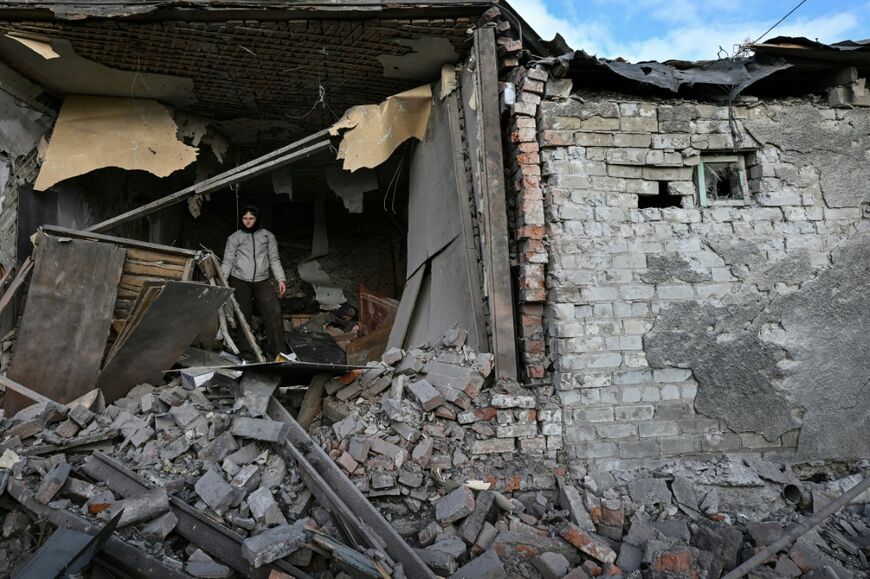
Russia pummelled Ukraine in the run-up to the talks and carried out one of its deadliest strikes yet -- with Kyiv saying 55 people were killed in a frontline village as they queued for humanitarian aid.
Ukrainian President Volodymyr Zelensky said the intensified strikes were part of Moscow's strategy of "putting pressure on Ukraine's position" at the negotiations.
Russia's Vladimir Putin, who launched the war in February 2022, has repeatedly refused broader ceasefire offers and face-to-face talks with Zelensky.
Trump's son-in-law Jared Kushner and special envoy Steve Witkoff will gather the enemy sides in Abu Dhabi for the first time since February, when negotiations took place in Geneva.
Russia and Ukraine have held several rounds of failed talks during almost five years of war and hopes for peace are low.
"We don't have any particular expectations," a senior Ukrainian official in Kyiv told AFP.
- 'We don't want Yalta 2.0' -
Trump last week floated a "very big agreement" on the war that will "involve all of Europe", stoking fears Washington would collaborate with Moscow on creating a new European security architecture.
Shortly before launching its 2022 invasion, Moscow had issued an ultimatum to the West for NATO to rollback troops from Eastern Europe.
The diplomat who issued the demand, Sergei Ryabkov, will for the first time be part of Moscow's delegation, which is headed by Putin's nationalistic aide Vladimir Medinsky.
Kushner said Monday that a peace settlement will require direct Russia-Europe talks "on the broader security arrangements that affect them" and said the US "recognises difficult decisions ahead."
These announcements have stoked fears in European capitals.
"For Europe, it is clear: we do not need to establish a new security architecture for Europe," German Foreign Minister Johann Wadephul said Monday.
He urged Moscow to "give up maximalist demands" and warned against any "negotiation show" in the UAE capital.
Zelensky has warned of a "Yalta 2.0" referring to Western leaders dividing Europe with the USSR in 1945.
According to Ukraine's chief negotiator Rustem Umerov, representatives from the UK, France, Germany and Italy, as well as NATO and EU officials will hold separate talks with Kyiv's representatives in Abu Dhabi.
The Kremlin -- which has sought to keep Europe out of the talks -- said negotiations will remain "trilateral".
A recent ceasefire in the Kherson region was "a very positive precedent", Ukrainian political expert Volodymyr Fesenko told AFP, predicting Kyiv will look for "de-escalation of the war through such local truces".
Kushner and Witkoff have been accused by critics of being soft on Russia and US media have reported that the Americans are pushing large back-door business deals with Moscow.
oc/mmp/ceg
This one's on us.
The story doesn't end here.
Our correspondents are already on the next chapter. Read everything they file, from $2/week.