



Who is Fatima El Mansouri, Morocco’s first woman prime minister?
Her appointment marks the first time a woman has served as Morocco’s head of government and the second time a woman has held the position in the Arab world.
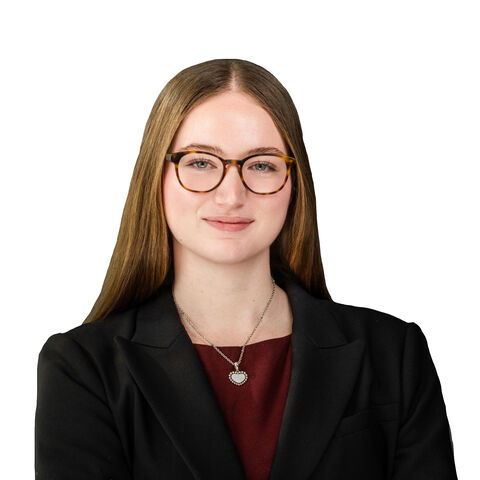

Morocco’s King Mohammed VI on Tuesday appointed Fatima Ezzahra El Mansouri as the country’s first woman head of government, making her the second woman to serve as prime minister in the Arab world after Tunisia’s Najla Bouden.
The appointment comes less than a week after Mansouri’s Authenticity and Modernity Party, or PAM, emerged as the largest party in Morocco’s Sept. 23 parliamentary elections. PAM won 97 of the 395 seats in the House of Representatives. Voter turnout was about 38%, down from 50% in 2021 and the lowest since 2007.
She will now be responsible for negotiating a coalition and forming a government.
In a statement to reporters on Tuesday, Mansouri called her appointment a “historic moment for our country.”
“We are fully aware of the importance of this stage and of the high expectations of citizens, particularly young people,” she said, adding: “We will draw up a program offering realistic and concrete solutions.”
PAM campaigned on creating at least one million jobs by 2031 and expanding investment in social programs.
Early life
Mansouri, 50, was born in Marrakesh on Jan. 3, 1976, into a family with roots in the Rhamna region near the city. Her father, Abderrahmane El Mansouri, served as a local official in Marrakesh and later became Morocco’s ambassador to the United Arab Emirates.
According to an Organization for Economic Co-operation and Development (OECD) biography of Mansouri, she was educated in French schools in Marrakesh before studying law at France’s University of Montpellier and later earning a degree in Anglo-American business law at Pace University in New York. She also holds a degree in private law from Mohammed V University in Rabat.
After returning to Morocco, she worked as a lawyer specializing in commercial and real estate transactions, according to PAM’s website. She became involved in politics through the Movement of All Democrats, the precursor to PAM, which was founded in 2008.
In politics
In 2009, at age 33, Mansouri was elected mayor of Marrakesh, becoming the first woman to lead the city. She was elected to the House of Representatives in 2011 and served two consecutive terms, from 2011 to 2016 and from 2016 to 2021, according to the Moroccan House of Representatives’ website. From 2015 to 2024, Mansouri chaired PAM’s National Council. She returned to the Marrakesh mayoralty after the 2021 elections.
In October 2021, she joined the government of Prime Minister Aziz Akhannouch, who became head of government that year, as minister of national territorial planning, urban planning, housing and city policy.
In 2024, Mansouri became coordinator of PAM’s collective leadership and in 2026 headed the party during the 2026 election campaign. PAM is generally described as a centrist party and was founded in 2008 in part as an alternative to the Islamist Justice and Development Party, or PJD, which governed Morocco from 2011 to 2021.
In July 2025, she faced allegations of a conflict of interest over the sale of family-owned land near Marrakesh in 2023. The allegations were circulated in leaked documents attributed to the hacker group Jabaroot. Mansouri denied any wrongdoing, saying the land was inherited by her family and that the transaction had no connection to her government position.
Mansouri’s priorities
Economic pressures are likely to be central to Mansouri’s tenure. PAM made employment and household purchasing power major themes of its 2026 campaign, pledging 1 million new jobs over five years alongside greater investment in health care, education, social protection and wages.
Those priorities come as Morocco faces growing frustration among young people over economic conditions and job prospects in the country. In 2025, youth-led protests that began over deteriorating health care and poor hospital conditions spread to cities across the country, with demonstrators also demanding improvements to education and greater social justice. Morocco’s High Commission for Planning reported earlier this year that unemployment among Moroccans ages 15–24 rose from 36.7% in 2024 to 37.2% in 2025.
Her domestic agenda will unfold alongside a foreign policy largely shaped by Morocco’s monarchy, which retains primary authority over foreign affairs and defense.
This one's on us.
The story doesn't end here.
Our correspondents are already on the next chapter. Read everything they file, from $2/week.
See Offers