



South Lebanon children return to school destroyed by Israel strike


In southern Lebanon, eight-year-old Yara Ajami started the academic year this week in a doorless, windowless classroom after her school was destroyed by an Israeli strike.
Well known in the area for its excellence, Ajami's elementary school in Burj Qalaway was struck by Israel in May, two months after Hezbollah dragged Lebanon into the Middle East war by attacking its southern neighbour.
"We are happy to be back (to school), but we were happier before. We used to draw, play, but now there are no desks or chairs," the young girl with braided hair said as she climbed a bare concrete staircase.
Rather than go to their old school building, Ajami and the other students returning to classes after the summer break on Monday were diverted to a nearby structure still under construction that was being built to house preschoolers.
The sun shone through unglazed windows into unfinished classrooms as children followed their lessons, while outside clumps of twisted rebar jutted from the ground like dead bushes where walls used to stand.
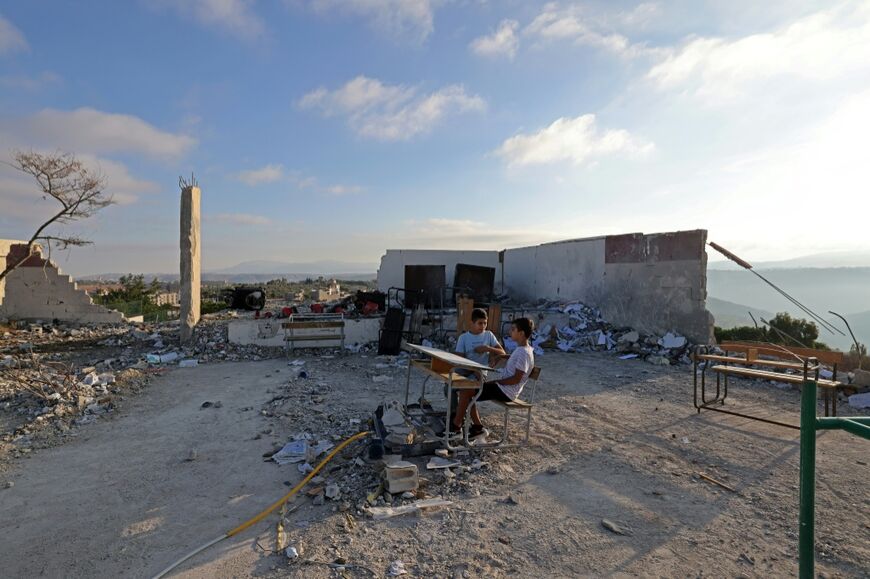
The students come from areas heavily hit by Israeli attacks and most were displaced during the war, with some -- like Ajami -- returning to find their homes damaged or destroyed.
- 'Sadness in their eyes' -
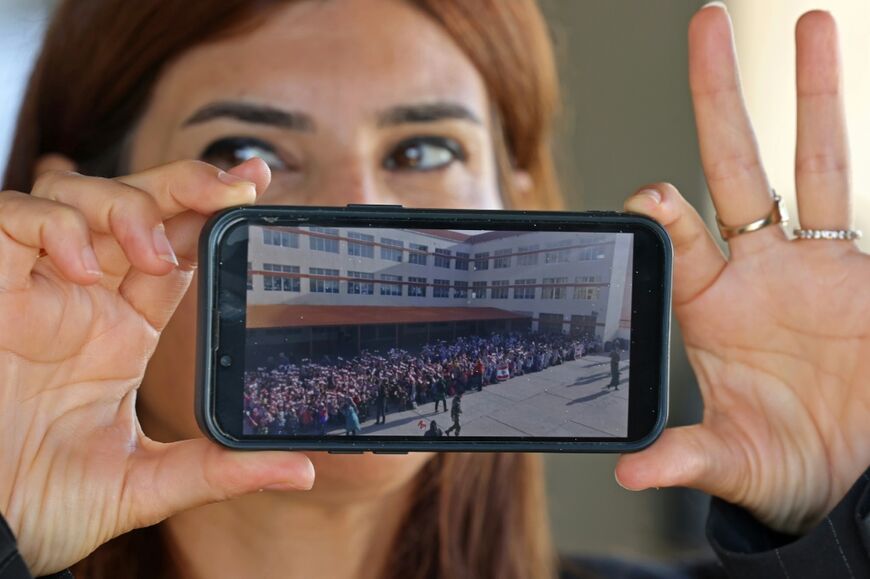
"There is sadness in their eyes, each one of them has a story," school principal May Mehdi told AFP from the courtyard.
"But I am happy they are here," she said, showing on her phone what the school, her pride, once looked like.
Mehdi does not have an office in the current building, which does not even have a teacher's lounge.
Around 250 students are registered in the 24-classroom school, which used to have at least 600 school-goers before the start of the latest war in March, when Hezbollah attacked Israel in support of Tehran, following US-Israeli attacks on the Islamic republic.
Israel responded with major airstrikes and a ground invasion that killed more than 4,300 people, including 261 children according to Lebanese authorities.
More than a million people were displaced, but more than 800,000 returned since June, when a US-Iran memorandum of understanding and a Lebanon-Israel framework agreement significantly reduced the violence.
In some schools in the south that have been converted into shelters, displaced people and students now share the space, with floors reserved for each group.
The Israeli army has repeatedly accused Hezbollah of using civilian buildings, including schools, to launch attacks or hide weapons.
Rights groups, however, have accused Israel of possible war crimes in its war with Hezbollah.
Lebanese authorities accuse Israel of systematically destroying villages in the south, including homes, schools, places of worship and water and electricity infrastructure.
- 'Destruction, insecurity, displacement' -
Many of Burj Qalaway's children were unable to start the school year, being still displaced or fearing to return to the town, less than a kilometre (mile) away from Israeli troops occupying a swathe of the south.
On Thursday, an Israeli strike hit Qantara, a nearby village.
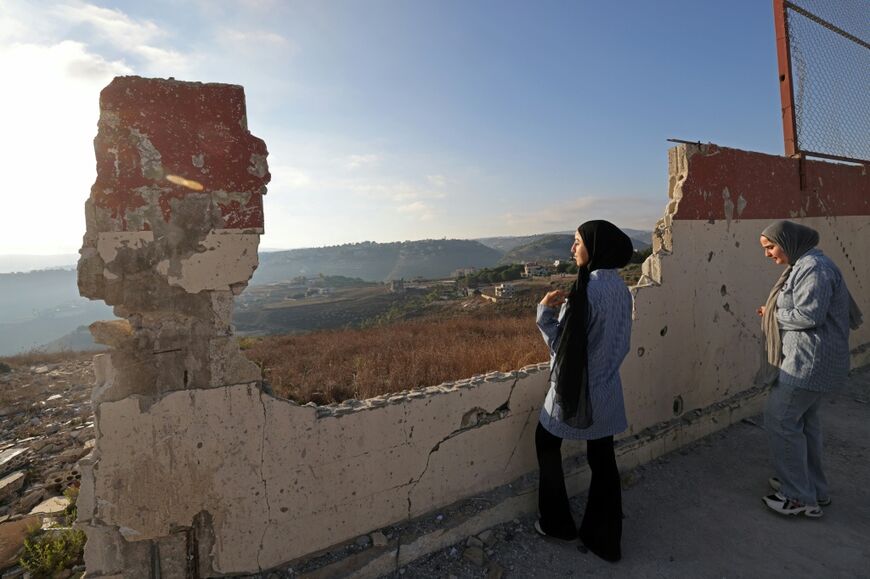
Earlier this month, UNICEF said that nearly 100,000 students in Lebanon were unable to return to their schools for the academic year due to "damage, destruction, insecurity, or displacement".
The UNICEF report also stated that 436 schools were damaged by the war, while 37 were completely destroyed.
The Burj Qalaway school previously boasted a laboratory, a computer room, and an interactive room.
Government-funded prefabricated units are being installed on the school premises where rubble has not yet been cleared.
- 'Make my father proud' -
Teacher Hoda Najdi gave her class while emphasising to her students the importance of continuing their education and achieving good results despite the difficult circumstances.
"My home was destroyed and so was my school... (but) the students give us the strength and will to continue," the 42-year-old told AFP.
Student Mohammed Mozannar, who was displaced from one place to another in Beirut during the war, said he was "very happy to be back to make up for" the lost year.
"I had no books, no phone and no internet" to follow lessons online, he said.
"I now want to make my father proud."
But the return to school also brought back painful memories for some, like 14-year-old Rawan Fakih.
"I remembered the activities we used to do, I remembered how stressful exams were... and I remembered my friend who was killed" by an Israeli strike, she said.
sno/nad/ris
This one's on us.
The story doesn't end here.
Our correspondents are already on the next chapter. Read everything they file, from $2/week.
See Offers